
You can get reverse osmosis water from a home filter, refill station, store, or delivery service.
If you are asking, “how do I get reverse osmosis water,” the best choice depends on your budget, water use, space, and need for convenience. This guide explains each option, how reverse osmosis works, what to check before buying, and how to avoid common mistakes.
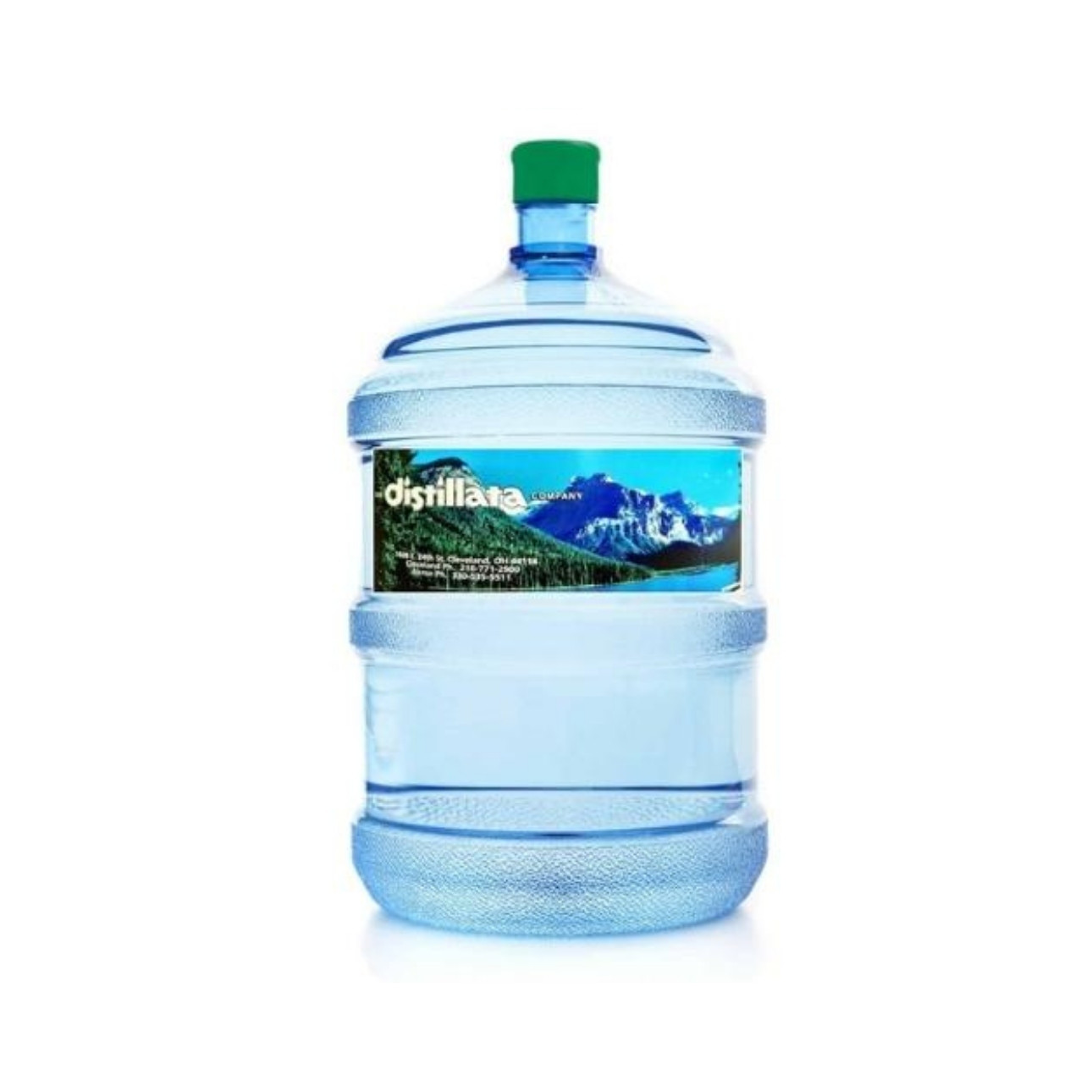
What Is Reverse Osmosis Water?
Reverse osmosis water has passed through a special membrane that removes many dissolved substances from water. These may include lead, arsenic, fluoride, nitrates, sodium, and other unwanted compounds, depending on the system and its certification.
The process uses water pressure to push water through the membrane. The tiny pores allow water molecules to pass while blocking many larger particles and dissolved contaminants. The result is clean-tasting water with much of its mineral content reduced.
A reverse osmosis system usually has several stages:
• A sediment filter catches dirt, sand, and rust.
• A carbon filter reduces chlorine, odors, and some chemicals.
• The reverse osmosis membrane removes many dissolved contaminants.
• A final carbon filter improves taste before drinking.
• Some systems add minerals back into the water.
Reverse osmosis is not the same as simple charcoal filtration. A carbon filter can improve taste and reduce some chemicals, but it does not usually remove dissolved salts and minerals as effectively as an RO membrane.
:max_bytes(150000):strip_icc()/installing-a-reverse-osmosis-system-2718849-hero-4b9b0d7bbd3941eeb12d23d3ebd7296b.jpg)
How Do I Get Reverse Osmosis Water at Home?
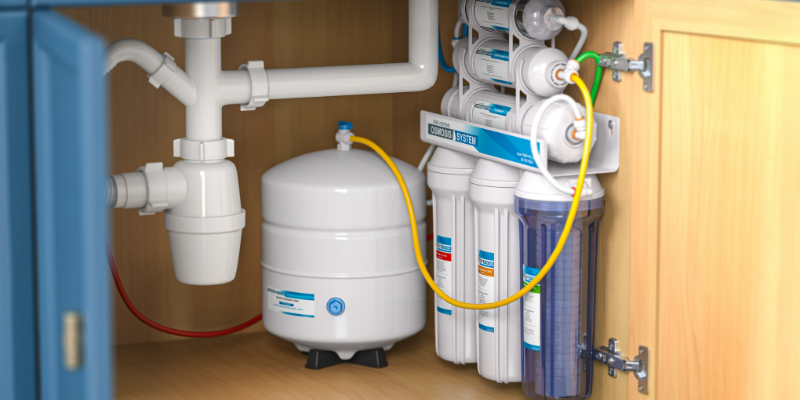
The most direct answer to “how do I get reverse osmosis water” is to install a point-of-use RO system under your kitchen sink. This setup connects to the cold-water line and sends filtered water to a separate drinking-water faucet.
Most under-sink systems include a storage tank. The tank fills slowly, then provides water when you open the faucet. This is useful because reverse osmosis filtration can take more time than regular tap filtration.
Follow these basic steps:
-
Test your tap water or review your local water quality report.
-
Choose a system certified for the contaminants you want to reduce.
-
Check that your sink has space for the filters and storage tank.
-
Confirm that your water pressure meets the system’s requirements.
-
Install the system according to the instructions or hire a plumber.
-
Flush the new filters and membrane before drinking the water.
-
Mark the replacement dates on your calendar.
A typical under-sink system may need a drain connection. During filtration, some water carries rejected contaminants to the drain. Newer high-efficiency systems waste less water, so check the product’s waste-to-product ratio before you buy.
Countertop Reverse Osmosis Systems
A countertop system is useful if you rent a home or do not want to modify your plumbing. You fill a tank by hand, and the unit produces filtered water into a clean container.
This option is often easier to set up. However, it may take counter space and may produce less water per hour than an under-sink system. You also need to refill the tank often.
Whole-House Reverse Osmosis Systems
Whole-house RO systems treat water for many fixtures. They can be helpful when a water test shows a serious problem throughout the home, such as high salinity or certain chemical contaminants.
For most households, whole-house RO is not necessary. It costs more, uses more water, and may remove minerals from water used for bathing and cleaning. A professional water treatment specialist should size the system correctly.
How Do I Get Reverse Osmosis Water Without Installing a Filter?
If you are still wondering “how do I get reverse osmosis water” without installing equipment, you have several simple choices.
Buy Reverse Osmosis Water at a Refill Station
Many grocery stores and water shops have refill machines. You bring a clean container, fill it at the machine, and pay by the gallon.
Before using a refill station, inspect the area. The machine should look clean, well maintained, and clearly labeled. Ask when the filters and sanitizing parts were last serviced. A poor maintenance program can affect water quality, even when the machine uses RO technology.
Buy Bottled Reverse Osmosis Water
Some bottled water brands use reverse osmosis as part of their treatment process. Look at the label for terms such as “reverse osmosis,” “purified by reverse osmosis,” or “RO purified.”
Do not assume that every bottle marked “purified water” came from reverse osmosis. Purified water may be treated with distillation, deionization, carbon filtration, or another method. Check the label or the company’s water quality report if the treatment method matters to you.
Use a Water Delivery Service
Water delivery companies may provide large containers of reverse osmosis water for homes and offices. This can be convenient for people who drink a lot of water but do not want to maintain a filter system.
Ask about:
• The treatment method
• Delivery and bottle sanitation
• Filter replacement practices
• Mineral content
• Container cleaning
• Delivery fees and cancellation terms
A delivery service can be a good middle ground. It offers convenience without requiring installation, but the long-term cost may be higher than producing RO water at home.
Ask at a Local Water Store
Some local water stores sell RO water by the gallon. Staff may also explain the store’s filtration process and refill policy.
Bring a container made for drinking water. Avoid using old containers that have cracks, strong odors, or residue. Wash and dry your container before each refill.

How Do I Choose the Right Reverse Osmosis System?
Choosing the right answer to “how do I get reverse osmosis water” starts with your water quality, not with the biggest filter package.
First, review your local water quality report. Public water suppliers in the United States usually provide an annual report. If you use a private well, arrange laboratory testing because well water quality can change over time.
Pay attention to these factors:
• Contaminants: Select a system tested for the substances found in your water.
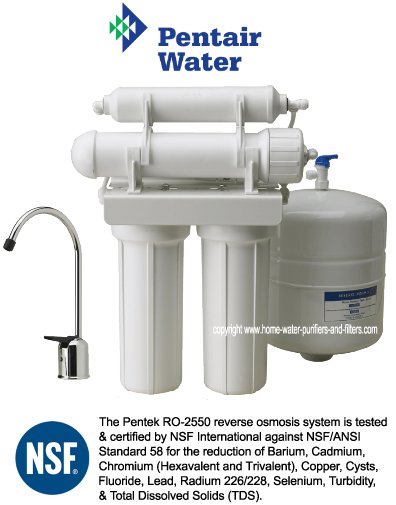
• Certification: Look for relevant NSF or ANSI certification, such as NSF/ANSI 58 for reverse osmosis drinking-water systems.
• Capacity: Check how many gallons the system can make per day.
• Water pressure: Low pressure may reduce performance and increase wastewater.
• Replacement cost: Filter prices matter more than the initial purchase price over time.
• Storage size: A larger tank helps busy homes avoid running out of water.
• Installation: Confirm that the system fits your sink and plumbing.
• Remineralization: Decide whether you prefer water with some minerals added back.
A high gallon-per-day rating does not always mean the system will produce that amount in your kitchen. Actual output depends on water temperature, pressure, membrane age, and incoming water quality.
Why Certification Matters
A certification mark can show that an independent organization has tested the system against a stated performance standard. It does not mean the system removes every possible contaminant.
Read the performance data sheet. It should list the contaminants tested and the percentage reduction achieved. If you are concerned about lead, nitrate, PFAS, or another specific substance, confirm that the system is certified or tested for that substance.
Do You Need a Remineralization Filter?
Reverse osmosis removes many minerals, including calcium and magnesium. A remineralization filter adds some minerals back and may make the water taste less flat.
For most people with a balanced diet, drinking RO water is not a major source of mineral intake. Still, taste matters. If your water tastes too plain, a remineralization stage may make it more enjoyable and encourage you to drink more.
How Do I Get Reverse Osmosis Water and Keep It Safe?
Learning “how do I get reverse osmosis water” is only the first step. Safe storage and regular maintenance matter just as much as the filtration method.
Replace filters based on the manufacturer’s schedule. Many systems use sediment and carbon filters every 6 to 12 months. The membrane may last longer, often two to five years, but its life depends on water quality and use.
Watch for signs that service is needed:
• A sudden change in taste or smell
• Slower water production
• A cloudy appearance
• A damaged storage tank
• Leaks near the fittings
• A filter change reminder
• A failed water-quality test
Sanitize the storage tank and filter housing as directed. Do not touch clean filter connections with dirty hands. After replacing a filter, flush the system for the time stated in the instructions.
One common mistake is changing only the final taste filter. The earlier filters protect the RO membrane, so ignoring them can shorten membrane life and reduce performance.
Another mistake is storing RO water for too long in a warm place. Keep filled containers sealed, cool, and away from direct sunlight. Wash reusable containers often.
Is Reverse Osmosis Water Good for You?
Reverse osmosis water can be a useful choice when you want to reduce specific contaminants in drinking water. It is especially helpful when testing shows elevated levels of substances that an RO system is designed to reduce.
However, reverse osmosis is not a cure-all. It does not automatically solve every water problem. Some systems may not remove gases, microbes, or certain chemicals unless they include additional treatment stages.
The safest approach is to match the filter to the water problem. For example:
• Sediment may require a sediment filter.
• Chlorine and odors may respond well to activated carbon.
• Dissolved salts may require reverse osmosis.
• Microbial concerns may require ultraviolet treatment or disinfection.
• Iron and sulfur may need specialized treatment.
People with serious health concerns should review water test results with a qualified professional. If your water comes from a private well, test it regularly and after flooding, repairs, or changes in taste and smell.
How Much Does Reverse Osmosis Water Cost?
The cost depends on how you get reverse osmosis water.
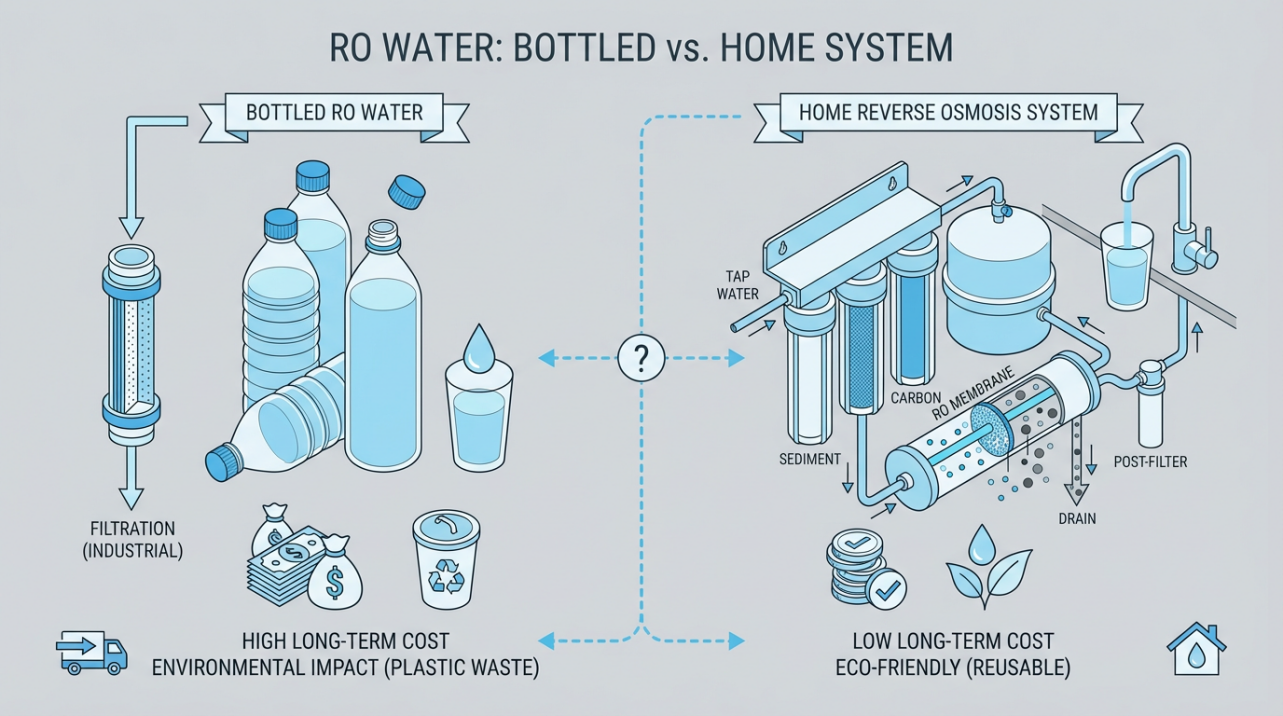
A home system has an upfront purchase and installation cost. You then pay for replacement filters, water, electricity in some cases, and occasional repairs. Over several years, home filtration may cost less per gallon than buying bottled water.
Refill stations usually have a low cost per gallon. However, you must transport the water and clean your containers. Delivery services charge for the water, containers, delivery, and sometimes equipment rental.
Bottled water is easy to use but often costs the most over time. It also creates more plastic waste unless the containers are part of a return-and-reuse program.
When comparing options, calculate the full yearly cost:
• Equipment or rental fees
• Installation
• Filter replacements
• Water and sewer charges
• Delivery fees
• Containers
• Repairs
• Your time
The cheapest option is not always the best option. A slightly more expensive system may offer better certification, lower water waste, easier maintenance, and better long-term value.
:max_bytes(150000):strip_icc()/installing-a-reverse-osmosis-system-2718849-hero-4b9b0d7bbd3941eeb12d23d3ebd7296b.jpg)
Common Mistakes to Avoid
People often search “how do I get reverse osmosis water” and focus only on where to buy it. These mistakes can cause problems after purchase.
• Choosing a filter without testing the water: You may pay for features you do not need or miss a contaminant that matters.
• Ignoring certification: A product can claim advanced filtration without having independent performance testing.
• Forgetting water pressure: Low pressure can lead to slow production and poor membrane performance.
• Skipping filter changes: Old filters can reduce flow and may allow the membrane to wear out faster.
• Failing to flush new filters: New systems often need several tank cycles before the water is ready to drink.
• Using dirty containers: Clean filtration cannot protect water stored in a contaminated bottle.
• Assuming all purified water is RO water: Read the label and verify the treatment method.
• Buying a whole-house unit without professional advice: The wrong design can waste water and create unnecessary expense.
A practical lesson is to treat an RO system like a small appliance, not a set-and-forget device. A few minutes of care each month can help protect water quality and extend the system’s life.

Frequently Asked Questions About How Do I Get Reverse Osmosis Water
How do I get reverse osmosis water at home?
Install an under-sink or countertop reverse osmosis system, or use a water delivery service. An under-sink system is usually the most convenient option for regular drinking and cooking.
Can I buy reverse osmosis water at a grocery store?
Yes. Many grocery stores have refill stations, and some sell bottled water treated with reverse osmosis. Check the machine label or bottle label to confirm the treatment method.
Is reverse osmosis water safe to drink every day?
For most healthy people, properly produced and stored RO water is safe to drink every day. Choose a certified system, maintain it on schedule, and follow local water testing advice.
Does reverse osmosis remove fluoride?
Many RO membranes can reduce fluoride, but performance varies by system and water conditions. Check the product’s certified performance data before relying on it for fluoride reduction.
How often should reverse osmosis filters be changed?
Many sediment and carbon filters need replacement every 6 to 12 months. The membrane often lasts two to five years, but actual timing depends on water quality, usage, pressure, and maintenance.
Does reverse osmosis waste a lot of water?
Traditional systems may send several gallons to the drain for each gallon produced. High-efficiency systems waste less, so compare the manufacturer’s waste-to-product ratio before buying.
Should I use a remineralization filter?
Use one if you prefer a fuller taste or want some minerals added back. It is optional for most people, but the filter should be maintained and replaced like any other stage.
Conclusion
The best answer to “how do I get reverse osmosis water” depends on your needs. You can install a countertop or under-sink system, refill containers at a local station, buy bottled RO water, or arrange delivery.
Start by testing your water and identifying the contaminants you want to reduce. Then choose a certified system, compare long-term costs, maintain the filters, and store the finished water safely. Take time to compare your options, and share your experience or questions in the comments.

2 Comments