Use certified activated carbon, reverse osmosis, or ion exchange to remove PFAS from drinking water.
PFAS are long-lasting chemicals that can enter water through industrial sites, firefighting foam, landfills, and some consumer products. Learning how to remove PFAS from drinking water starts with testing your water, choosing a proven treatment method, and replacing filters on time. This guide explains what works, what does not, and how to choose a safer system for your home.
What Are PFAS and Why Are They in Drinking Water?
PFAS stands for per- and polyfluoroalkyl substances. This large group includes thousands of human-made chemicals. Common examples include PFOA and PFOS.
PFAS have been used to make products resist water, grease, heat, and stains. They may appear in products such as:
• Nonstick cookware
• Water-resistant clothing
• Food packaging
• Stain-resistant carpets
• Firefighting foams
• Industrial materials
PFAS are often called “forever chemicals” because many break down very slowly. Once they enter soil or groundwater, they can remain for years and move through a water supply.
Small amounts may not change the taste, smell, or color of water. This makes testing important. You cannot reliably detect PFAS with your senses.
Long-term exposure to some PFAS has been linked with effects such as higher cholesterol, reduced immune response, changes in liver function, and certain cancers. Risk depends on the chemical, dose, length of exposure, and the person’s health.
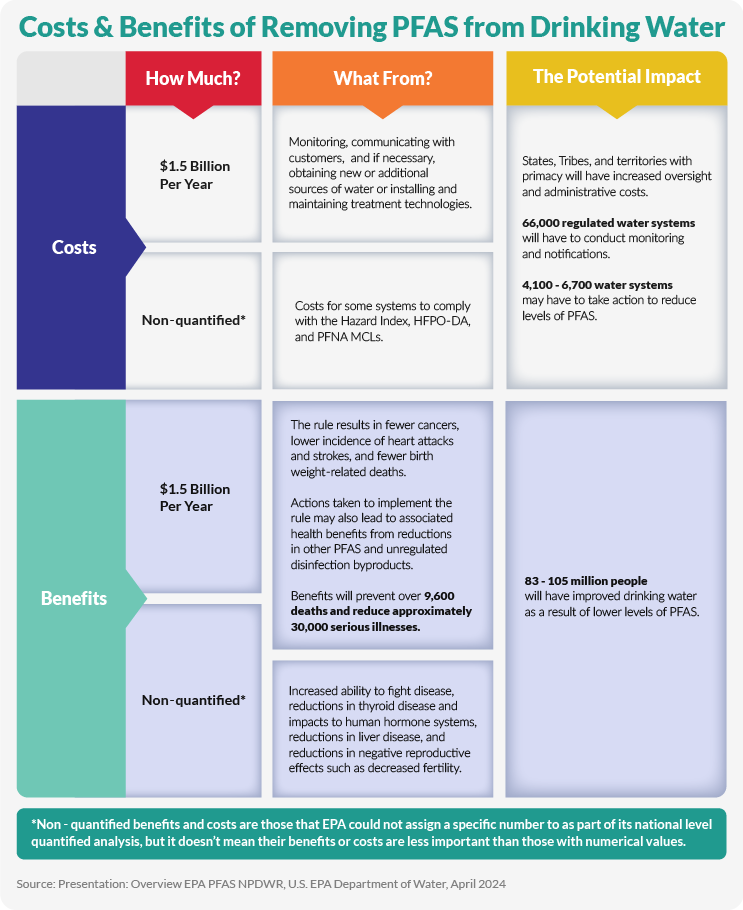
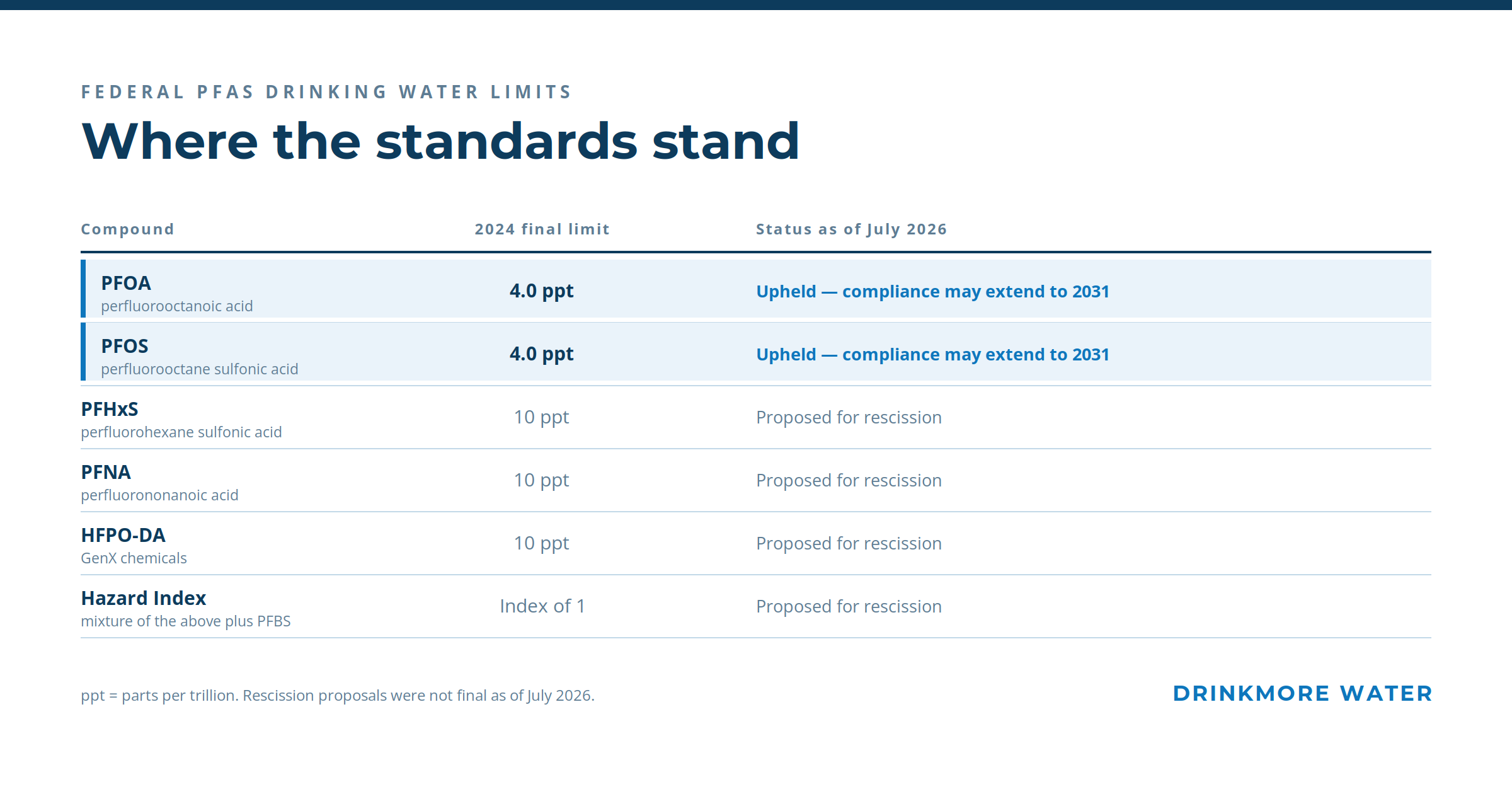
The U.S. Environmental Protection Agency has set federal drinking water limits for PFOA and PFOS. State standards may differ, and public water systems may still be working toward compliance. Check your water provider’s latest report for local information.

Test Your Water Before Choosing a Filter
Testing is the first practical step in learning how to remove PFAS from drinking water. It tells you whether PFAS are present and may show which chemicals are involved.
Start with your local water supplier if you use public water. Many suppliers publish an annual water quality report. Ask whether the report includes PFAS testing, not just general water data.
If you use a private well, arrange a test through a state-certified laboratory. Not every water lab can test for PFAS. Look for a laboratory that uses an approved method and reports results in parts per trillion, or ppt.
A good testing plan includes:
- Test untreated water before installing a filter.
- Record the results and the sample date.
- Install the treatment system.
- Test the water after treatment.
- Retest at the schedule recommended by the lab or filter maker.
PFAS testing can be costly. Still, it is more useful than buying a random filter and hoping it works. A test also helps you decide whether you need a drinking-water filter, a whole-house system, or a temporary bottled-water option.
Ask the laboratory or water authority these questions:
• Which PFAS chemicals does the test measure?
• What is the detection limit?
• Does the lab follow EPA-approved testing methods?
• How should the sample be collected?
• How quickly must the sample reach the lab?
Poor sampling can affect results. Follow the laboratory’s instructions closely, and avoid touching the inside of the bottle or cap.

The Best Ways to Remove PFAS From Drinking Water
Several treatment methods can reduce PFAS. Their success depends on the PFAS type, water chemistry, filter size, contact time, and maintenance.
The most common proven methods are activated carbon, reverse osmosis, and ion exchange.
Granular Activated Carbon
Granular activated carbon, or GAC, traps many PFAS on the surface of carbon particles. It is often used by water utilities and in home filters.
GAC can work well for longer-chain PFAS, such as PFOA and PFOS. It may be less effective for some shorter-chain PFAS. The filter must also be large enough to give water enough contact time with the carbon.
For a home, GAC may be found in:
• Under-sink drinking-water systems
• Countertop filters
• Refrigerator filters
• Whole-house systems
• Water treatment tanks
A small pitcher filter may help, but only if it has been tested and certified for PFAS reduction. Do not assume that every carbon filter removes PFAS.
Reverse Osmosis
Reverse osmosis, or RO, pushes water through a semipermeable membrane. The membrane blocks many dissolved chemicals, including many PFAS.
An under-sink RO system is often a strong choice for drinking and cooking water. It usually includes a sediment filter, carbon filters, an RO membrane, and a final polishing filter.
RO systems have limits. They may waste some water, need regular service, and remove minerals along with unwanted chemicals. They also create a concentrated waste stream that must go down the drain or be managed according to local guidance.
Ion Exchange
Ion exchange systems use special resin beads that attract and hold PFAS. They can be effective, especially when designed for PFAS treatment.
These systems may work well for homes with high PFAS levels or water chemistry that reduces carbon performance. However, they need correct sizing and timely resin replacement.
When resin becomes full, PFAS can pass through. In some cases, a poorly maintained system may release a concentrated amount of contaminants. Professional design is wise for high levels or private wells.
Combining Treatment Methods
Some systems combine carbon, ion exchange, and reverse osmosis. A common setup uses carbon as a first stage and RO as a final barrier for drinking water.
Layered treatment can provide extra protection, but it also adds cost and maintenance. More equipment does not always mean better results. Each stage should have a clear purpose and a proven performance claim.
How to Choose a Certified PFAS Water Filter
Certification makes filter shopping easier. Look for a product certified by an independent organization for PFAS reduction.
Useful standards and marks may include:
• NSF/ANSI 53 for certain contaminant reduction claims
• NSF/ANSI 58 for reverse osmosis systems
• NSF P473, where applicable to PFAS reduction claims
• A current performance data sheet with specific PFAS claims
Certification details can change. Always check the exact product model, not just the brand name.
A filter certified for chlorine, taste, or odor is not automatically certified for PFAS. The label should clearly name the PFAS chemicals it reduces and show the test conditions.
Review these details before buying:
• The tested PFAS compounds
• The certified reduction level
• The rated filter capacity
• The expected flow rate
• The replacement schedule
• The cost of replacement cartridges
• Whether installation needs a plumber
• Whether the system treats only one tap or the whole home
Be careful with vague claims such as “removes toxins” or “purifies everything.” Reliable products explain what they remove, how they were tested, and when the cartridge must be replaced.
Point-of-Use or Whole-House Treatment?
Most people focus on drinking and cooking water. A point-of-use system treats water at one tap, usually the kitchen faucet.
Point-of-use treatment is often the most affordable option because it treats only the water you consume. It also reduces the amount of equipment and filter media you need.
A whole-house system treats water at the main entry point. It may make sense when:
• PFAS levels are high
• Several taps are used for drinking and cooking
• A private well has repeated contamination
• You want to reduce exposure from brushing teeth or making ice
• A water professional recommends it
Whole-house treatment costs more and requires careful design. It may also expose the filter to a much larger volume of water, which can shorten filter life.
For many homes, an under-sink carbon or RO system is a sensible first step. Families with infants, pregnant people, or household members with health concerns may want to discuss testing and treatment choices with a health professional.
How to Install and Maintain a PFAS Filter
A filter works only when it is installed and maintained correctly. Even a high-quality system can fail if the cartridge is old or the water flows too quickly.
Follow the product instructions. Flush a new cartridge for the required time. This removes carbon dust and helps prepare the system for use.
Keep a simple maintenance record with:
• Installation date
• Filter model
• Replacement date
• Water test results
• Any changes in taste, pressure, or flow
Replace cartridges before they reach their rated capacity. Do not wait for bad taste or slow flow. PFAS usually has no taste or smell, so sensory changes are not a dependable warning.
After replacement, flush the system as directed. If the system has a storage tank, clean it according to the manual. For a whole-house unit, ask the installer how to handle spent carbon or resin.
If a system has a pressure gauge, leak alarm, or digital reminder, check it often. Small leaks can cause water damage, while a missed replacement can reduce treatment performance.

What Does Not Remove PFAS?
Several common actions do not reliably remove PFAS from water.
Boiling is one of the most common mistakes. Heat can kill many germs, but it does not destroy PFAS. Boiling may even increase the concentration if water evaporates and the PFAS remains behind.
Standard sediment filters also do not remove dissolved PFAS. They are useful for sand, rust, and dirt, but they are not a PFAS treatment.
Water softeners are designed mainly to reduce hardness minerals such as calcium and magnesium. They should not be treated as PFAS filters unless the specific system has a verified PFAS claim.
Typical refrigerator filters may reduce some contaminants, but the model must show a certified PFAS reduction claim. A filter that improves taste is not automatically a PFAS filter.
Bottled water is not a perfect answer. PFAS levels vary by brand and source, and plastic bottles create waste. If you use bottled water temporarily, choose a reputable brand and check whether it provides current water quality information.
Common Mistakes to Avoid
People often spend money on the wrong system because PFAS treatment is not always explained clearly. Avoid these mistakes:
• Buying a filter based only on a general “purifier” claim
• Ignoring private well testing
• Using an expired cartridge
• Treating boiling as a PFAS solution
• Choosing a whole-house system without sizing advice
• Forgetting to test water after installation
• Assuming one filter removes every PFAS compound
• Disposing of spent media without checking local guidance
Another mistake is focusing only on the purchase price. A low-cost filter may become expensive if its cartridge needs frequent replacement. Compare the full cost over one year, including installation, replacement parts, water waste, and testing.
Do not panic after a positive test. A result is a reason to act, not a reason to fear every glass of water. Use reliable testing, follow public health guidance, and choose a treatment method that matches the level and type of contamination.
How Much Does PFAS Water Treatment Cost?
The cost of removing PFAS varies widely. A basic certified pitcher or faucet filter may cost less than an under-sink RO system. Whole-house systems can cost much more because they require larger media tanks, plumbing work, and regular service.
Typical cost factors include:
• Initial water testing
• Filter or membrane purchase
• Professional installation
• Replacement cartridges
• Electricity for some RO pumps
• Water wasted during RO treatment
• Follow-up testing
• Disposal of used treatment media
Do not choose a system by price alone. A certified filter with clear performance data is usually a better value than a cheap product with broad marketing claims.
Some states, utilities, and local programs offer testing or treatment support for affected communities. Contact your health department, water provider, or state environmental agency to ask about assistance.
Practical Steps for Removing PFAS From Drinking Water
Use this simple plan if you are not sure where to begin:
- Find out whether you use public water or a private well.
- Review your water supplier’s latest PFAS information.
- Test your water through a qualified laboratory if needed.
- Identify the PFAS levels and compounds found.
- Choose a certified point-of-use or whole-house system.
- Install the system according to the instructions.
- Flush the filter before drinking the water.
- Mark the replacement date on your calendar.
- Retest treated water to confirm performance.
- Keep records of tests, repairs, and filter changes.
For a private well, also look for possible contamination sources near the property. These may include airports, military sites, industrial facilities, landfills, wastewater plants, and areas where firefighting foam was used.
If the level is high or the source is unclear, speak with your local health department or a qualified water treatment professional. Avoid relying on sales claims alone.
Frequently Asked Questions About How to Remove PFAS From Drinking Water
What is the best way to remove PFAS from drinking water?
The most proven home options are certified activated carbon, reverse osmosis, and ion exchange systems. The best choice depends on the PFAS level, the specific chemicals present, water chemistry, budget, and the amount of water you need to treat.
Does boiling water remove PFAS?
No. Boiling does not destroy PFAS. Because some water evaporates during boiling, the remaining PFAS may become more concentrated.
Do Brita-style filters remove PFAS?
Some pitcher filters may reduce certain PFAS, but many do not have a certified PFAS claim. Check the exact model for independent certification and a performance data sheet before relying on it.
Can a water softener remove PFAS?
A standard water softener is not designed to remove PFAS. Only use an ion exchange system for PFAS when it has a verified performance claim and is properly sized and maintained.
Does reverse osmosis remove all PFAS?
Reverse osmosis can remove many PFAS, but performance varies by membrane, water chemistry, pressure, and maintenance. Use a system with clear testing data, and replace its filters and membrane on schedule.
Should I buy bottled water if my tap water contains PFAS?
Bottled water may be a short-term option, but it is not automatically PFAS-free. A certified home treatment system can provide a more consistent long-term solution when it is correctly selected and maintained.
Can I remove PFAS from well water?
Yes, treatment systems can reduce PFAS in private well water. Test the well first, then choose a system based on the results and have high-level contamination reviewed by a qualified professional.
Conclusion
Learning how to remove PFAS from drinking water begins with testing and ends with regular filter care. Certified activated carbon, reverse osmosis, and ion exchange are the main treatment options, while boiling, sediment filters, and standard water softeners do not reliably solve the problem.
Start by checking your water report or arranging a certified laboratory test. Then choose a system with a specific PFAS reduction claim, install it correctly, and track every filter change. For more guidance, contact your local health department or water provider, and share your questions or experience with PFAS treatment in the comments.