
To install a paper towel holder under a cabinet, mark its position, drill pilot holes, and secure it with short screws.
Learning how to install paper towel holder under cabinet is a simple kitchen upgrade that saves counter space and keeps rolls within easy reach. With the right holder, careful measurements, and hardware that fits your cabinet, the job often takes less than 20 minutes. This guide explains the process clearly, including options for wood, laminate, metal, and rental-friendly cabinets.

Why install a paper towel holder under a cabinet?
An under cabinet paper towel holder keeps the roll off your counter. This creates more room for food prep, small appliances, and daily kitchen tasks. It also places the towel near the sink, stove, or work area.
A good location should meet three needs:
• It should be easy to reach with one hand.
• It should not block cabinet doors or drawers.
• It should stay away from direct heat, steam, and water splashes.
Most holders use either screws, adhesive, or a combination of both. Screw mounted models usually provide the strongest hold. Adhesive models can work well for light use, but their strength depends on the surface, tape quality, humidity, and weight of the roll.
In my experience, the best position is often near the front edge of the cabinet, but not so close that the holder catches clothing or bumps your head. I once placed one too far back, and every person in the kitchen had to reach under the cabinet to find it. Moving it forward by about two inches made a big difference.
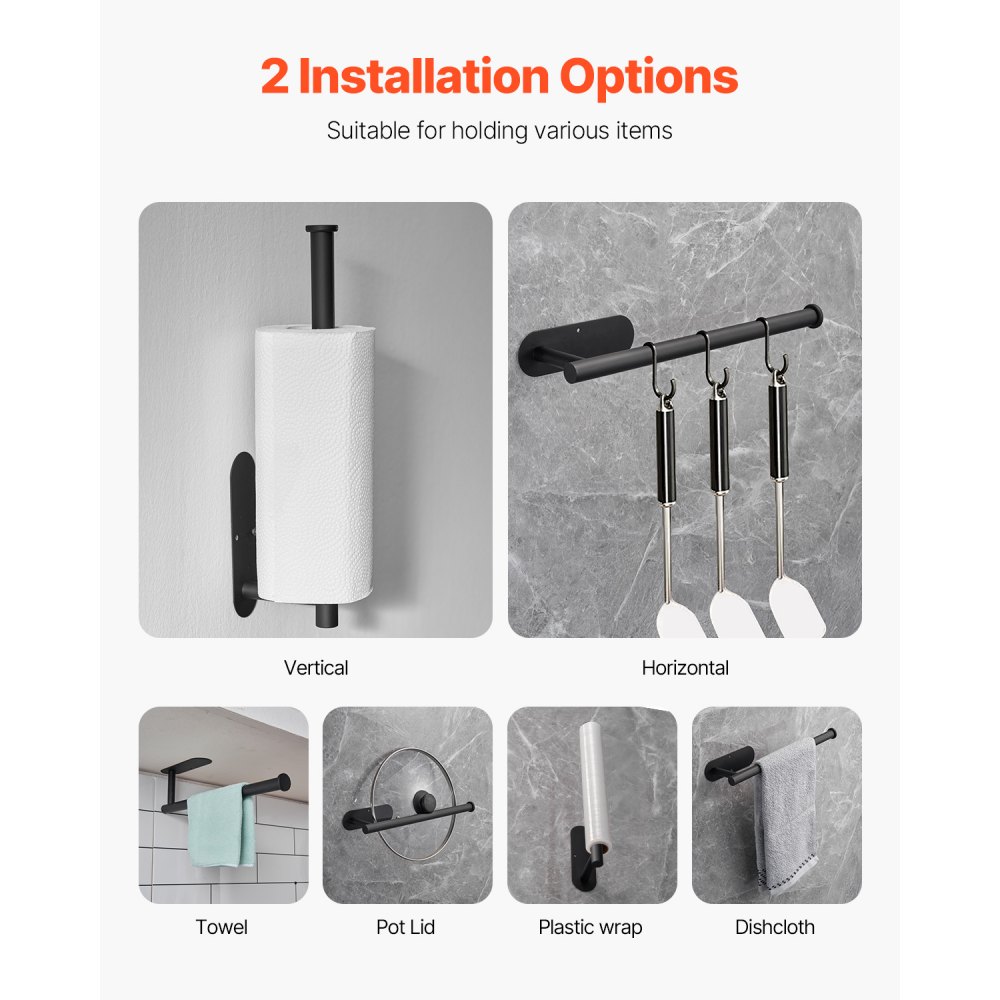
Tools and materials you need
Before learning how to install paper towel holder under cabinet, gather all your supplies. Having the tools ready prevents rushed measurements and misplaced holes.
Basic tools
• Under cabinet paper towel holder
• Measuring tape
• Pencil or fine tip marker
• Small level
• Drill or electric screwdriver
• Small drill bit for pilot holes
• Screwdriver bit that matches the screws
• Painter’s tape
• Safety glasses
• Short wood screws, if the included screws are unsuitable
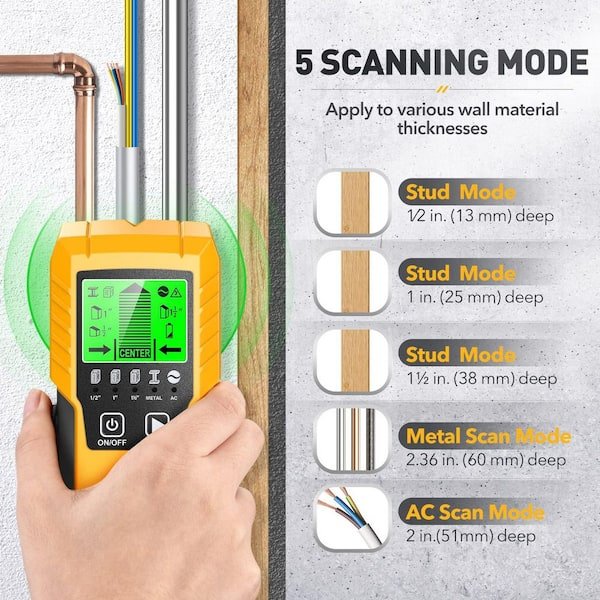
You may also need a stud finder for a wall mounted design, but it is usually not needed for a holder attached to the bottom of a cabinet.
Check the included hardware
Lay out the holder, brackets, screws, washers, and mounting plate. Read the instructions if they are available. Some paper towel holders have a single mounting bar, while others have two separate brackets.
Check the screw length before drilling. A screw that is too long can pass through the cabinet base and damage the inside of the cabinet. A screw that is too short may not hold the holder securely.
For most cabinet bottoms, a screw that penetrates about 3/8 to 1/2 inch into the wood is enough. Always account for the thickness of the holder bracket before choosing screw length.

Choose the best mounting location
The location affects both comfort and strength. Hold the empty holder under the cabinet and test several spots before marking anything.
Think about the following points:
• Leave enough space for the roll to spin freely.
• Keep the holder clear of cabinet hinges.
• Make sure the roll does not touch the backsplash or wall.
• Avoid placing it directly above a cooktop or hot pan.
• Check that the cabinet door opens without hitting the roll.
• Keep the towel within comfortable reach of the main work area.
A standard paper towel roll is wider than many people expect. Test the holder with a roll in place, not just when it is empty. Allow extra room at the sides so you can remove the roll without scraping your knuckles.
Use painter’s tape to outline the holder’s footprint. Step back and look at it from the normal standing position. This small test can prevent a crooked or inconvenient installation.
Should the holder sit at the front or back?
A holder near the front edge is easy to reach. However, it may be more visible and could catch on sleeves. A holder farther back looks less noticeable but may be harder to use.
For most kitchens, placing the front of the roll about 1 to 2 inches behind the cabinet’s front edge offers a useful balance. The exact spacing depends on the cabinet depth and the holder’s design.

How to install paper towel holder under cabinet with screws
Screw installation is the most secure method for a wooden cabinet. Follow these steps slowly, especially if you have never drilled into cabinetry.
1. Assemble the holder
Put the paper towel holder together according to its instructions. Some models require you to attach side arms, a spring rod, or mounting brackets first.
Do not fully tighten parts that need adjustment. You may need to shift the arms slightly after the holder is attached.
2. Mark the center line
Measure the cabinet width and find the center. Mark this point lightly with a pencil.
If the holder has two brackets, measure the distance between the bracket holes. Transfer those measurements to the cabinet bottom. Use a level or ruler to make sure the marks form a straight line.
Accurate marking matters more than speed. A holder that is only slightly uneven can look noticeably crooked once a full roll is attached.
3. Apply painter’s tape
Place a small piece of painter’s tape over each drill mark. The tape can help reduce surface chipping on laminate or finished wood.
Mark the hole locations again on top of the tape. Use a sharp pencil or a small punch to create a clear starting point.
4. Drill pilot holes
Select a drill bit slightly smaller than the screw’s solid shaft. The bit should not be wider than the screw threads.
Drill straight upward into the cabinet bottom. Stop as soon as the hole reaches the needed depth. You can wrap painter’s tape around the drill bit to act as a depth guide.
This is one of the most important steps in learning how to install paper towel holder under cabinet. A pilot hole helps prevent split wood and makes it easier to drive the screw straight.
5. Attach the mounting bracket
Hold the bracket over the pilot holes. Start each screw by hand for a few turns. Then tighten the screws with a screwdriver or drill set to a low torque level.
Do not overtighten the screws. Excess force can strip the wood, crack laminate, or bend a thin metal bracket. Stop when the bracket sits firmly against the cabinet.
6. Install the roll
Attach the holder arms or rod if you have not already done so. Place a paper towel roll on the rod and test the motion.
The roll should spin smoothly. Pull a sheet with one hand and check that the holder does not shift, sag, or twist.
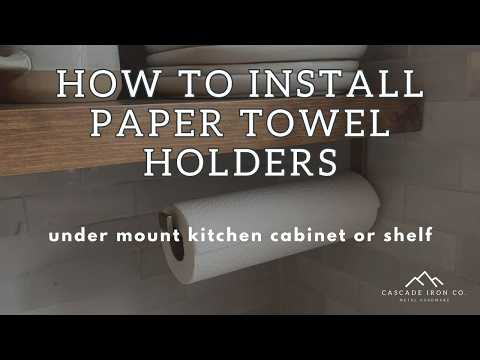
How to install paper towel holder under cabinet without drilling
A no drill holder can be useful in a rental home or on a cabinet that you do not want to alter. These holders usually use strong adhesive strips, suction, or a removable mounting system.
Clean the cabinet surface with a product recommended by the adhesive maker. Remove grease, dust, and moisture. Let the surface dry fully before attaching the holder.
Follow these steps:
-
Test the holder’s position with a piece of paper or painter’s tape.
-
Clean and dry the mounting area.
-
Apply the adhesive evenly without touching the sticky side.
-
Press the holder against the cabinet for the stated amount of time.
-
Wait for the recommended curing period before adding a paper towel roll.
-
Test the holder gently before pulling a sheet with force.
Adhesive mounting works best on smooth, sealed surfaces. It may fail on dusty wood, textured laminate, unfinished surfaces, or cabinets exposed to steam. It can also leave residue or pull away a weak finish.
For that reason, adhesive is not always the best choice for a busy kitchen. If the holder will receive heavy daily use, a screw mounted model is usually more dependable.

Installing on wood, laminate, and metal cabinets
Cabinet material changes the installation method. Identify the surface before choosing a drill bit or adhesive.
Wood cabinets
Wood is usually the easiest surface for a screw mounted holder. Drill a pilot hole to reduce splitting, especially near an edge or corner.
If the cabinet bottom is made from thin plywood or fiberboard, avoid long screws. Use moderate pressure and stop tightening when the bracket is secure.
Laminate cabinets
Laminate can chip when drilled. Painter’s tape and a sharp drill bit can help create a cleaner hole.
Start with a small bit and drill slowly. Do not force the bit through the surface. If the laminate begins to lift, stop and inspect the hole before continuing.
Metal cabinets
Use a drill bit made for metal. Wear safety glasses and keep the drill at a slow speed. A metal cabinet may also require nuts, bolts, or special sheet metal screws.
Check the back side before drilling. Electrical wires, plumbing, or sharp metal edges may be hidden inside some cabinet structures.
Glass or delicate surfaces
Do not drill into glass or fragile decorative panels unless you have the correct tools and experience. An adhesive holder designed for that surface may be safer, but check its weight limit first.
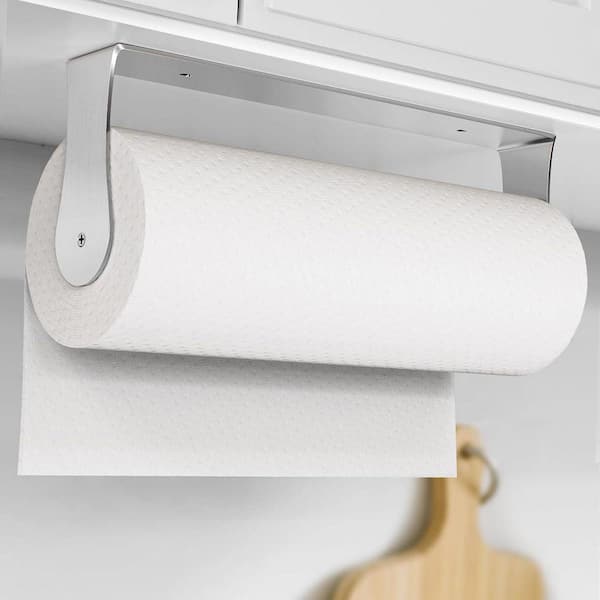
Common mistakes to avoid
The most common problems are easy to prevent. Take a few extra minutes before drilling.
Choosing a location without testing it
A holder may look centered but still be hard to reach. Test it with a roll installed and stand where you normally prepare food.
Using screws that are too long
Long screws can damage the cabinet interior. Measure the cabinet thickness and compare it with the screw length before installation.
Skipping pilot holes
Skipping this step can split wood or make the screw enter at an angle. Pilot holes also reduce the amount of force needed.
Tightening too much
Overtightening can strip the screw hole. If the screw spins without becoming firm, the wood may already be damaged.
Ignoring the roll size
Some jumbo rolls do not fit compact holders. Check the holder’s width and diameter range before buying or installing it.
Mounting near heat or water
Steam and heat can weaken adhesive. Water can also damage unfinished wood. Choose a dry, protected area whenever possible.
Forgetting cabinet movement
The bottom of a wall cabinet can flex slightly, especially if it is old or poorly secured. If the holder moves when you pull a towel, inspect the cabinet and use stronger hardware.
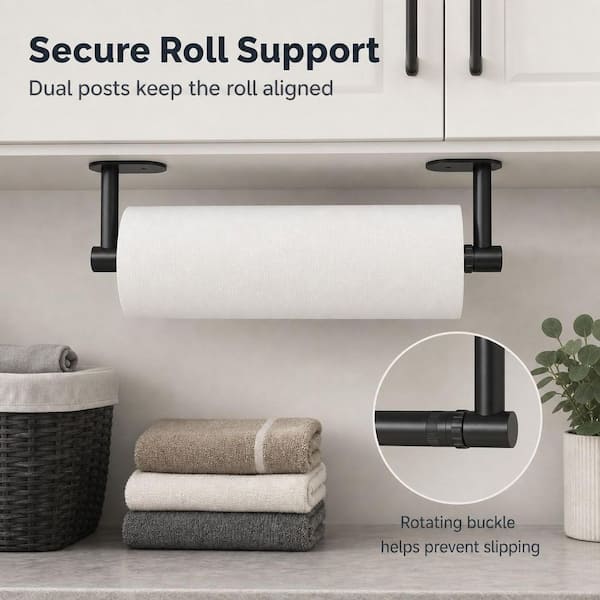
How to make the installation strong and neat
A clean installation depends on alignment, hardware, and gentle use. Use a level before tightening the final screw. If the holder has two mounting points, tighten each side a little at a time.
For extra stability, choose a holder with a wide mounting plate. A wide plate spreads the pulling force over a larger area. This is helpful for households that use paper towels often.
Some holders include a spring loaded arm or tension bar. Adjust it so the roll stays in place but still turns smoothly. Too much tension makes the holder hard to use, while too little tension allows the roll to fall off.
If the screw hole becomes loose, do not simply use a longer screw. You can repair a small stripped wood hole with a suitable wood filler or a wooden plug, then allow it to cure before redrilling. For serious damage, replace the mounting location or ask a qualified repair professional for help.
Cleaning and maintaining the holder
A paper towel holder needs little care, but regular cleaning keeps it sanitary and smooth. Wipe the bar and brackets with a damp cloth and mild soap. Dry the surfaces afterward, especially around wood cabinets.
Avoid soaking wooden or adhesive mounted parts. Strong cleaners may weaken adhesive or damage a painted finish. Follow the care instructions supplied with the holder.
Check the screws every few months. If the holder feels loose, remove the roll and inspect the mounting points. Tighten gently rather than forcing the hardware.
When replacing the roll, pull the new sheet from the bottom or front as designed. Avoid twisting the roll sideways, since uneven force can loosen the holder over time.
Safety tips for drilling under a cabinet
Learning how to install paper towel holder under cabinet is simple, but safe tool use still matters.
• Wear safety glasses when drilling overhead.
• Keep both hands clear of the drill bit.
• Confirm that no wiring or plumbing is hidden in the drilling area.
• Use a stable step stool rather than standing on a countertop.
• Keep the drill speed low when working on laminate or metal.
• Do not drill deeper than needed.
• Keep children away from the work area.
If you are unsure about hidden wiring, cabinet construction, or the condition of the surface, stop and seek professional advice. A small home project is not worth risking an electrical shock or structural damage.
Frequently asked questions about how to install paper towel holder under cabinet
Can I install a paper towel holder under any cabinet?
Most holders can attach to solid wood, plywood, laminate, and some metal cabinets. Check the cabinet thickness, surface condition, and holder instructions before choosing screws or adhesive.
Is it better to screw or glue an under cabinet paper towel holder?
Screws usually provide the strongest and most lasting hold. Adhesive is convenient for rentals and smooth surfaces, but it may weaken from heat, steam, grease, or repeated pulling.
How long should the screws be for an under cabinet paper towel holder?
The screw should enter the cabinet without passing through it. In many cases, a short screw that penetrates about 3/8 to 1/2 inch works well, but measure your holder and cabinet before drilling.
Do I need pilot holes for this installation?
Pilot holes are strongly recommended for wood and laminate cabinets. They reduce splitting, improve screw alignment, and make it easier to control the drilling depth.
Where is the best place to mount the holder?
Choose a spot that is easy to reach, clear of cabinet doors, and away from heat and water. Test the position with a full roll before marking the holes.
Why does my paper towel holder keep coming loose?
The screws may be too short, the holes may be stripped, or the cabinet surface may not support adhesive. Remove the holder, inspect the mounting area, and use suitable hardware rather than simply tightening harder.
Can I install a paper towel holder under a rental cabinet?
Yes. A removable adhesive holder is often the simplest rental friendly option. Test it on a hidden area first and follow the product’s removal instructions to reduce the chance of finish damage.
Conclusion
Installing a paper towel holder under a cabinet is a quick way to free counter space and improve kitchen flow. The key steps are choosing a practical location, checking the cabinet material, marking carefully, drilling shallow pilot holes, and using hardware that fits.
For the strongest result, screw the holder into a suitable wood or plywood cabinet base. For a rental or smooth surface, use a quality adhesive model and respect its weight and curing limits. Now that you know how to install paper towel holder under cabinet, choose your location, gather your tools, and complete the project with care. Share your installation tips or explore more practical home improvement guides for your next small upgrade.


3 Comments