
Self-closing door hinges use spring force to pull a door shut after someone opens it. In a typical U.S. home, apartment, office, or commercial building, the hinge stores energy as the door opens. When the door is released, that energy turns the hinge and moves the door back toward the frame.
A self-closing hinge can help control drafts, keep pets or children from entering certain areas, and support privacy. Some models also help a door meet self-closing rules. However, a hinge that closes a door does not always latch it, control its speed, or meet fire-door requirements.
What Is a Self-Closing Door Hinge?
A self-closing door hinge is a hinge with a built-in spring or similar mechanism. It replaces, or works like, a standard butt hinge while adding closing force.
A normal hinge lets a door swing. It does not push the door open or closed. A self-closing hinge adds stored energy to that movement.
Most self-closing hinges have:
- Hinge leaves: The flat metal plates that attach to the door and frame.
- A pin: The central rod around which the leaves turn.
- A spring: The part that stores energy as the door opens.
- A spring housing or adjustment system: The area that holds or adjusts spring tension.
- A bearing or bushing: A part that helps the hinge turn smoothly.
The hinge may look much like a standard door hinge from the outside. The main difference is inside the barrel, where the spring creates closing force.
Self-closing hinge vs. self-latching door
These terms describe different actions:
- A self-closing hinge moves the door toward the closed position.
- A self-latching door closes far enough for the latch to engage.
- A door closer is a separate device that controls closing speed and force.
- A spring hinge is another common name for a hinge with a closing spring.
A self-closing hinge may close a door but fail to latch it if the spring is weak, the door is out of alignment, or the latch has too much friction.
How Do Self-Closing Door Hinges Work?
A self-closing hinge works by storing mechanical energy while the door opens and releasing that energy as the door closes.
Here is the basic cycle:
- The user pushes or pulls the door open.
- The hinge leaves rotate around the hinge pin.
- That rotation winds or compresses the internal spring.
- The spring stores energy.
- When the user lets go, the spring tries to return to its resting position.
- The spring turns the hinge back toward its closed position.
- The door moves toward the frame.
The spring creates torque. Torque is a turning force. In simple terms, stronger spring tension creates more force to turn the hinge, but it can also make the door harder to open.
A simple mechanical view
The closing force depends on several factors:
- Spring tension
- Door weight
- Door width
- Hinge position
- Friction in the hinge
- Air pressure
- Weather stripping
- Door alignment
- Number of self-closing hinges
A wide or heavy door needs more closing torque than a narrow, light door. A tight seal or strong draft can also resist the closing motion.
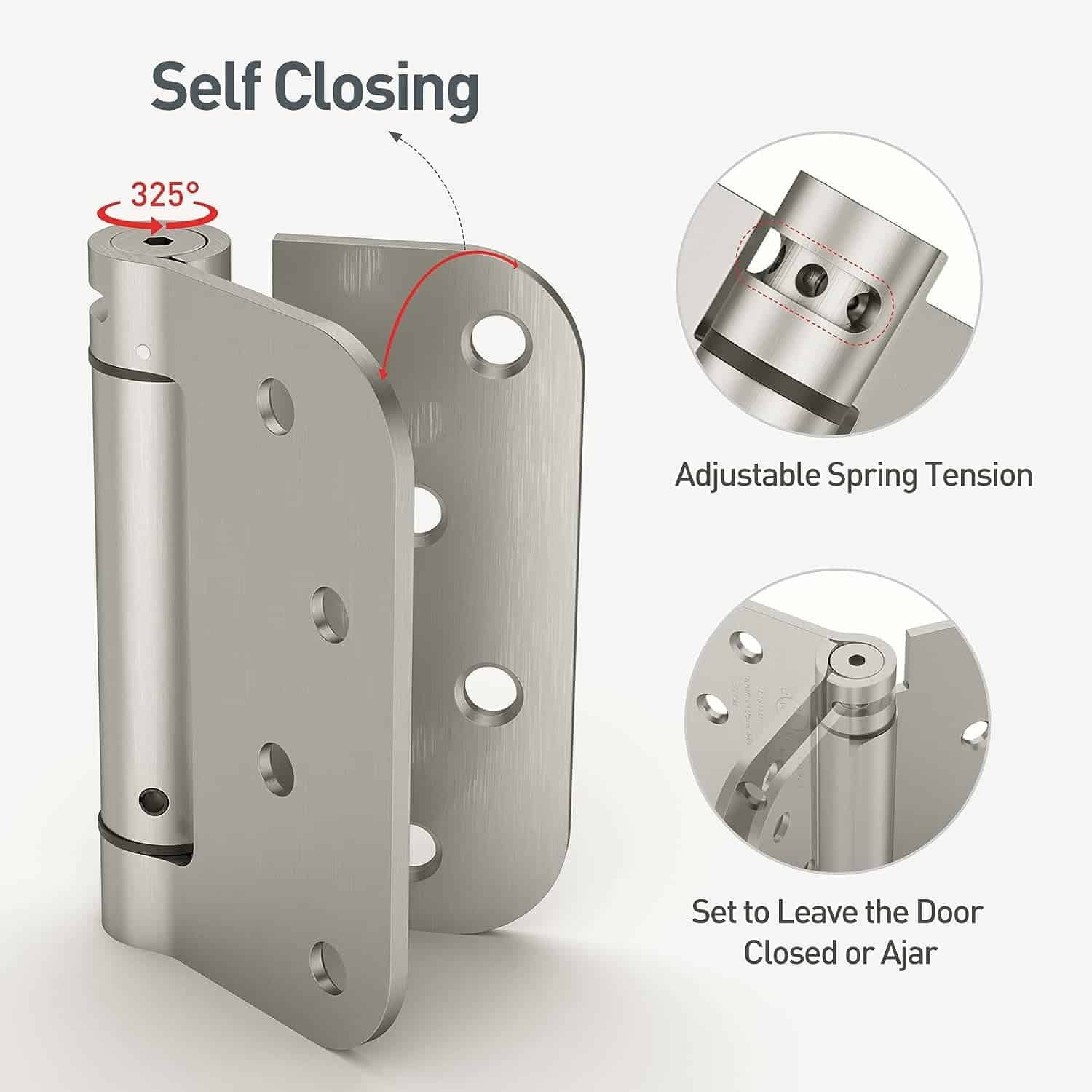
Many spring hinges use a coil spring around the hinge pin. When the door turns, the spring twists. Other designs use cams, pins, or compact spring mechanisms to create a similar result.
What Happens Inside a Spring-Loaded Hinge?
Inside a spring-loaded hinge, the spring connects the moving parts of the hinge. The exact design varies by brand and model, but the operating idea stays the same.
When the door opens, the hinge rotates away from its neutral position. This twists the spring. The spring then applies force in the opposite direction. That force pulls the door back toward the closed position.
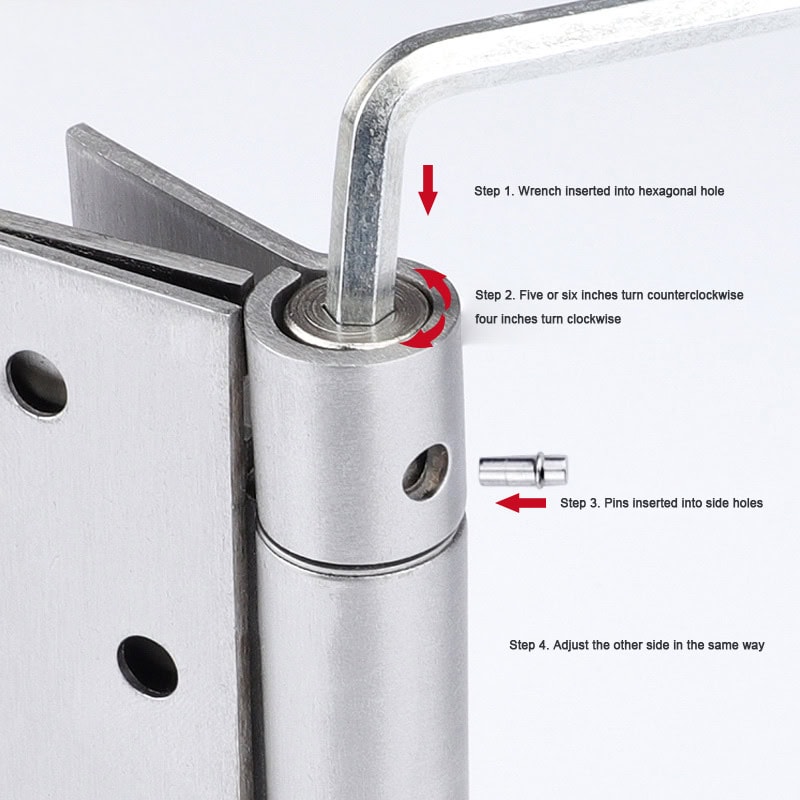
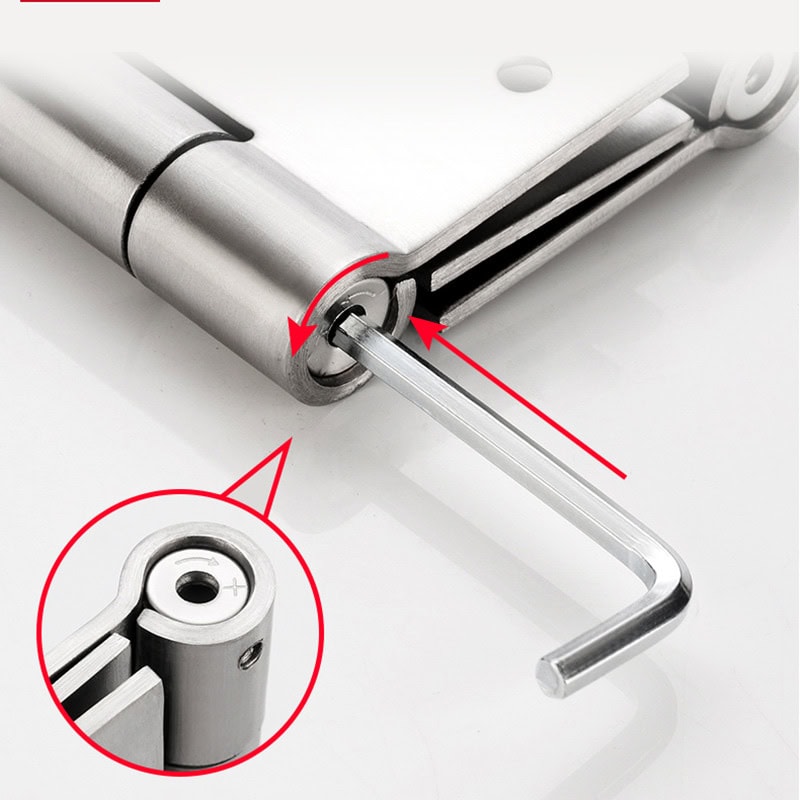
Some models include a tension adjustment. A small pin, screw, or tool can change how tightly the spring is wound. Higher tension may help a heavy door close. Lower tension may make the door easier to open.
Do not assume that more tension is always better. Excess tension can:
- Make the door hard to open
- Cause the door to slam
- Wear the hinge or screws
- Stress the door frame
- Prevent the latch from working smoothly
- Create a pinch hazard
A spring hinge may have a fixed spring force or an adjustable spring force. Read the manufacturer’s instructions before changing it.
Types of Self-Closing Door Hinges
Different hinge designs suit different doors and uses. The main choice is between a spring hinge, a continuous hinge with closing hardware, and a separate door closer.
Single-action spring hinges
These are common on interior doors. They usually allow the door to swing in one direction and then return to the frame.
They may work well for:
- Bedrooms
- Closets
- Utility rooms
- Small office doors
- Light interior doors
A single-action hinge is not the same as a double-action hinge. It normally controls movement in one swing direction.
Double-action spring hinges
A double-action hinge allows the door to swing both ways. The springs help return the door to a center or closed position.
These hinges are often used on:
- Kitchen doors
- Pantry doors
- Café-style doors
- Workshop doors
- Some commercial interior openings
Double-action hinges need proper alignment. If the center position is wrong, the door may stop short of the frame or swing past it.
Adjustable spring hinges
Adjustable models let the installer change spring tension. This can help match the hinge to the door’s weight and resistance.
Adjustment should be gradual. Test the door after each small change. The door should close firmly but not slam.
Self-closing gate or specialty hinges
Some gate hinges use springs, gravity, or a cam system. These are not always suitable for indoor doors.
Gate hinges often have different mounting needs and load limits. A gate hinge should not be used on a fire-rated or egress door unless the complete assembly is approved for that use.
Overhead door closers
An overhead closer is not a hinge, but people often compare the two. It mounts at the top of the door and frame. It uses a hydraulic or mechanical system to control the closing motion.
Compared with a spring hinge, an overhead closer often provides better control over:
- Closing speed
- Latch speed
- Backcheck
- Opening force
- Delayed closing
Use a door closer when controlled movement matters more than a simple, hidden closing function.

Do Self-Closing Hinges Control Door Speed?
Most basic self-closing hinges do not control speed as precisely as a hydraulic door closer.
A spring hinge mainly provides force. The door’s speed depends on the spring, friction, door weight, air pressure, and resistance from the frame or seal.
Some specialty hinges include damping features. These may slow the door near the end of its travel. Check the product specifications. Do not assume that every self-closing hinge has a damper.
If a door slams, the best fix may be a hydraulic door closer rather than less spring tension. Reducing tension too much can leave the door partly open.
How Many Self-Closing Hinges Does a Door Need?
The correct number depends on the door, hinge rating, manufacturer instructions, and local requirements.
A common residential setup uses three hinges on a standard door. Some doors use two hinges. Heavy, tall, wide, or high-use doors may need more support or a different hinge system.
Adding more self-closing hinges does not automatically improve performance. If each hinge applies closing force, the combined force may make the door difficult to open or cause it to slam.
Before installation, check:
- The door weight
- The door height and width
- The hinge size
- The hinge material
- The manufacturer’s load rating
- Whether all hinges should be self-closing
- Whether the door needs a listed fire-door assembly
- Whether the frame and screws can support the load
Use the manufacturer’s installation pattern. Some systems use one spring hinge with standard hinges. Others require two or more spring hinges.
How to Install a Self-Closing Door Hinge
Installation starts with a correctly fitted and aligned door. A self-closing hinge cannot solve a badly sagging door or a frame that is out of square.
Before you begin
Gather:
- The correct replacement hinges
- A screwdriver or drill
- A level
- A tape measure
- A hinge template, if supplied
- Manufacturer-approved screws
- A hinge adjustment tool, if required
Wear eye protection when removing old hardware. Support the door before removing its hinges. A door can be heavy and may fall without warning.
Installation steps
-
Confirm the hinge size and type.
Match the new hinge to the door thickness, frame, screw-hole pattern, swing direction, and load rating. -
Support the door.
Use a wedge or another safe support. Do not rely on one remaining hinge to hold the door. -
Remove one hinge at a time.
Keeping the other hinges attached can help preserve alignment. -
Attach the hinge leaves.
One leaf mounts to the door edge. The other mounts to the frame. Keep the hinge barrel aligned with the other hinges. -
Use suitable screws.
The screws must fit the hinge and provide enough grip in the frame. For some applications, longer screws may improve attachment, but use only screws approved for the door and frame. -
Check the door swing.
Open the door by hand. It should move without binding. -
Set spring tension slowly.
If the model is adjustable, follow its instructions. Make small changes. -
Test the closing action.
Release the door from several opening positions. It should move toward the frame and close without excessive speed. -
Check the latch.
The latch should enter the strike without rubbing or bouncing back. -
Check clearances.
Look for pinch points, rubbing, gaps, and contact with nearby walls or hardware.
Signs of a successful installation
The installation is likely working properly when:
- The door stays aligned with the frame
- The hinge does not bind
- The door closes from normal opening positions
- The latch engages without force
- The door does not slam
- The screws remain tight
- The door can still be opened with reasonable effort
Why Is My Self-Closing Door Not Closing?
A self-closing door that stays open usually has a mechanical, alignment, or resistance problem.
| Symptom | Possible cause | First check |
|---|---|---|
| Door stops before the frame | Weak spring, poor alignment, air pressure, or seal resistance | Open the door halfway and release it |
| Door slams | Too much spring tension or no speed control | Reduce tension only as the manual allows |
| Latch misses the strike | Door sag, frame movement, or misaligned strike | Check the gap and hinge screws |
| Door rubs the frame | Loose screws, warped door, or frame shift | Use a level and inspect hinge mounting |
| Door opens too easily but will not close | Spring may be under-tensioned or damaged | Inspect the adjustment system |
| Hinge makes noise | Dry bearing, dirt, or damaged parts | Follow the lubrication instructions |
| Door closes only partway | Seal pressure, floor slope, or hinge binding | Test with the latch and weather strip in mind |
A safe troubleshooting order
Start with the easiest and lowest-risk checks:
- Remove objects that block the door.
- Check whether the door rubs the frame.
- Tighten loose hinge screws.
- Inspect the strike and latch.
- Check weather stripping and door seals.
- Test the door with normal air movement.
- Adjust spring tension only if the instructions permit it.
- Replace the hinge if the spring or housing is damaged.
Do not force a stuck spring mechanism. A loaded spring can release suddenly. If the hinge is bent, cracked, or difficult to adjust, replace it or ask a qualified door hardware professional to inspect it.
Can a Self-Closing Hinge Be Used on a Fire Door?
Only use a self-closing hinge on a fire door when the complete door assembly permits it.
A fire-rated opening is not rated because of one hinge alone. The door, frame, hinges, latch, closer, seals, and installation must work as an approved assembly. The applicable requirements may depend on the building type, door location, fire rating, and local authority having jurisdiction.
In the United States, fire-door requirements can involve building codes, the International Building Code, the National Fire Protection Association’s NFPA 80, and product listings from recognized testing agencies. Requirements can change by location and application.
A spring hinge that closes an ordinary interior door is not automatically approved for a fire door. Look for the required listing and installation instructions. When in doubt, contact the building official, fire-door inspector, or a qualified commercial door contractor.
A fire door may also need to self-latch. Closing near the frame is not enough if the latch does not engage.

Self-Closing Hinges and Accessibility
A self-closing hinge adds resistance to opening. That resistance may affect accessibility.
For accessible routes in the United States, door opening force and closing behavior can be subject to the Americans with Disabilities Act Standards for Accessible Design and other applicable rules. The exact requirement depends on the door type, location, use, and whether an exception applies.
A hinge that feels acceptable on a closet door may be too strong for an accessible entrance. Do not adjust a commercial or public door based only on personal preference. Have the opening checked against the applicable standard.
For a public, commercial, or multifamily building, ask a qualified contractor or accessibility professional to verify:
- Opening force
- Closing speed
- Latch operation
- Threshold conditions
- Clear floor space
- Door width
- Egress requirements
How Long Do Self-Closing Hinges Last?
Service life depends on use, door weight, environment, installation, and maintenance. A hinge on a lightly used bedroom door may experience far less wear than one on a busy restroom or apartment entrance.
Inspect the hinge when you notice:
- A loose hinge pin
- Rust or corrosion
- Cracks
- Uneven gaps
- Squeaking
- Slow or incomplete closing
- A door that no longer latches
- Screws that keep loosening
Keep the hinge and surrounding area clean. Lubricate only if the manufacturer allows it. Some hinges use sealed parts or require a specific lubricant.
Replace a damaged spring hinge rather than trying to repair a sealed spring. A replacement should match the door’s size, weight, swing, finish, and use.
Spring Hinge or Door Closer: Which Should You Choose?
Choose a spring hinge when you need simple automatic closing and the door has modest control needs. Choose an overhead door closer when you need controlled speed, stronger adjustment, or commercial-grade performance.
| Need | Better starting option |
|---|---|
| Simple interior door closure | Spring hinge |
| Two-way kitchen or café door | Double-action spring hinge |
| Controlled closing speed | Hydraulic door closer |
| Heavy or high-use door | Rated commercial closer or hinge system |
| Fire-rated opening | Listed hardware approved for the full assembly |
| Accessible public opening | Hardware selected and adjusted to applicable requirements |
| Door that must stay open at times | A closer with an approved hold-open feature, where allowed |
The key trade-off is simplicity versus control. A spring hinge is compact and often easy to install. A door closer usually offers better control but needs more space, adjustment, and installation care.

Common Mistakes to Avoid
Avoid these mistakes when selecting or adjusting a self-closing hinge:
- Using a hinge that is too small. The door may sag or fail to close.
- Adding too much spring tension. The door may slam or become hard to open.
- Assuming closing means latching. The latch and strike must still align.
- Using ordinary hardware on a fire door. The full assembly must meet its required listing.
- Ignoring door alignment. A hinge cannot overcome severe rubbing or a warped frame.
- Installing too many spring hinges. Combined force may exceed what the door needs.
- Using the wrong screws. Poor attachment can loosen or damage the frame.
- Blocking a required exit. Never create a condition that prevents safe egress.
- Adjusting commercial hardware without checking requirements. Public doors may have code, accessibility, and life-safety limits.
If the door is part of an exit route, fire barrier, apartment corridor, school, health care facility, or public building, use the applicable local requirements before changing the hardware.
Frequently Asked Questions
Do self-closing hinges close a door all the way?
They can, if the spring has enough force and the door is properly aligned. A tight seal, door closer, floor slope, or damaged latch can stop the door before it fully closes.
Do self-closing hinges lock the door?
No. A hinge does not lock a door. It may move the door toward the frame, but a latch, lock, or other security hardware is still needed.
Can I make a self-closing hinge close faster?
Some adjustable models allow tension changes. Follow the instructions and make small adjustments. If the hinge has no speed-control feature, a hydraulic door closer may be a safer solution than increasing spring tension.
Can I use one self-closing hinge with regular hinges?
Many door systems allow this, but the correct setup depends on the hinge maker and the door. Follow the manufacturer’s installation instructions rather than assuming that one arrangement fits every door.
Why does my door close but not latch?
The door may be sagging, the strike may be misaligned, the spring may be weak, or the latch may have too much friction. Check alignment first. Do not increase spring tension until you know the door and frame are correctly fitted.
Are self-closing hinges required on every door?
No. Requirements depend on the building, door location, use, fire rating, and local code. A fire door or public entrance may need specific listed hardware, while a typical interior home door may not.
Sources and Standards to Check
For a U.S. project, use the product instructions and the rules that apply to the specific opening. Useful sources include:
- NFPA 80: Standard for Fire Doors and Other Opening Protectives
- ADA Standards for Accessible Design
- BHMA Standards and Certification
- UL Solutions Door and Hardware Information
- The hinge manufacturer’s installation and adjustment instructions
- Your local building department or authority having jurisdiction
These sources address different issues. A manufacturer’s instructions explain how a specific hinge works. A code or standard may determine whether that hinge is suitable for a particular door.
Conclusion
Self-closing door hinges work by storing energy as the door opens and releasing it to turn the door back toward the frame. Spring tension, door weight, alignment, seals, and air pressure all affect the result.
For a light interior door, a correctly sized spring hinge may provide simple and reliable closing. For a heavy, public, accessible, high-use, or fire-rated door, a listed door closer or approved hardware assembly may be the better choice.
Before adjusting or replacing one, identify the door’s use and requirements. Then match the hinge to the door, set the tension carefully, and confirm that the door closes, latches, and remains safe to use.




One Comment