
A safe medicine cabinet should help you find the right product quickly, keep medicines dry and labeled, and prevent children, pets, and visitors from reaching them. In a U.S. home, the best system is simple: sort medicines by use, remove expired products, store each item as its label directs, and keep urgent medicines easy for responsible adults to find.
Introduction
Many American homes store medicines in a bathroom cabinet. That may seem convenient, but heat and humidity from showers can damage some products. A cool, dry place away from sinks, windows, children, and pets is often better. Always follow the storage instructions on the package or prescription label.
A good medicine cabinet is not just tidy. It also lowers the risk of taking the wrong product, using an expired medicine, or mixing products with the same active ingredient.

What You Need Before You Start
Gather these items before you remove everything from the cabinet:
- A clean table or counter
- A trash bag for empty packaging
- A small box for medicines that need disposal
- A marker or labels
- A current list of prescription medicines
- A separate container for first-aid supplies
- A lockbox if children, teens, guests, or pets may reach the medicines
- A list of emergency numbers
Do not sort medicines over a sink or near food. Keep children and pets out of the area until the job is done.
You may also want a phone or notebook for recording:
- Medicine name
- Strength
- Dose
- How often it is taken
- Prescribing clinician
- Pharmacy name and phone number
- Refill details
- Known allergies or medicine warnings
The list should support the labels, not replace them. If the label is unclear, call the pharmacy before using the medicine.

Step 1: Take Everything Out and Group Similar Items
Remove every medicine and health product from the cabinet. Check drawers, baskets, travel bags, and nearby shelves so you do not organize only part of your supply.
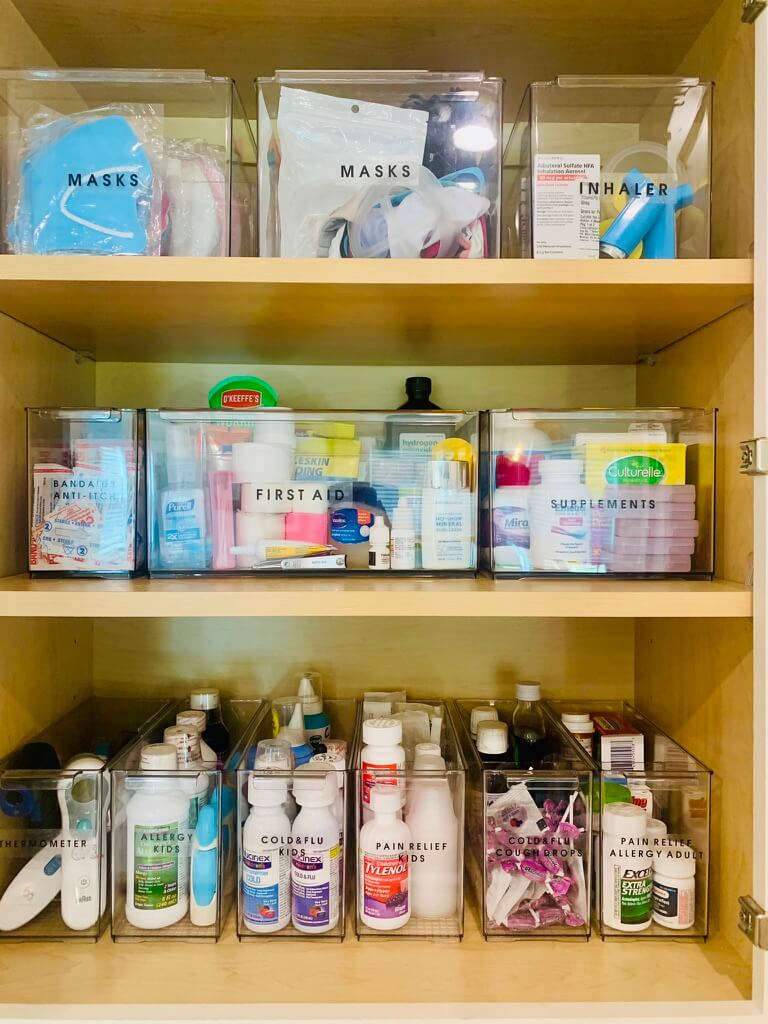
Place items into clear groups:
- Daily prescription medicines
- As-needed prescription medicines
- Common over-the-counter medicines
- First-aid supplies
- Cold, allergy, and cough products
- Pain and fever medicines
- Stomach and bowel products
- Skin creams and ointments
- Vitamins and supplements
- Medicines for children
- Pet medicines
- Items that need special storage or disposal
Keep pet medicines separate from human medicines. Some human medicines can seriously harm animals, and pet products may have different directions and strengths.
Do not combine loose pills in one container. Even if two pills look alike, they may have different ingredients or doses.
Step 2: Check Every Medicine Before Putting It Back
Inspect each product one at a time. Keep it only if you can identify it and understand how it should be used.
Check the following:
- Medicine name
- Active ingredient
- Strength
- Expiration date
- Prescription label
- Seal or package condition
- Storage instructions
- Color, smell, or texture changes
- Whether the medicine belongs to someone in the home
Do not use a product if the label is missing or unreadable. Ask a pharmacist how to identify or replace it.
An expiration date tells you how long the manufacturer supports the product’s strength, quality, and purity under stated storage conditions. After that date, the medicine may not work as intended. It may also have changed in appearance or quality.
Do not rely on sight alone. A medicine can look normal and still be unsuitable after its expiration date.
Pay special attention to liquid medicines
Liquid medicines may have a shorter usable period after opening. Some antibiotics prepared by a pharmacy may have a “discard after” date that is earlier than the printed expiration date.
Write the date opened on products such as:
- Eye drops
- Creams
- Liquid antibiotics
- Insulin or other injectable medicines
- Liquid children’s medicines
- Nasal sprays
The product label or pharmacist can tell you when an opened medicine must be discarded.
Separate medicines that look alike
Store medicines with similar names or packaging apart from each other. This helps prevent mix-ups between products such as:
- Acetaminophen and ibuprofen
- Immediate-release and extended-release tablets
- Adult and children’s products
- Different strengths of the same prescription
- Eye drops and ear drops
- Prescription medicines with similar names
Use the full product name and strength when speaking with a pharmacist or clinician.
Step 3: Create Simple Storage Zones
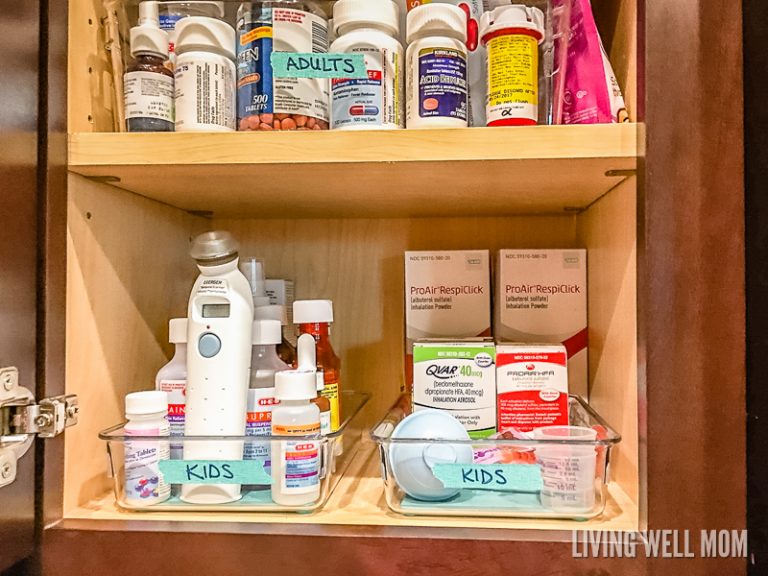
Use labeled bins or shelves so each item has one clear home. The best layout depends on the people in your household, but this basic plan works well:
| Storage zone | What belongs there | Key rule |
|---|---|---|
| Daily medicines | Current prescriptions and routine medicines | Keep in original labeled containers |
| First aid | Bandages, gauze, antiseptic, gloves | Keep separate from pills |
| Pain and fever | Products for adults and children | Check active ingredients |
| Allergy and cold care | Antihistamines, sprays, cough products | Keep sedating products clearly marked |
| Stomach care | Antacids, oral rehydration products, laxatives | Follow age and dose limits |
| Skin care | Creams, ointments, burn care | Keep away from food and heat |
| Travel or backup supplies | Small, current quantities | Review them often |
| Disposal box | Expired, recalled, or unidentified products | Keep closed and out of reach |
Use separate bins for adult and children’s medicines. A red or bright label can help identify products that require extra care, but labels do not replace reading the package.
Keep measuring syringes, cups, and spoons with the medicine they belong to when possible. Do not use a kitchen spoon to measure liquid medicine. Household spoons vary in size.
Keep medicines in original containers
Original containers include the drug name, strength, directions, expiration date, and other safety information. They also reduce the chance of confusing one medicine with another.
A weekly pill organizer may help some adults manage routine doses. However, do not move medicines into an organizer if the label says to keep them in the original container, protect them from light or moisture, or use special handling. Ask a pharmacist when you are unsure.
Step 4: Choose a Safer Location
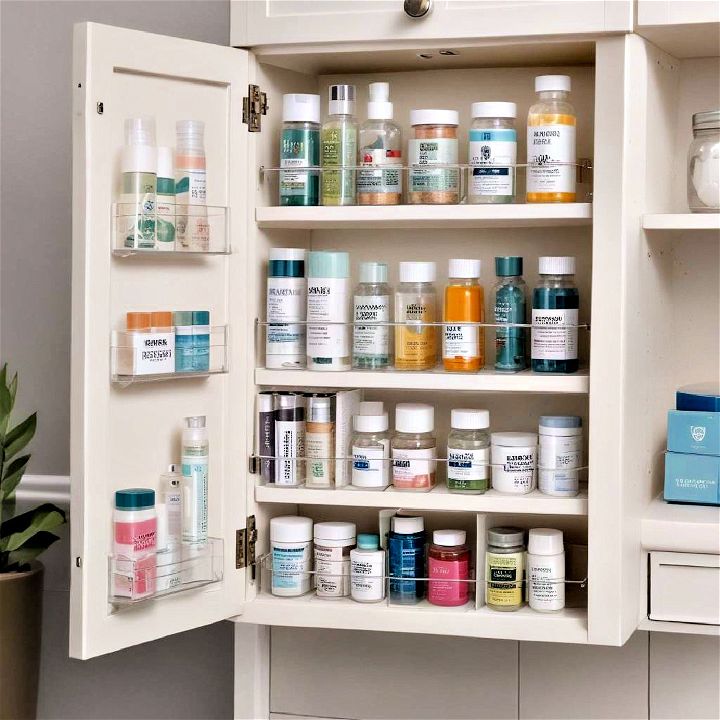
The bathroom medicine cabinet is often not the best place for medicines. Steam, heat, and moisture may affect tablets, capsules, powders, creams, and devices.
Choose a location that is:
- Cool and dry
- Away from direct sunlight
- Away from a stove, radiator, or heating vent
- Out of sight and reach of children
- Inaccessible to pets
- Easy for the intended adult or caregiver to access
- Separate from cleaning products and chemicals
A high shelf alone may not be enough. Young children can climb, and older children may know how to move a chair. The American Academy of Pediatrics recommends storing medicines up and away, and using a locked location when appropriate.
Use a lock when risk is present
A lockbox or locked cabinet may be appropriate when the home includes:
- Young children
- Teens who may misuse medicines
- Visitors or caregivers
- A person with memory loss
- A person at risk of accidental or intentional overdose
- Pets that can open cabinets
Do not lock away emergency medicines so tightly that an adult cannot reach them in time. Keep a responsible caregiver informed about the location and access method.
Step 5: Store Special Medicines Correctly
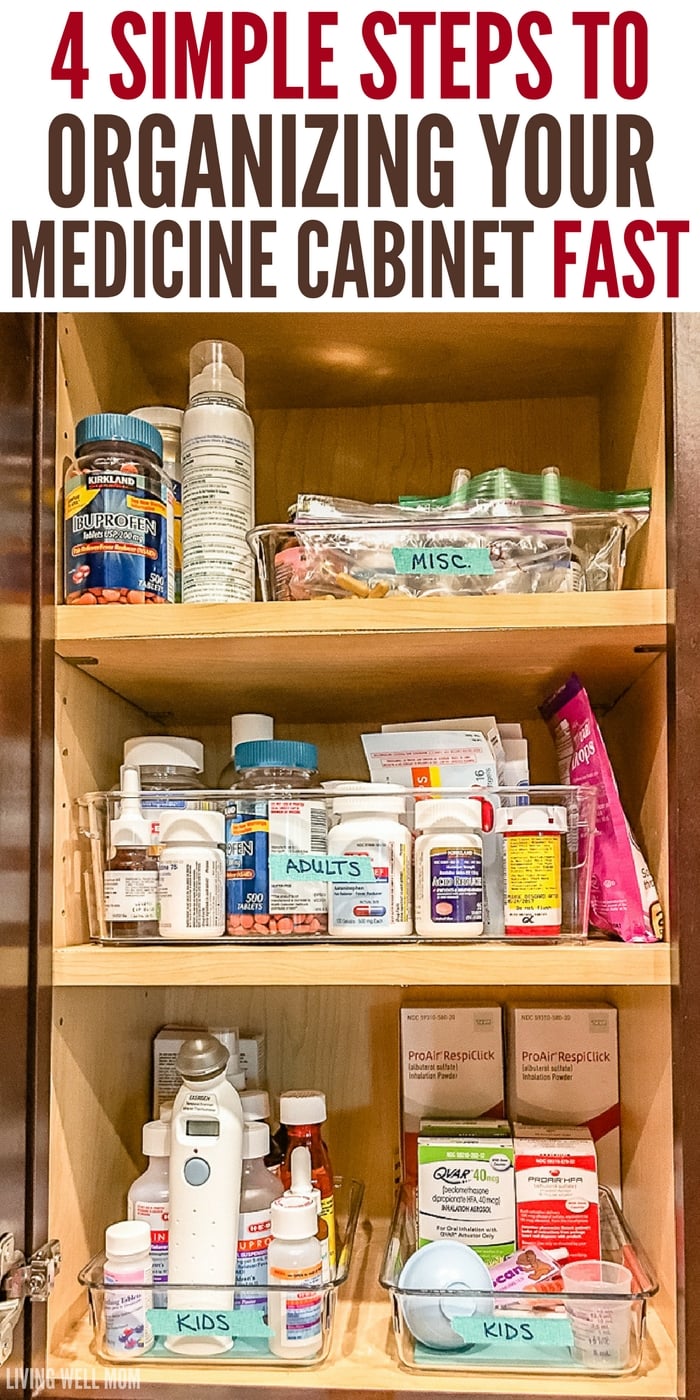
Some medicines need more care than ordinary tablets. Follow the exact label and ask a pharmacist if the instructions conflict with your usual storage plan.
Refrigerated medicines
Store medicines in the refrigerator only when the label says to do so. Do not freeze them unless the product instructions allow it.
Keep refrigerated medicines:
- In their original package
- Away from the freezer compartment
- Away from the refrigerator door when possible
- In a place where children cannot reach them
If the power goes out or a medicine freezes by mistake, call the pharmacy or manufacturer before using it.
Medicines that need protection from light
Some medicines must stay in an amber bottle or another protective package. Do not transfer them to a clear container unless a pharmacist confirms that it is safe.
Inhalers, injections, and medical devices
Keep inhalers, injectable medicines, testing supplies, and other devices with their instructions. Check expiration dates and replacement schedules. Some devices need cleaning or new batteries.
Controlled substances
Prescription opioids, stimulants, sedatives, and other controlled medicines deserve extra care. Keep them secured, do not share them, and never save leftover doses for another person. Ask a pharmacy or use an authorized drug take-back site for disposal.

Step 6: Dispose of Expired and Unwanted Medicines Safely
Do not keep unwanted medicines “just in case.” Extra supplies increase the chance of accidental use, confusion, theft, or misuse.
The U.S. Food and Drug Administration recommends using a drug take-back option when one is available. Many pharmacies, police departments, and community sites participate in the Drug Enforcement Administration’s National Prescription Drug Take Back program.
For medicines that cannot be taken to a collection site:
- Check the FDA flush list.
- If the medicine is not on that list, follow FDA disposal instructions.
- Remove personal information from prescription labels when preparing containers for disposal.
- Do not give medicine to another person.
The FDA flush list applies only to specific medicines that may pose a serious danger from accidental exposure and for which a take-back option may not be readily available. Do not flush medicines simply because they are old.
Keep unwanted medicines in a closed container away from children and pets until disposal is complete.
Handle needles and lancets separately
Do not place loose needles, syringes, or lancets in household trash or recycling. Put used sharps in an FDA-cleared sharps disposal container or follow your state and local disposal rules.

Step 7: Build a Medicine List for Emergencies
A well-organized cabinet should support emergency care. Keep an updated medicine list in a known location, such as on the refrigerator, with a caregiver, or in a secure digital record.
Include:
- Medicine and active ingredient
- Strength
- Dose and schedule
- Reason for use
- Allergies
- Prescribing clinician
- Pharmacy contact information
- Emergency contact details
Review the list after a hospital visit, new prescription, dose change, or discontinued medicine.
For urgent questions about a possible poisoning in the United States, call Poison Control at 1-800-222-1222 or use the service at PoisonControl.org. Call 911 for trouble breathing, collapse, seizures, severe confusion, or an unresponsive person.
Do not wait for symptoms if a child may have swallowed medicine. Do not make someone vomit unless a medical professional tells you to do so.

How Often Should You Organize a Medicine Cabinet?
Review the cabinet at least twice a year and whenever someone’s medicines change. A useful schedule is:
- Monthly: Check daily medicines, open liquids, and emergency supplies.
- Every three to six months: Check expiration dates and remove products no longer needed.
- After a move: Recheck storage conditions and labels.
- After a hospital stay: Update the medicine list and discard stopped medicines after confirming with a pharmacist or clinician.
- After a recall notice: Follow the recall instructions right away.
Do not stop a prescription medicine only because it is hard to organize or because you are unsure about the label. Call the prescriber or pharmacist first.

Common Medicine Cabinet Mistakes to Avoid
Avoid these habits:
- Keeping medicines in a hot, steamy bathroom
- Mixing different pills in one bottle
- Using a kitchen spoon for liquid medicine
- Saving old antibiotics for future illness
- Sharing prescription medicines
- Treating “child-resistant” as “childproof”
- Leaving medicines in a purse, backpack, or car
- Keeping medicines beside cleaning chemicals
- Throwing needles into a trash bag
- Flushing every expired medicine
- Taking two products with the same active ingredient
- Removing labels from prescription bottles before the medicine is disposed of
- Moving medicines to a new container without checking storage needs
Read the “Drug Facts” label on over-the-counter products. The active ingredient section is especially useful. For example, several cold, flu, and pain products may contain acetaminophen. Taking more than one such product can lead to an unsafe total dose.
When two products might overlap, ask a pharmacist rather than guessing.

Key Takeaways
- Store medicines in a cool, dry place, not automatically in the bathroom.
- Keep prescription and over-the-counter products in their original labeled containers.
- Separate adult, child, pet, first-aid, and disposal supplies.
- Check expiration dates, opened-product dates, labels, and storage instructions.
- Lock medicines when children, pets, visitors, or misuse risks are present.
- Use drug take-back programs whenever possible.
- Keep sharps out of household trash and recycling.
- Maintain an up-to-date medicine list.
- Call Poison Control at 1-800-222-1222 for possible poisoning in the United States.
Frequently Asked Questions
Should medicines be stored in the bathroom?
Usually, a cool, dry location outside the bathroom is better. Heat and humidity may affect some medicines. Follow the product label if it gives different instructions.
Can I put all my pills in one organizer?
Not always. Some medicines need their original container, light protection, moisture protection, or special handling. Ask a pharmacist before moving a medicine into a pill organizer.
How do I organize children’s medicines?
Keep children’s medicines in a separate, clearly labeled bin. Store them out of sight and reach, preferably in a locked location. Use the measuring device supplied with the product and check the child’s age and weight directions.
What should I do with expired prescription medicine?
Use a pharmacy or community drug take-back site when available. If that is not possible, check the FDA disposal instructions and flush list. Do not share the medicine or keep it for another person.
What if I cannot identify a pill?
Do not take it. Keep it separate from usable medicines and ask a pharmacist about identification or disposal. A missing label is a safety problem.
Where should emergency medicines go?
Keep them where the responsible adult or caregiver can reach them quickly. If children or others may misuse them, use secure storage while making sure authorized adults know how to access them.
Conclusion
Organizing a medicine cabinet at home takes less time when you use a repeatable system: remove everything, check each item, group medicines by purpose, store them in a cool and secure place, and dispose of unwanted products safely. The final test is simple: an adult should be able to find the correct medicine and read its instructions without confusion.
Start with one cabinet today. Remove expired or unidentified products, move medicines away from heat and moisture, and create a current medicine list before putting everything back.


One Comment