
Clean kitchen rugs by vacuuming, spot treating stains, washing safely, and drying them fully to prevent odors and mold.
Kitchen rugs face more than daily dust. They collect crumbs, grease, drink spills, pet hair, and moisture near sinks and stoves. Learning how to clean kitchen rugs the right way protects the fibers, keeps your floor sanitary, and helps the rug last longer. This guide explains safe methods for washable, woven, rubber-backed, and delicate rugs, with practical tips drawn from real household cleaning routines.
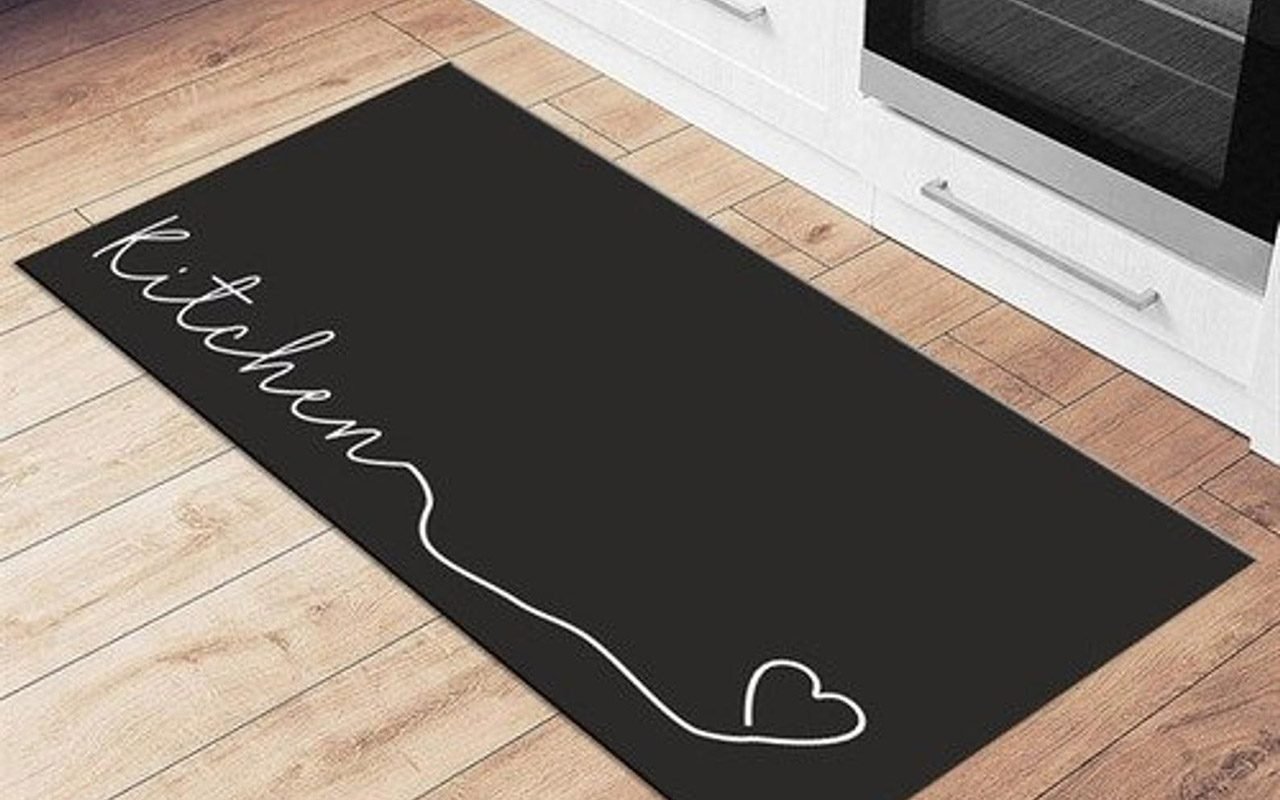
Why Kitchen Rugs Need Regular Cleaning
Kitchen rugs work hard. They catch water by the sink, crumbs under the table, and oil near the stove. Over time, this mix can create stains, sticky fibers, bad smells, and hidden bacteria.
A rug may look clean on top while dirt sits deep in the pile. Food crumbs can also attract ants and other pests. Regular cleaning keeps small messes from becoming hard, set-in stains.
How often you clean depends on the rug and your kitchen habits:
- Vacuum or shake the rug two to three times each week.
- Spot clean spills as soon as they happen.
- Wash washable rugs every two to four weeks.
- Deep clean rugs in busy kitchens at least once each month.
- Clean rugs near pet bowls or trash cans more often.
A simple habit makes a major difference: clean spills while they are still wet. Fresh spills are easier to lift because they have not bonded with the fibers.

Check the Rug Label Before Cleaning
Before learning how to clean kitchen rugs, check the care label. The label may state whether the rug is machine washable, safe for cold water, or suitable only for professional cleaning.
If there is no label, inspect the rug carefully. Identify the material, backing, color, and weave. Each part affects the cleaning method.
Common kitchen rug types include:
- Cotton rugs: These are often machine washable and easy to air-dry.
- Polyester rugs: These usually resist stains and tolerate gentle washing.
- Wool rugs: These need mild products, cool water, and careful drying.
- Jute or sisal rugs: These can shrink, stain, or become weak when wet.
- Rubber-backed rugs: These need low heat and gentle handling because heat can crack the backing.
- Memory foam mats: These often need hand washing or a gentle machine cycle.
- Vintage or handmade rugs: These may need professional cleaning.
Test any cleaner on a hidden corner first. Wait until the spot dries before checking for color loss or texture changes.
Never assume that a waterproof backing means the whole rug is washable. Water can still damage the fibers, glue, or floor beneath it.

What You Need to Clean Kitchen Rugs
You do not need a large collection of products. Simple tools are often safer and more effective than strong chemicals.
Gather these supplies:
- A vacuum with a brush or upholstery attachment
- A soft-bristled brush
- White microfiber cloths
- Mild dish soap or gentle laundry detergent
- A bowl of cool or lukewarm water
- Baking soda for dry odor control
- A dull spoon for lifting solid spills
- A clean towel for blotting
- A fan or drying rack
Avoid chlorine bleach unless the care label clearly allows it. Bleach can remove color, weaken fibers, and damage rubber or latex backing. Also avoid mixing cleaning products, especially bleach with ammonia or acidic cleaners.
When learning how to clean kitchen rugs, use less soap than you think you need. Too much detergent can leave a sticky film that attracts more dirt.

How to Clean Kitchen Rugs Step by Step
The safest cleaning process has four stages: remove dry dirt, treat stains, wash gently, and dry completely.
1. Remove loose dirt
Take the rug outdoors if possible. Shake it gently or tap it against a clean railing. Do not beat delicate rugs, since this can damage the weave.
Next, vacuum both sides. Start with the back to loosen grit trapped below. Then vacuum the top slowly, moving in different directions.
For a small rug, use an upholstery attachment. A strong rotating brush may pull loops or fringe.
2. Treat stains before washing
Use a spoon to lift food, mud, or thick spills. Work from the outside of the stain toward the center. This helps stop the mark from spreading.
Mix a few drops of mild dish soap with cool water. Dampen a cloth, wring it out, and blot the stain. Do not soak the rug unless the care label permits full washing.
Grease needs a slightly different approach. Sprinkle a small amount of baking soda or cornstarch over fresh grease. Let it sit for 15 to 30 minutes, then vacuum it up. Follow with a small amount of diluted dish soap.
3. Wash the rug safely
For a machine-washable rug, follow the label. Use cold water and a gentle cycle. Wash the rug alone or with similar soft items to keep the load balanced.
Use a small amount of mild detergent. Skip fabric softener because it can coat fibers and reduce absorbency. Never overload the washer.
For hand washing, place the rug in a tub or clean outdoor area. Apply cool water and a small amount of gentle detergent. Press the water through the rug instead of twisting it.
4. Rinse well
Soap residue can make a rug feel stiff or tacky. Rinse until the water runs clear and no slippery film remains.
A good rinse is one of the most important parts of how to clean kitchen rugs. Leftover detergent can attract dust and may irritate sensitive skin.
5. Dry the rug completely
Press out water with clean towels. Do not wring rubber-backed, wool, or delicate rugs.
Lay the rug flat in a well-ventilated place. Turn it over during drying so both sides receive air. A fan can speed up drying without adding heat.
Do not put a damp rug back on the floor. Moisture trapped under the backing can cause mildew, floor damage, or a musty smell.
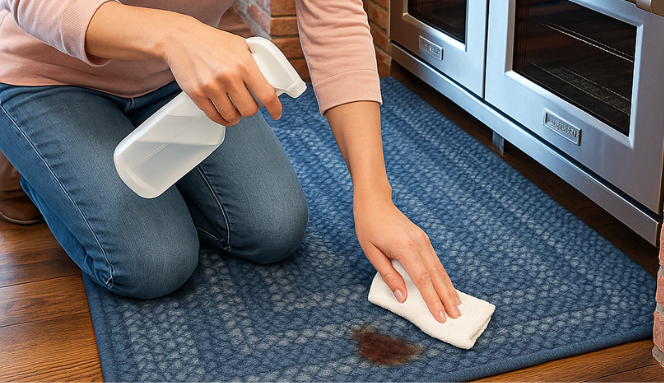
How to Remove Common Kitchen Rug Stains
Different stains respond to different methods. Always blot first and scrub gently.
Grease and cooking oil
Cover the fresh spot with baking soda or cornstarch. Leave it for 15 to 30 minutes, then vacuum. Blot with diluted dish soap and cool water.
Repeat if needed. Do not rub hard, since rubbing can push oil deeper into the pile.
Coffee, tea, and juice
Blot the liquid with a dry cloth. Then use a cloth dampened with cool water and a small amount of mild detergent.
Avoid hot water at first. Heat can set some food and drink stains, especially those containing milk or sugar.
Tomato sauce
Lift thick sauce with a spoon. Blot with cool water and mild detergent. Work slowly from the outer edge toward the middle.
Some red sauces contain strong pigments. If the stain remains, use a fabric-safe stain remover only after testing a hidden area.
Mud
Let the mud dry first. Vacuum or brush away the loose dirt. Cleaning wet mud too soon can spread it through the fibers.
Once the dry soil is gone, blot the remaining mark with mild soap and water.
Pet urine
Blot as much liquid as possible with towels. Use an enzyme cleaner labeled safe for the rug material. Enzyme products can help break down the organic compounds that cause odor.
Follow the product directions closely. Some enzyme cleaners need time to work, while others may not suit wool or natural fibers.
Sticky food
Place a small ice pack in a plastic bag over the spot for a few minutes. Once the food hardens, lift it with a dull spoon.
Clean the remaining film with diluted dish soap. Rinse the area with a damp cloth and dry it well.

How to Clean Rubber-Backed Kitchen Rugs
Rubber-backed rugs need special care. Heat, harsh chemicals, and aggressive scrubbing can cause the backing to crack, peel, or crumble.
Start by vacuuming both sides. Spot clean with cool water and mild soap. Use a soft cloth instead of a stiff brush.
If the label allows machine washing, choose a gentle cycle and cold water. Air-dry the rug flat. Do not use a dryer unless the manufacturer clearly approves it.
Inspect the floor before replacing the rug. If the backing has become brittle or sticky, replace the rug. A damaged backing can mark vinyl, wood, or laminate flooring.
One practical lesson is worth remembering: never fold a wet rubber-backed rug for storage. Moisture can stay trapped in the folds and create a strong mildew smell.
How to Clean Delicate and Natural-Fiber Rugs
Wool, jute, sisal, bamboo, and handmade rugs require a lighter touch. Too much water can cause shrinkage, color bleeding, stiffness, or fiber damage.
For these rugs:
- Vacuum gently without a rotating brush.
- Blot spills right away.
- Use very little water.
- Avoid soaking the rug.
- Keep natural-fiber rugs away from strong sunlight while wet.
- Use a professional rug cleaner for large, valuable, or badly stained pieces.
Jute and sisal can develop dark water marks because plant fibers absorb moisture unevenly. For that reason, full wet cleaning at home may do more harm than good.
Wool can also release some natural color during cleaning. A hidden-area test is essential. If the color transfers to a white cloth, stop and seek professional advice.

How to Remove Odors From Kitchen Rugs
Odors often come from trapped food, grease, pet accidents, or moisture beneath the rug. Cleaning only the top may not solve the problem.
First, vacuum the rug and the floor beneath it. Sprinkle a light layer of baking soda over a dry, colorfast rug. Let it sit for several hours, then vacuum slowly.
For washable rugs, laundering and complete drying usually work better than fragrance sprays. Scented products may cover an odor without removing its source.
If a musty smell returns after cleaning, check for moisture under the rug or damage to the backing. A rug that stays damp may need replacement.
Never apply baking soda to a wet rug. It can become difficult to remove and may form a paste in the fibers.

Mistakes to Avoid When Cleaning Kitchen Rugs
Even careful cleaning can go wrong when the method does not match the rug.
Avoid these common mistakes:
- Using hot water on an unknown stain
- Scrubbing hard and spreading the stain
- Applying too much detergent
- Ignoring the care label
- Drying a rubber-backed rug with high heat
- Putting a damp rug back on the floor
- Using bleach on colored fibers
- Mixing cleaning chemicals
- Cleaning a large natural-fiber rug with too much water
- Skipping a colorfastness test
One mistake I see often is focusing on the stain while ignoring the rug backing. The top may look perfect, but cracked latex or trapped moisture can still damage the floor.
Another common error is rushing the drying stage. Drying is not an extra step. It is part of how to clean kitchen rugs safely.
How to Keep Kitchen Rugs Cleaner for Longer
Deep cleaning is easier when daily care limits the amount of dirt that enters the rug.
Use these simple habits:
- Place a washable mat near the sink and stove.
- Keep a small cloth near cooking areas for quick spills.
- Vacuum high-traffic spots often.
- Rotate the rug every few weeks to reduce uneven wear.
- Use a rug pad that allows airflow.
- Wash pet bowls on a separate tray.
- Keep the rug away from standing water.
- Remove shoes before walking across the rug.
- Clean spills before they dry.
Choose a rug with a low pile for busy kitchens. Low-pile rugs dry faster and do not trap as much food as thick shag rugs.
Washable cotton and synthetic rugs are often the most practical choice for homes with children, pets, or frequent cooking. Natural-fiber rugs can look beautiful, but they need more careful maintenance.
How Often Should You Clean Kitchen Rugs?
The right schedule depends on use, not just appearance. A rug in a rarely used kitchen may need less care than one beside a busy sink.
A simple schedule looks like this:
- Daily: Blot spills and remove visible crumbs.
- Two or three times weekly: Vacuum the top and bottom.
- Weekly: Check for stains, dampness, and damaged backing.
- Every two to four weeks: Wash washable rugs.
- Monthly: Deep clean or inspect rugs in busy areas.
- Immediately: Clean pet accidents, raw meat juice, milk, and greasy spills.
Homes with pets, young children, allergies, or heavy cooking may need more frequent cleaning. If the rug smells bad soon after washing, inspect the padding, floor, and backing instead of simply washing it again.
Frequently Asked Questions About How to Clean Kitchen Rugs
Can I put a kitchen rug in the washing machine?
You can machine wash a kitchen rug only when its care label allows it. Use cold water, a gentle cycle, mild detergent, and air-dry the rug unless the label says otherwise.
What is the best cleaner for kitchen rugs?
Mild dish soap or gentle laundry detergent works for many washable rugs. Always test the cleaner in a hidden area, and use a material-specific product for wool, jute, or delicate rugs.
How do I clean a kitchen rug without a washing machine?
Vacuum the rug, blot stains with diluted mild soap, rinse with a damp cloth, and dry it flat with good airflow. Avoid soaking rugs that are not designed for full wet cleaning.
How do I get grease out of a kitchen rug?
Sprinkle baking soda or cornstarch over fresh grease and let it absorb the oil. Vacuum it up, then blot the area with diluted dish soap and cool water.
Can I use bleach on a kitchen rug?
Bleach is usually not recommended because it can remove color and weaken fibers or backing. Use it only if the care label clearly approves it and never mix it with other cleaners.
How do I stop a kitchen rug from smelling musty?
Clean the rug and dry both sides completely. Also inspect the floor and rug backing for trapped moisture, since the odor may return if the source remains damp.
How often should I wash kitchen rugs?
Many washable kitchen rugs benefit from washing every two to four weeks. Clean them sooner if they are near food preparation areas, pet bowls, or a frequently used sink.
Conclusion
The best way to clean kitchen rugs is to match the method to the material. Vacuum often, treat spills quickly, use mild soap, avoid excess water, and dry every part of the rug fully. Pay special attention to rubber backing, natural fibers, and hidden moisture.
A few minutes of routine care can prevent stains from becoming permanent and odors from settling in. Check your rug label today, clean one problem area, and build a simple washing schedule that fits your kitchen. Share your favorite rug-cleaning tip or explore more practical home-care guides for a cleaner, safer home.




One Comment