
Clean hard water in a dishwasher with citric acid, vinegar, a filter wash, and regular descaling.
Mineral-rich water can leave white film, cloudy glasses, blocked spray holes, and rough deposits inside your machine. I have found that the best results come from treating both the dishwasher and the water supply, not just wiping away visible scale. This guide explains how to clean hard water in dishwasher systems safely, using simple steps that protect the appliance and improve cleaning performance.
What hard water does to a dishwasher
Hard water contains dissolved minerals, mainly calcium and magnesium. These minerals are harmless to drink, but they can form scale when heated and dried inside a dishwasher.
Over time, hard water may cause:
• White spots on glasses and plates
• A chalky film on the tub
• Clogged spray-arm holes
• Scale around the heating element
• Poor detergent performance
• Cloudy glassware
• A musty smell from trapped food and mineral buildup
• Slow filling or draining in severe cases
Think of mineral scale as a thin shell that grows a little after every wash. A small amount is easy to remove. A thick layer can reduce water flow and make the dishwasher work harder.
The first step in learning how to clean hard water in dishwasher appliances is to identify the type of buildup. A soft white film often responds to vinegar or citric acid. Thick, rough scale may need a commercial dishwasher descaler approved for your machine.

How to clean hard water in dishwasher step by step
Before cleaning, empty the dishwasher and remove the bottom rack. Check the owner’s manual for warnings about vinegar, citric acid, or commercial descaling products. Some manufacturers allow mild acids, while others recommend only their own cleaner.
1. Remove and wash the filter
Most modern dishwashers have a removable filter near the bottom of the tub.
- Turn off the dishwasher.
- Remove the bottom rack.
- Twist or lift out the filter as shown in the manual.
- Rinse it under warm water.
- Use a soft brush to remove food and scale.
- Reinstall the filter firmly.
Do not use a sharp knife or metal brush. Scratches can damage the filter and trap more debris.
2. Clear the spray arms
Mineral scale can block the small spray holes. Remove the spray arms if your manual allows it. Rinse them and gently clear each hole with a wooden toothpick or soft brush.
Do not push debris deeper into the arm. Shake the arm lightly and rinse it until water flows freely through all openings.
3. Wipe the door and tub
Mix warm water with a small amount of dish soap. Wipe the door edges, detergent dispenser, tub walls, and rubber gasket.
For white scale, use a cloth dampened with diluted white vinegar only if your manufacturer permits it. Never pour undiluted vinegar into rubber seals or leave it sitting on metal parts for a long time.
4. Run a citric acid cleaning cycle
Citric acid is often effective against calcium deposits. Use a dishwasher cleaner that contains citric acid, or use powdered citric acid only when the product label and appliance manual allow it.
A typical process is:
- Place the recommended amount of cleaner in the detergent cup or tub.
- Run the hottest empty cycle.
- Let the cycle finish completely.
- Run a second short rinse if any odor or residue remains.
Never mix citric acid, vinegar, bleach, or other cleaners. Chemical mixtures can create harmful fumes or damage the appliance.
5. Inspect the heating area
After the cycle, check the bottom of the tub. If the heating element has a thick crust, do not scrape it while hot. Large deposits may need a professional service visit, especially if the element looks cracked, discolored, or damaged.
This process is one of the safest ways to clean hard water in dishwasher interiors without using harsh abrasives.
How to remove hard water stains from dishwasher dishes
Cleaning the machine alone may not remove old stains from glassware. Mineral spots on dishes form when hard water dries on the surface after a wash.
For glasses and plates:
• Soak them in warm water with a small amount of white vinegar.
• Rinse them well with clean water.
• Dry them with a soft towel.
• Avoid abrasive powders on glass.
• Repeat the process for older deposits.
If the glass remains cloudy after cleaning, it may have permanent etching. Etching is not a removable mineral film. It happens when heat, detergent, soft water, and repeated washing damage the glass surface.
A useful test is to wipe the cloudy area with vinegar. If the film disappears, minerals are likely the cause. If it stays cloudy, the glass may be etched.
In my experience, people often use more detergent when dishes look cloudy. That can make the problem worse. Too much detergent may leave residue, especially when the dishwasher does not have enough water to rinse it away.
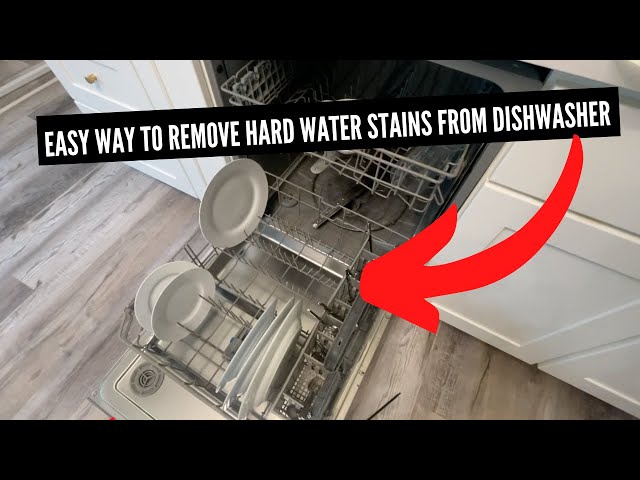
The best products for dishwasher hard water buildup
The right cleaner depends on the amount of scale and your dishwasher’s care instructions.
Citric acid dishwasher cleaner
Citric acid is a common descaling ingredient. It can dissolve calcium deposits and often leaves less odor than vinegar.
Use it for:
• Light or moderate scale
• White film inside the tub
• Mineral deposits around the spray arms
• Routine monthly or seasonal maintenance
Follow the package directions. More cleaner is not always better.
White vinegar
White vinegar may help with light mineral film and odors. However, frequent use can affect rubber parts, seals, and some finishes. Many appliance makers advise against regular vinegar use, so check the manual first.
Do not place vinegar in the detergent cup with detergent. Run it only as a separate cleaning method when approved.
Commercial dishwasher descaler
A commercial descaler is usually the best option for thick buildup. Choose a product labeled for automatic dishwashers, and follow the exact dose.
Avoid using bathroom limescale remover, toilet cleaner, or drain cleaner. These products may contain ingredients that damage stainless steel, rubber, plastic, or electrical parts.
Dishwasher cleaner tablets
Cleaning tablets can remove grease, food residue, and some mineral film. They may not remove heavy scale unless they contain a descaling ingredient.
Read the label carefully. A cleaner designed mainly for grease is not always a complete solution for hard water.

How to prevent hard water buildup
Prevention is easier than repeated deep cleaning. Once you know how to clean hard water in dishwasher appliances, the next goal is to slow new scale from forming.
Use rinse aid
Rinse aid helps water slide off dishes instead of drying in droplets. This can reduce spots and improve drying.
Fill the dispenser as directed. If glasses show streaks, lower the rinse-aid setting. If water spots remain, increase it slightly.
Use the correct detergent amount
Follow the detergent label and your dishwasher manual. Hard water often requires a little more detergent than soft water, but excessive detergent can create residue.
Powder, gel, and tablets may perform differently. In very hard water, a high-quality powder or tablet made for hard-water conditions may work better than a basic gel.
Use the dishwasher’s water-softener setting
Some dishwashers have a built-in water softener. It may require dishwasher salt, not ordinary table salt.
If your machine has this feature:
• Test your water hardness.
• Set the hardness level correctly.
• Add only the recommended dishwasher salt.
• Keep the salt cap sealed.
• Wipe away spilled salt before running a cycle.
Never add regular table salt unless the manufacturer specifically says it is safe.
Run hot water before starting
Turn on the kitchen faucet until the water feels hot. This helps the dishwasher begin with hot water and may improve detergent action.
Do not waste a large amount of water. A short run is usually enough.
Clean the filter often
A dirty filter reduces water circulation. When water flow drops, mineral deposits and food residue can stay behind.
Rinse the filter every one to four weeks, depending on how often you run the dishwasher and how dirty your dishes are.
Leave the door slightly open
After a cycle ends, opening the door slightly helps moisture escape. Less standing moisture can reduce odor and residue.
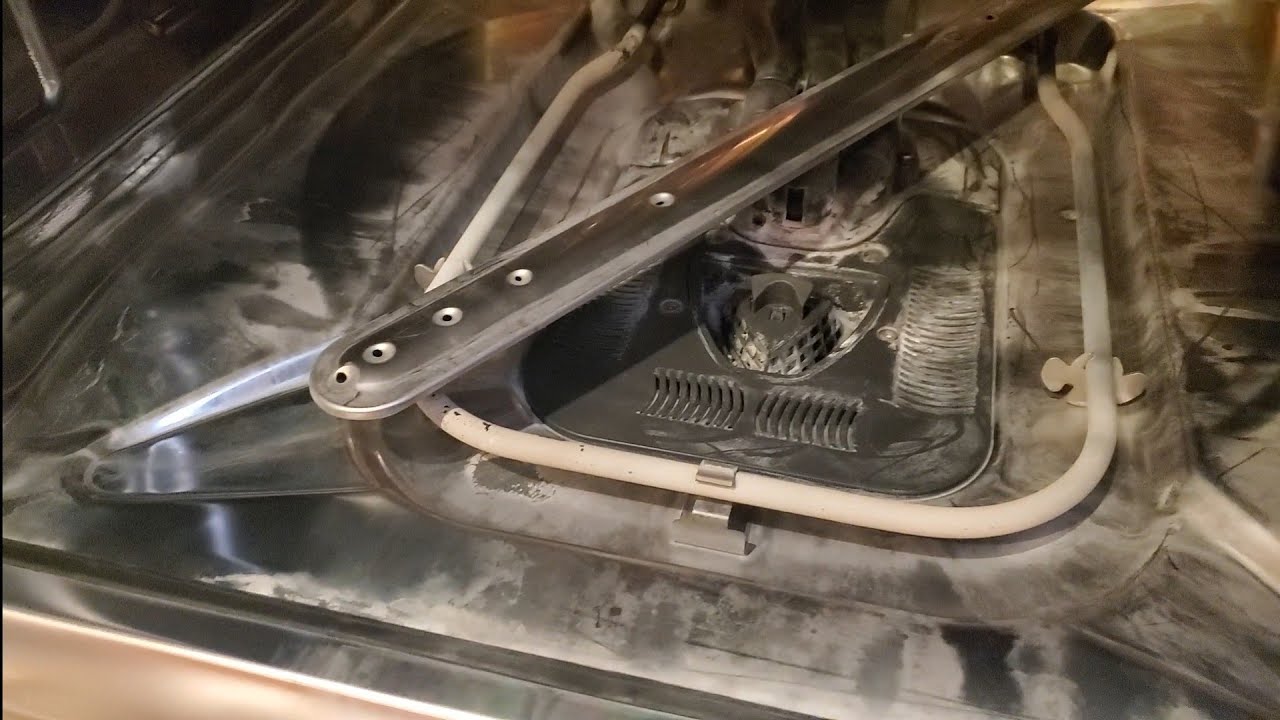
How often should you descale a dishwasher?
The correct schedule depends on water hardness, usage, temperature, and whether the dishwasher has a working water softener.
A practical schedule is:
• Soft water: Clean the filter monthly and descale once or twice a year.
• Moderately hard water: Descale every three to six months.
• Very hard water: Descale every one to three months.
• Heavy daily use: Inspect the tub and spray arms more often.
A water hardness test strip can give a useful estimate. Your local water utility may also publish hardness data.
Do not wait for poor cleaning results. If you see white deposits near the filter, spray arms, or heating area, it is time to inspect the machine.
When I have helped troubleshoot dishwasher complaints, the most common mistake was waiting until glasses became cloudy. A short cleaning cycle at the first sign of scale is much easier than removing years of buildup.

Mistakes to avoid when cleaning dishwasher scale
Some cleaning methods can damage the dishwasher or create a safety risk.
Avoid these mistakes:
• Do not mix vinegar with bleach or chlorine products.
• Do not use drain cleaner or bathroom descaler.
• Do not scrape stainless steel with a knife.
• Do not run the dishwasher with loose cleaner powder unless the label permits it.
• Do not use table salt in a dishwasher salt reservoir.
• Do not pour large amounts of acid into the machine.
• Do not use abrasive scouring pads on the tub.
• Do not ignore a leaking seal or damaged spray arm.
• Do not assume cloudy glass is always removable scale.
If the dishwasher has a strong chemical smell, leaks, fails to drain, or makes unusual noises, stop cleaning and arrange an inspection.
A cleaning product can remove mineral scale, but it cannot repair a damaged heating element, pump, valve, or seal.
When professional dishwasher service is needed
Home cleaning works well for light and moderate deposits. Professional help may be needed when scale has caused a mechanical problem.
Contact a qualified appliance technician if:
• The dishwasher does not drain.
• Water does not spray from the arms.
• The machine leaves dishes dirty after cleaning.
• The heating element stays cold.
• The dishwasher leaks from the door.
• The filter will not come out.
• Scale covers internal parts that you cannot safely reach.
• The machine displays a water inlet or drain error.
A technician can check the circulation pump, inlet valve, drain hose, heater, seals, and water-softener system.
If your home has extremely hard water, a whole-house water softener may help more than repeated dishwasher cleaning. However, installation cost, salt use, maintenance, and local water conditions should be considered first.

Frequently asked questions about how to clean hard water in dishwasher
Can I put vinegar in my dishwasher to remove hard water?
Vinegar may remove light mineral film, but it is not suitable for every dishwasher. Check the owner’s manual first, and never mix vinegar with bleach or other cleaners.
Is citric acid safe for cleaning a dishwasher?
Citric acid is commonly used in dishwasher cleaners and can dissolve calcium scale. Use a product approved for dishwashers and follow the label, because concentrated acid or repeated misuse may harm some parts.
How do I remove white spots from glasses after dishwashing?
Soak the glasses in warm water with diluted white vinegar if the glass maker permits it, then rinse and dry them. If the cloudiness remains, the glass may be permanently etched rather than covered with removable scale.
Should I use more dishwasher detergent with hard water?
Hard water may require the detergent amount recommended for your water level, but using too much can leave residue. Start with the product directions and adjust only if the manual and detergent label support it.
How often should I clean a dishwasher with hard water?
Many homes need descaling every one to six months, depending on water hardness and use. Inspect the filter, spray arms, and tub regularly, and clean sooner when white scale appears.
Can hard water damage a dishwasher?
Long-term scale can reduce water flow and place stress on parts such as spray arms, valves, and heating components. Regular descaling, correct detergent use, and a working water softener can reduce that risk.
Can I use CLR to clean my dishwasher?
Do not use CLR or another household descaler unless the product label and dishwasher manufacturer specifically approve it. A dishwasher-specific cleaner is a safer choice because it is designed for appliance materials and wash conditions.
Conclusion
Hard water buildup is easier to control when you clean the filter, clear the spray arms, use an approved descaler, and maintain the correct rinse-aid and detergent settings. Citric acid may help with mineral scale, while vinegar is best used with caution and only when your appliance manual allows it.
The most reliable approach to how to clean hard water in dishwasher systems is simple: remove debris first, descale safely, prevent new deposits, and seek service when scale affects mechanical parts. Check your dishwasher manual today, inspect the filter, and leave a comment with the method that worked best for your machine.





2 Comments