In the United States, there is no single national limit for yard-waste bags. Your city, county, waste hauler, or HOA may set its own rules.
Many programs accept 10 to 20 paper yard-waste bags per pickup, but some allow fewer, more, or no bags at all. Some services use a total volume limit, such as 1 cubic yard. Others count bags, bundles, cans, or carts separately.
Before you set bags at the curb, check these four details:
- The maximum number of bags or containers.
- The accepted bag size and type.
- The weight limit for each bag.
- The pickup-day and placement rules.

The Short Answer: How Many Bags Are Usually Allowed?
A common residential limit is 10 to 15 bags per collection day, but this is only a rough planning range. A local program may allow 5 bags, 20 bags, one cart, or unlimited bags within a volume cap.
Rules also differ by material. A city may collect grass and leaves in paper bags but require branches to be tied in bundles. It may reject plastic bags, soil, rocks, food scraps, or large logs.
The safest answer is:
Put out only the amount your local yard-waste program lists as one pickup’s limit. If no bag limit is listed, look for a total volume or weight limit.
The U.S. Environmental Protection Agency explains that yard trimmings include materials such as grass, leaves, and branches. Local agencies decide how those materials are collected and processed. See the EPA yard-trimmings guidance.
Common limits in the United States
| Local rule type | How it may be written | What it means |
|---|---|---|
| Bag limit | “Up to 10 bags per pickup” | Count each accepted bag |
| Cart limit | “One yard-waste cart” | Loose material goes inside the cart |
| Volume limit | “Up to 1 cubic yard” | The total pile or container volume matters |
| Bundle limit | “Branches in bundles no longer than 4 feet” | Branches must meet size and tie rules |
| Weight limit | “Each bag must weigh no more than 50 pounds” | Heavy bags may be left behind |
| Seasonal rule | “Leaf collection runs October through December” | Service may change during the year |
A bag count is not always a fair measure. Ten small bags may hold less material than six large bags. That is why some programs use cubic yards instead of a simple bag number.

How to Calculate Your Yard-Waste Volume
You can estimate your total volume by multiplying the number of bags by the size of each bag. This helps when your hauler lists a cubic-yard limit.
Use this formula:
Total cubic feet = number of bags × bag gallons × 0.1337
Then convert cubic feet to cubic yards:
Total cubic yards = total cubic feet ÷ 27
Approximate volume by bag size
| Bag size | Approximate volume per bag | 10 bags equal about |
|---|---|---|
| 20 gallons | 2.7 cubic feet | 1.0 cubic yard |
| 30 gallons | 4.0 cubic feet | 1.5 cubic yards |
| 33 gallons | 4.4 cubic feet | 1.6 cubic yards |
| 40 gallons | 5.3 cubic feet | 2.0 cubic yards |
| 50 gallons | 6.7 cubic feet | 2.5 cubic yards |
These figures assume the bags are filled close to their rated size. Real bags may hold less because leaves do not fill every space. Wet grass can also make a bag much heavier without greatly changing its volume.
Example: 15 bags of leaves
Suppose you have 15 bags, and each bag holds about 30 gallons:
- 15 × 30 gallons = 450 gallons
- 450 × 0.1337 = about 60 cubic feet
- 60 ÷ 27 = about 2.2 cubic yards
If your service allows only 1 cubic yard, you would need to split the load across collection days or use another disposal option.
Do not confuse bag size with fill level
A 33-gallon bag does not always contain 33 gallons of yard waste. A loose pile of leaves may take up more space than crushed leaves. Grass clippings may settle after you fill the bag, but the bag can still become too heavy to lift.
For this reason, volume calculations are useful estimates, not a replacement for your local rules.

What Kind of Bags Can You Use?
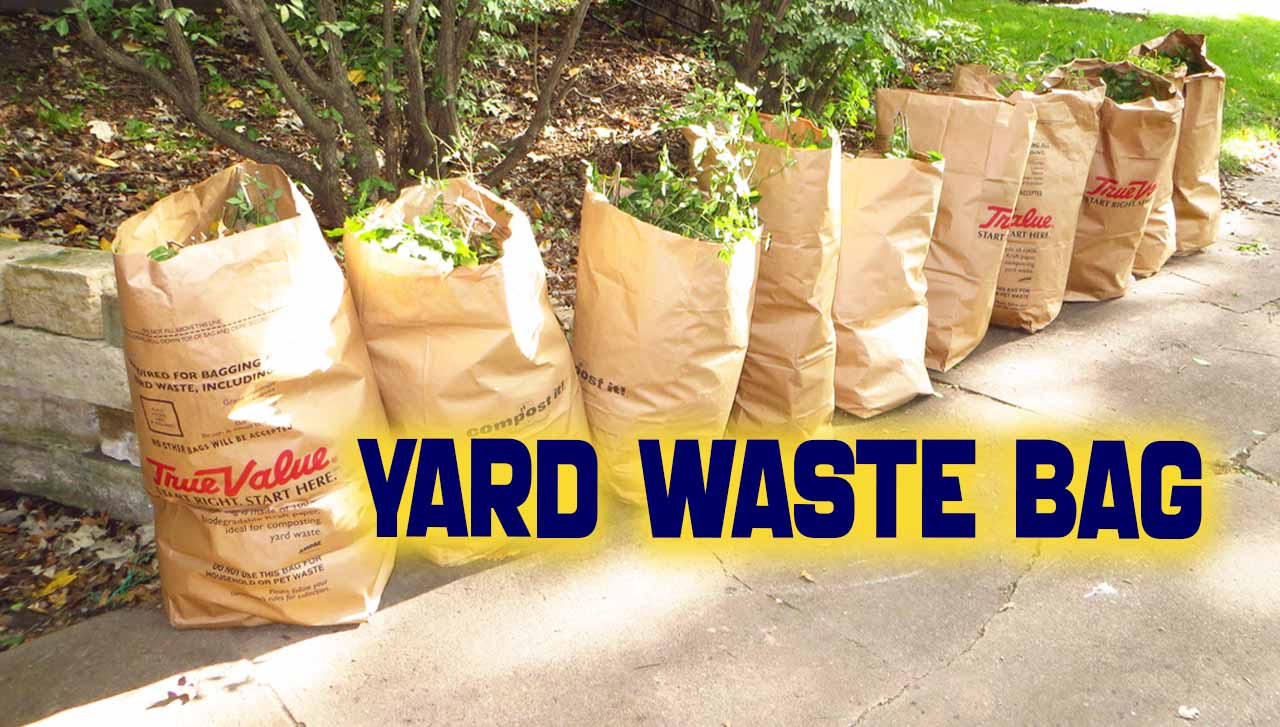
Most curbside yard-waste programs prefer compostable paper lawn bags. Many do not accept plastic bags because plastic can contaminate commercial compost or mulch.
Check the local rule before buying bags. A program may require:
- Paper bags made for yard waste.
- Bags no larger than a stated size.
- Bags that are open at the top.
- No plastic liners.
- No torn or leaking bags.
- Bags that can be lifted safely by one worker.
Some cities accept loose leaves in an approved cart instead of bags. Others provide seasonal leaf collection with different rules from regular weekly service.
Paper bags versus plastic bags
Paper yard-waste bags are often accepted because they can enter a composting process with the plant material. Plastic bags may be rejected even when they are labeled biodegradable. “Biodegradable” does not always mean the bag is accepted by a local compost facility.
Do not assume that a bag marked “compostable” is allowed. Compostable packaging may require an industrial composting system, and the local facility may not accept it.
Why ordinary trash bags may be rejected
Plastic bags can cause several problems:
- Workers must open them by hand.
- Plastic can mix with finished compost.
- Thin bags can tear and scatter wet grass.
- Some facilities cannot remove all plastic contamination.
- Local collection rules may classify bagged yard waste as garbage.
Use the bag type named by your city or hauler. If the rules are unclear, call the provider before setting the bags out.

How Much Yard Waste Fits in One Bag?
A typical 30- to 33-gallon paper bag may hold a moderate amount of dry leaves, but the safe amount depends on the material.
| Material | Usual concern |
|---|---|
| Dry leaves | Light but bulky |
| Damp leaves | Heavier and harder to lift |
| Grass clippings | Can become very heavy when wet |
| Small weeds | May contain soil and roots |
| Pine needles | Dense and slow to compact |
| Small twigs | Can puncture paper bags |
| Soil and sod | Often not accepted and very heavy |
Keep bags light enough for one person to lift without straining. A large bag full of wet grass may exceed a hauler’s weight limit even when it is not full.
A practical rule is to fill the bag only until you can still lift it safely. Leave several inches of space at the top so the bag can stay upright and close enough to prevent material from spilling.
Do not add rocks, dirt, gravel, concrete, flowerpots, or large roots unless your local program specifically allows them. These materials can damage collection equipment and may make the bag unsafe to handle.

How Many Bags Can Go in a Yard-Waste Cart?
If your program uses carts, the answer may be based on cart capacity rather than bag count. A 64-gallon cart can hold more yard waste than a 32-gallon cart, but the cart still has a weight limit.
Place loose yard waste directly in the cart when the local program permits it. Do not pack material so tightly that the cart cannot be emptied. Wet grass and compacted leaves may stick to the cart or exceed its safe lifting weight.
If you use paper bags inside a cart, check the rules first. Some programs allow paper bags in the cart. Others require loose material only. Plastic liners are commonly prohibited.
Estimating cart volume
The same conversion can help:
- 32 gallons = about 4.3 cubic feet
- 64 gallons = about 8.6 cubic feet
- 96 gallons = about 12.8 cubic feet
These are approximate inside volumes. The usable amount may be lower because of the cart shape and the need to keep the lid closed.
A cart that is overflowing may not be collected. Keep the lid shut and place the cart with its wheels and handle facing the direction required by your hauler.

What Yard Waste Can You Put Out?
Most yard-waste programs accept common plant material, but the exact list varies. Commonly accepted items include:
- Grass clippings.
- Leaves.
- Small branches.
- Small twigs.
- Garden plants.
- Weeds without soil.
- Flowers and non-woody plant trimmings.
- Pine needles.
Some programs also accept pumpkins, holiday greenery, or untreated wood. Seasonal items may have separate collection dates.
Commonly excluded items include:
- Plastic bags.
- Food waste, unless the program accepts organics.
- Dirt and soil.
- Sod and large root balls.
- Rocks and gravel.
- Treated or painted wood.
- Lumber.
- Large branches and logs.
- Pet waste.
- Household garbage.
- Diseased plants, in some regions.
- Invasive weeds with mature seeds, in some programs.
Do not place invasive plants or diseased plant material in a compost pile unless local guidance says it is safe. Home compost piles may not reach the heat needed to destroy some seeds or pathogens.

How to Prepare Bags, Branches, and Bundles
Prepare yard waste according to the material type. Bags work well for leaves and grass, but branches usually need a separate method.
For leaves and grass
- Let wet grass drain or dry slightly when possible.
- Use approved paper yard-waste bags.
- Fill bags loosely enough to lift safely.
- Keep bags upright.
- Fold or close the top if required.
- Place bags where collection workers can reach them.
- Keep bags away from cars, drains, mailboxes, and utility equipment.
For branches
Many programs require branches to be:
- Cut to a maximum length.
- Limited to a maximum diameter.
- Tied into bundles.
- Kept below a maximum bundle weight.
- Set apart from paper bags.
The exact limits vary widely. Check your city or hauler’s branch rules before cutting a large pile into bundles.
Do not put sharp branches into paper bags. They can puncture the bottom and create a hazard for workers.
For storm debris
Storm debris may not follow normal yard-waste rules. After a major storm, a city may create special drop-off sites or collection routes. It may also separate branches from leaves and require debris to be placed away from power lines.
Never handle branches that touch or come close to power lines. Contact the utility company or local emergency service instead.

What If You Have More Bags Than the Limit?
If you have more yard waste than your service allows, divide it into smaller loads. This is often the simplest and least expensive option.
You can also:
- Compost leaves and plant trimmings at home.
- Mulch leaves with a mower when appropriate.
- Use a community compost site.
- Take material to an approved yard-waste drop-off location.
- Hire a licensed landscaping or hauling service.
- Ask whether a seasonal collection event accepts extra material.
Do not dump yard waste in a creek, vacant lot, storm drain, roadside, or wooded area. Yard waste can block drainage, spread invasive plants, and harm water quality.
Home composting
Leaves, small plant trimmings, and untreated plant matter can often be composted at home. Avoid adding diseased plants, pet waste, meat, dairy, or invasive weeds unless a reliable local guide says they are suitable.
Grass clippings can become wet and compacted. Mix them with dry leaves or other brown material to improve airflow.
Mulching leaves
Mulching leaves with a mower can reduce the number of bags you need. Shredded leaves may break down on the lawn or move into a compost pile. Do not leave such a thick layer that it blocks grass from light and air.

Why Yard-Waste Bags Are Not Collected
A bag may be left behind for several reasons:
- It is the wrong bag type.
- It contains plastic.
- It is too heavy.
- It is larger than the allowed size.
- It contains dirt, rocks, trash, or food.
- The material is outside the accepted list.
- The pickup occurred on the wrong day.
- The bag was placed too close to an obstruction.
- The program reached its seasonal limit.
- The service requires a cart instead of bags.
First, inspect the bag for a tag or notice. Many haulers mark the reason for noncollection.
Next, compare the material with the current rules on your city, county, or hauler website. If the reason is still unclear, take a photo and contact customer service. Ask whether the problem was the bag, material, weight, placement, or quantity.
Do not simply place the same rejected bag out again. Correct the issue first.
A Simple Bag-Count Checklist
Use this checklist before collection day:
- Confirm the pickup date.
- Confirm the maximum bag or volume limit.
- Check whether paper bags are required.
- Remove plastic, dirt, rocks, and trash.
- Separate branches from leaves and grass.
- Keep each bag light enough to lift safely.
- Close or fold the bag as required.
- Keep bags visible and accessible.
- Keep bags away from storm drains and parked cars.
- Save extra bags for the next pickup or use a drop-off site.
If your provider gives both a bag limit and a volume limit, follow the stricter limit. For example, 20 small bags may be allowed by count, but the total may still exceed a one-cubic-yard limit.

Key Takeaways
- There is no nationwide yard-waste bag limit in the United States.
- Many local programs allow about 10 to 20 bags per pickup, but this is not universal.
- Your provider may use a bag count, cart limit, cubic-yard limit, or weight limit.
- Paper yard-waste bags are commonly accepted; plastic bags are often rejected.
- A 30-gallon bag holds about 4 cubic feet, or roughly 0.15 cubic yard.
- Keep wet grass and leaves light enough for safe handling.
- Separate branches, soil, rocks, trash, and other excluded materials.
- Check the current rules from your city, county, or waste hauler before collection day.
Frequently Asked Questions
Is there a standard number of yard-waste bags per house?
No. Yard-waste limits are set by local governments, private haulers, or property managers. A common range is 10 to 20 bags, but your local service may use a different limit.
Can I use black plastic bags for yard waste?
Usually not. Many composting and yard-waste programs require paper bags or loose material in an approved cart. Check the local rule before using any plastic bag.
How heavy can a yard-waste bag be?
The limit depends on the provider. Even when no exact number is listed, the bag should be light enough for one worker to lift without injury. Wet grass, soil, and wet leaves can make a bag unsafe very quickly.
How many bags equal one cubic yard?
The answer depends on bag size. About 7 to 8 full 30-gallon bags equal one cubic yard by simple volume math. Ten 30-gallon bags equal about 1.5 cubic yards. Loose packing may reduce the actual amount.
Can I put food scraps in yard-waste bags?
Only if the local program accepts food scraps as part of an organics or compost collection service. Standard yard-waste programs often accept plant material but not meat, dairy, or household food waste.
What should I do with extra yard waste?
Keep it for the next pickup, compost suitable material, mulch leaves, use an approved drop-off site, or hire a permitted hauler. Do not dump yard waste in public areas, waterways, or storm drains.
Conclusion
The best answer to “how many bags of yard waste” is the limit set by your local U.S. collection program. As a rough estimate, plan for 10 to 20 bags, then verify the exact bag type, volume, weight, and material rules.
Your next step is to search your city or hauler’s website for “yard waste collection limits” and check the current instructions before placing bags at the curb.