A gas detector senses dangerous gases, measures their concentration, and triggers an alarm when levels become unsafe.
Understanding how does a gas detector work can help you choose, use, and maintain one with confidence. These devices protect workers, families, and emergency crews by turning invisible gas threats into clear warnings. This guide explains the sensors, alarms, readings, limits, and safety steps in plain English.
What Is a Gas Detector?
A gas detector is an electronic device that checks the air for specific gases. It may detect one gas or several gases at the same time.
Common targets include:
• Oxygen, shown as O₂
• Carbon monoxide, or CO
• Hydrogen sulfide, or H₂S
• Methane and other combustible gases
• Volatile organic compounds, or VOCs
• Carbon dioxide, or CO₂, in some applications
A gas detector draws air across a sensor. The sensor reacts to the gas. Electronics then change that reaction into a number on a screen, a sound, a light, or a vibration.
The device does not make a gas safe. It only warns you that a hazard may exist. You must leave the area, improve ventilation, or follow your site emergency plan when an alarm sounds.
A personal gas monitor usually clips to a worker’s clothing. A fixed gas detector stays in one place and connects to a control panel, fan, valve, or building system.
How Does a Gas Detector Work?
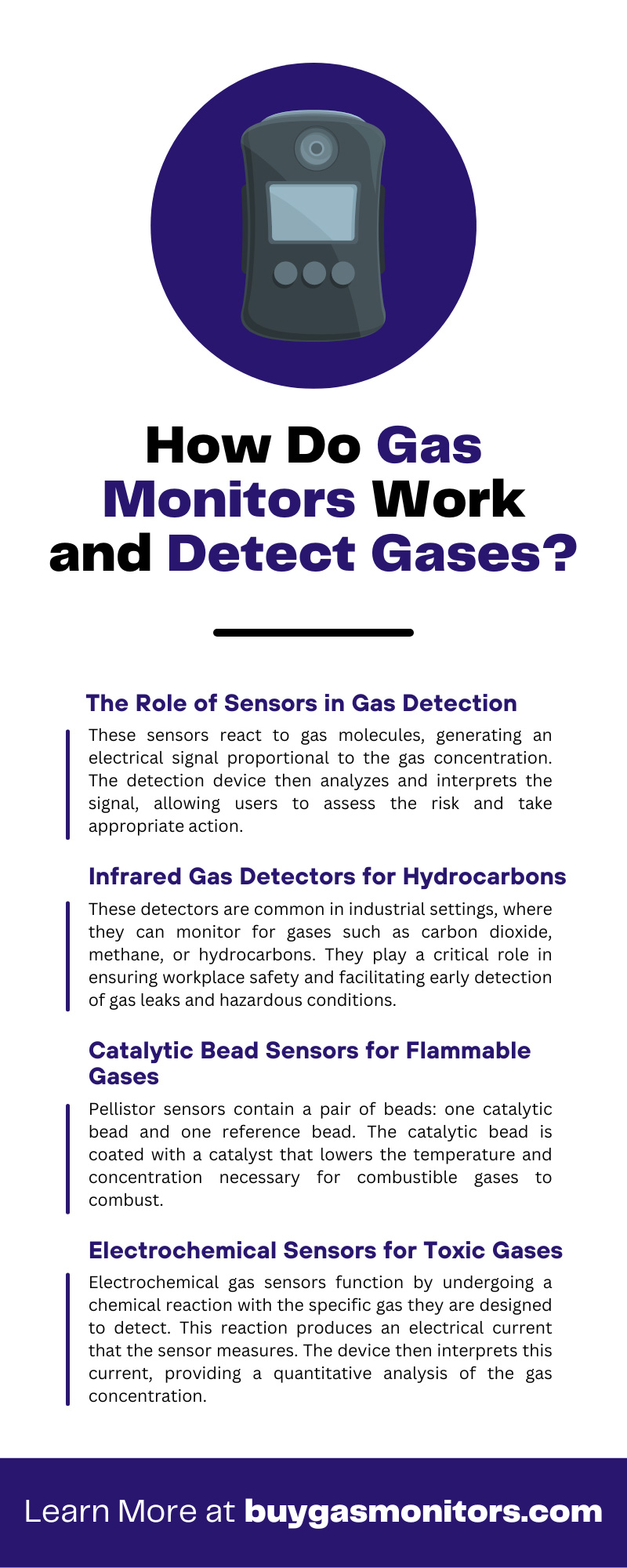
So, how does a gas detector work in real life? It follows a simple chain:
- Air reaches the sensor.
- The target gas reacts with the sensor.
- The sensor creates a measurable electrical signal.
- A processor compares the signal with stored alarm limits.
- The device shows the reading and warns the user if needed.
Think of the sensor as the detector’s nose. The processor acts like its brain. The alarm is its voice.
A portable detector may use natural air movement. This is called diffusion. Another model uses a small pump to pull air through a tube. Pumped detectors can sample tanks, pits, ducts, and other spaces before a person enters.
The detector checks the gas level many times each second. However, the exact speed depends on the model, sensor type, sampling method, and gas. A long sampling tube can also delay the reading.
Diffusion sampling
Diffusion detectors are small and easy to wear. Gas reaches the sensor as air moves around the unit.
They work well for personal protection. Yet they may not be ideal for testing a deep tank or a remote pipe. The detector cannot measure air that has not reached its sensor.
Pumped sampling
A pumped detector pulls air through a probe or hose. This lets a technician test a space from a safer position.
Pump systems need more care. Water, dust, blocked filters, and long tubes can slow the response or stop the sample flow. Many pumped units sound an alarm when they detect low flow.
The Main Types of Gas Sensors
The answer to how does a gas detector work depends on the sensor inside it. Different gases need different sensing methods.
catalytic bead sensors
Catalytic bead sensors detect combustible gases. They contain heated beads coated with a catalyst.
When a flammable gas reaches the bead, it burns without producing a visible flame. This reaction changes the bead’s temperature and electrical resistance. The instrument uses that change to estimate the gas level.
These sensors often report readings as a percentage of the lower explosive limit, or %LEL. The LEL is the smallest gas concentration that can support a flame.
Catalytic sensors need oxygen to work. They may also lose sensitivity after exposure to silicone vapors, lead compounds, sulfur compounds, or other contaminants.
Infrared sensors
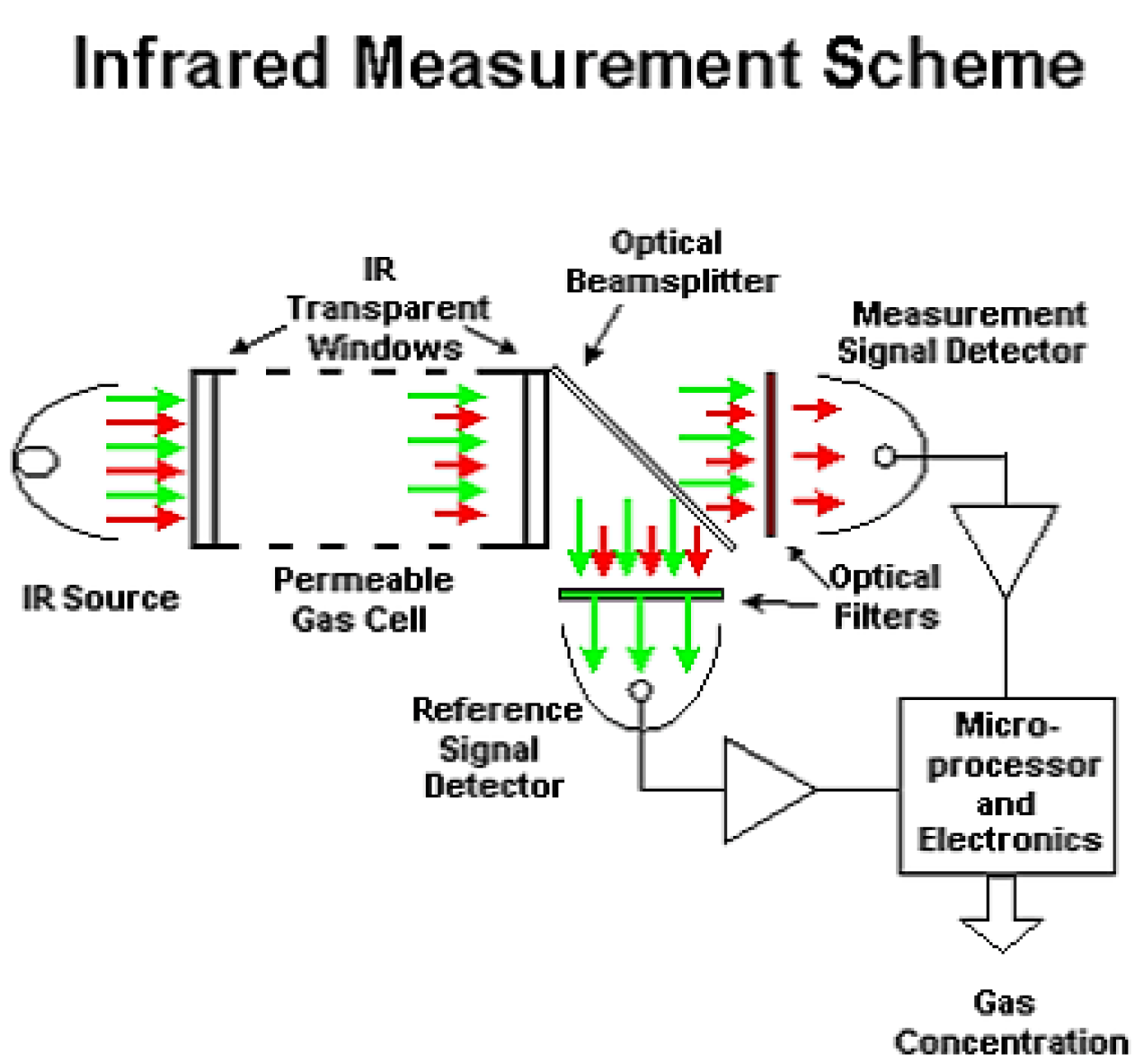
Infrared sensors detect gas by measuring how it absorbs infrared light. The gas passes through an optical path, and the amount of absorbed light relates to its concentration.
These sensors can detect methane, propane, and other hydrocarbons. They do not need oxygen, so they can work in an oxygen poor space.
Infrared sensors resist some poisons that harm catalytic sensors. However, they can still have limits. Dirt on the optical surfaces, condensation, and certain gases can affect readings.
Electrochemical sensors
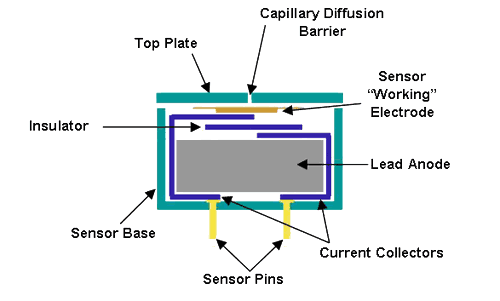
Electrochemical sensors are common for toxic gases and oxygen. A gas enters the sensor and reacts at an electrode.
That chemical reaction creates a small current. The current changes with the gas concentration. The detector converts it into a reading, such as 35 parts per million of carbon monoxide.
Electrochemical sensors have a limited service life. Their life may shorten in high heat, high humidity, or after long exposure to the target gas.
Photoionization detectors
A photoionization detector, or PID, uses ultraviolet light to ionize certain VOCs. The resulting ions create an electrical current.
PIDs are useful for detecting vapors from solvents, fuels, paints, and industrial chemicals. They usually display readings in parts per million.
A PID may not identify each chemical on its own. It often uses a reference gas and response factors. A trained user must understand what the reading means before making a safety decision.
Metal oxide semiconductor sensors
Metal oxide semiconductor sensors change electrical resistance when exposed to certain gases. They are used in some home, industrial, and specialty detectors.
They can detect broad gas groups. Yet humidity, temperature, and other vapors may affect their readings. They are not always as selective as electrochemical or infrared sensors.

What Do Gas Detector Readings Mean?
A gas detector may show readings in different units. The unit matters because it tells you how to understand the danger.
Parts per million
Parts per million, or ppm, is common for toxic gases. One ppm means one part of gas in one million parts of air.
For example, a carbon monoxide reading may rise from 5 ppm to 100 ppm. The safe response depends on the gas, exposure time, local rules, and detector settings.
Percentage by volume
Oxygen detectors often show percentage by volume. Normal air contains about 20.9% oxygen.
Oxygen deficiency can make breathing unsafe. Oxygen enrichment can increase fire risk. A detector may alarm for both conditions.
Percentage of the LEL
Combustible gas monitors often display %LEL. A reading of 10% LEL means the gas concentration has reached one tenth of the lower explosive limit for the selected gas.
A 0% LEL reading does not mean the area contains no gas. It means the level is below the detector’s display threshold or detection range.
Alarm levels
Manufacturers set low and high alarms for each gas. Some devices also have short term exposure limits and time weighted average alarms.
Alarm settings may vary by workplace rules and local regulations. Never change them without approval from a qualified safety professional.
Why Gas Detectors Use More Than One Alarm
A gas detector may use sound, lights, vibration, or a message on the screen. This design helps people notice an alarm in noisy, dark, or crowded areas.
A typical alarm system includes:
• Low alarm for an early warning
• High alarm for a more serious level
• TWA alarm for average exposure over time
• STEL alarm for short term exposure
• Overrange alarm when the reading exceeds the sensor scale
• Fault alarm for sensor, battery, pump, or calibration problems
Many detectors latch an alarm until a user resets it. This prevents a brief alarm from being missed.
Never silence an alarm simply because the reading later drops. The gas may still be present. Move to fresh air and follow the emergency procedure first.

What Affects Gas Detector Accuracy?
Knowing how does a gas detector work also means knowing when it may be wrong. A detector is not a perfect chemical laboratory. Its accuracy depends on the instrument, the sensor, the environment, and the user.
Important factors include:
Temperature and humidity
Extreme heat or cold can change sensor behavior. High humidity may affect electrochemical sensors and optical parts.
Check the operating range in the user manual. Do not assume a detector works normally in a freezer, boiler room, steam area, or outdoor winter setting.
Sensor cross sensitivity
Some sensors react to gases other than the target gas. For example, a toxic gas sensor may respond to another chemical vapor.
Cross sensitivity can create a false high reading. It can also change the reading in a way that is hard to notice.
Sensor poisoning
Certain substances can damage or weaken sensors. Common examples include silicone compounds, cleaning chemicals, sulfur compounds, lead, and halogenated vapors.
Keep detectors away from sprays, solvents, and heavy chemical fumes unless the device is designed for that work.
Blocked filters and tubes
Dust, water, mud, and ice can block the gas path. A blocked filter may reduce response speed or stop gas from reaching the sensor.
Inspect filters and sampling lines before use. Replace damaged parts with approved components.
Battery condition
A weak battery may stop the alarm, pump, or display. Some devices reduce performance before they shut down.
Charge the unit fully. Replace batteries according to the manufacturer’s schedule.

Calibration, Bump Testing, and Maintenance
Calibration adjusts a gas detector so its reading matches a known test gas. A bump test is a shorter check that confirms the sensor and alarms respond to gas.
These checks serve different purposes:
• A bump test checks basic response and alarm function.
• A calibration adjusts the reading for better accuracy.
• A visual inspection finds physical damage or blocked openings.
• A battery check confirms enough power for the task.
Many safety programs require a bump test before each day’s use or before each shift. The exact schedule depends on the manufacturer, workplace risk, and applicable rules.
A basic pre use routine looks like this:
- Inspect the case, clips, display, filters, and sensor openings.
- Turn on the detector in clean air.
- Confirm the startup test passes.
- Check the battery and expiration indicators.
- Perform the required bump test.
- Record the result.
- Wear the detector in the breathing zone.
Use certified test gas with the correct concentration. Do not use a cigarette, lighter, solvent, or random fuel as a test source.
A practical lesson from field safety work is simple: the detector that sits unused in a drawer is not protecting anyone. Storage, charging, testing, and records matter as much as the sensor itself.
Where Should You Place a Gas Detector?
Placement depends on the gas, the room, airflow, and the likely leak source. There is no single best height for every gas.
Methane is lighter than air and may collect near ceilings. Propane and many other heavy gases may collect near floors. Carbon monoxide can spread through a room and may move with warm air.
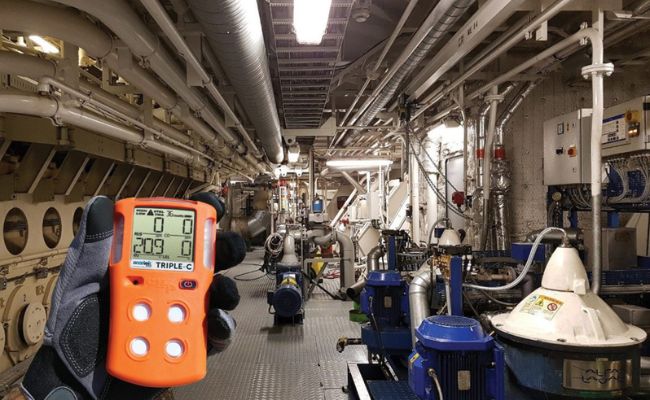
For personal protection, clip the monitor near your breathing zone. A chest or shoulder position is often useful. Do not hide it under a coat or place it inside a bag.
For fixed systems, a qualified designer should assess:
• Gas density
• Air movement
• Possible leak points
• Ventilation fans
• Doors and windows
• Heat sources
• Drainage and low spots
• Normal and emergency occupancy
A detector placed far from a likely leak may respond too late. A detector placed beside a strong air vent may miss the gas plume.
Portable, Fixed, and Home Gas Detectors
Different detectors serve different jobs.
Portable personal monitors
These protect workers who move through changing spaces. A four gas monitor often checks oxygen, combustible gas, carbon monoxide, and hydrogen sulfide.
Portable monitors need regular charging, testing, and sensor replacement. Their alarms are designed for the person wearing the unit.
Fixed gas detection systems
Fixed detectors stay installed in a building, plant, garage, laboratory, or process area. They may connect to alarms, exhaust fans, process shutdowns, and building controls.
Fixed systems need planned testing. A control panel may show a safe condition even when a sensor has failed, so fault alarms and maintenance records are essential.
Home gas alarms
Home alarms may detect carbon monoxide, natural gas, propane, or smoke. A carbon monoxide alarm does not automatically detect natural gas. A natural gas alarm does not automatically detect carbon monoxide.
Read the label before purchase. Install each alarm as directed, test it often, and replace it when the manufacturer says to do so.
What to Do When a Gas Detector Alarms
Treat every alarm as real until a qualified person proves otherwise. Do not stay to investigate if leaving is safe.
Follow these steps:
- Stop the task.
- Move to fresh air or a safe location.
- Warn people nearby without creating more risk.
- Call emergency services or the site response team.
- Do not switch electrical devices on or off in a suspected flammable atmosphere.
- Do not reenter until trained personnel test the area and give permission.
- Record the alarm and have the detector inspected.
If the alarm sounds in a home, leave immediately. Do not search for the source first. Call emergency services from outside or from a safe location.
A detector alarm is not a suggestion. It is a signal to act.
Common Mistakes to Avoid
Even a high quality gas detector cannot protect someone who uses it incorrectly. These mistakes appear often in homes, workshops, and industrial sites:
• Wearing the detector under clothing
• Skipping the bump test
• Ignoring a sensor fault
• Using expired test gas
• Assuming a zero reading means zero gas
• Testing only at head height
• Leaving a pump filter wet or blocked
• Changing alarm limits without approval
• Using the wrong sensor for the hazard
• Treating a low battery warning as unimportant
• Entering a confined space without a written plan
Never use a gas detector as a substitute for ventilation, isolation, permit controls, or confined space procedures.
For confined spaces, test before entry and continue monitoring as conditions change. Test the top, middle, and bottom when the risk assessment calls for it. Gas layers can form at different heights.
Benefits and Limitations of Gas Detection
Gas detectors offer major safety benefits:
• They find hazards that people cannot see.
• They may detect gas before symptoms appear.
• They provide continuous monitoring.
• They warn users with several alarm types.
• They support confined space and industrial safety plans.
• They can trigger automatic controls in fixed systems.
They also have limits:
• They detect only the gases their sensors support.
• Readings can be affected by heat, moisture, and chemicals.
• Sensors age and need replacement.
• A blocked sensor may not sample the air correctly.
• A detector cannot remove gas or rescue a worker.
• Alarm thresholds do not guarantee zero health risk.
• A reading may not identify the exact chemical source.
The safest approach combines gas detection with ventilation, leak prevention, training, personal protective equipment, and emergency planning.
How to Choose a Gas Detector
Start with the hazard, not the price. Ask what gases may exist, how much warning time you need, and who will use the device.
Look for these features:
- Correct sensor types for the expected gases.
- Clear readings in the required units.
- Audible, visual, and vibration alarms.
- A strong case and suitable ingress protection.
- A reliable battery and charging system.
- Data logging if records are important.
- Pumped sampling if remote testing is required.
- Simple calibration and bump test procedures.
- Replacement sensors that are easy to obtain.
- Compliance with relevant safety standards.
Check approvals for your location and industry. Some work areas require equipment certified for explosive atmospheres. A general consumer alarm may not be suitable for a refinery, mine, sewer, or confined space.
Frequently Asked Questions About How Does a Gas Detector Work
How does a gas detector work for carbon monoxide?
A carbon monoxide detector usually uses an electrochemical sensor. Carbon monoxide reacts inside the sensor and produces an electrical current that rises with the gas concentration.
How does a gas detector work for natural gas?
A natural gas detector may use a catalytic bead or infrared sensor. It measures methane or another combustible gas and often reports the result as a percentage of the lower explosive limit.
Can a gas detector detect every gas?
No. Each sensor responds to specific gases or gas groups. Check the detector label and manual before relying on it for a particular hazard.
Does a gas detector need calibration?
Yes. Sensors can drift with age, use, and environmental exposure. Follow the manufacturer’s calibration and bump test schedule, and remove any unit that fails a required check.
Where should I wear a portable gas detector?
Wear it near your breathing zone, such as on the chest or shoulder. Keep the sensor opening uncovered so surrounding air can reach it.
What should I do if my gas detector alarms?
Move to fresh air immediately and follow your emergency plan. Do not reenter or reset the alarm until trained personnel have tested the area and confirmed it is safe.
Conclusion
A gas detector works by bringing air to a sensor, measuring the sensor’s response, and comparing the result with programmed alarm limits. Catalytic, infrared, electrochemical, photoionization, and semiconductor sensors each serve different hazards.
The best protection comes from using the right detector, placing it correctly, testing it often, and responding to every alarm with care. Learn your device’s limits, follow the manual, and build gas testing into every high risk task. Explore your local safety guidance, review your emergency plan, and share your questions or experience in the comments.