
Introduction
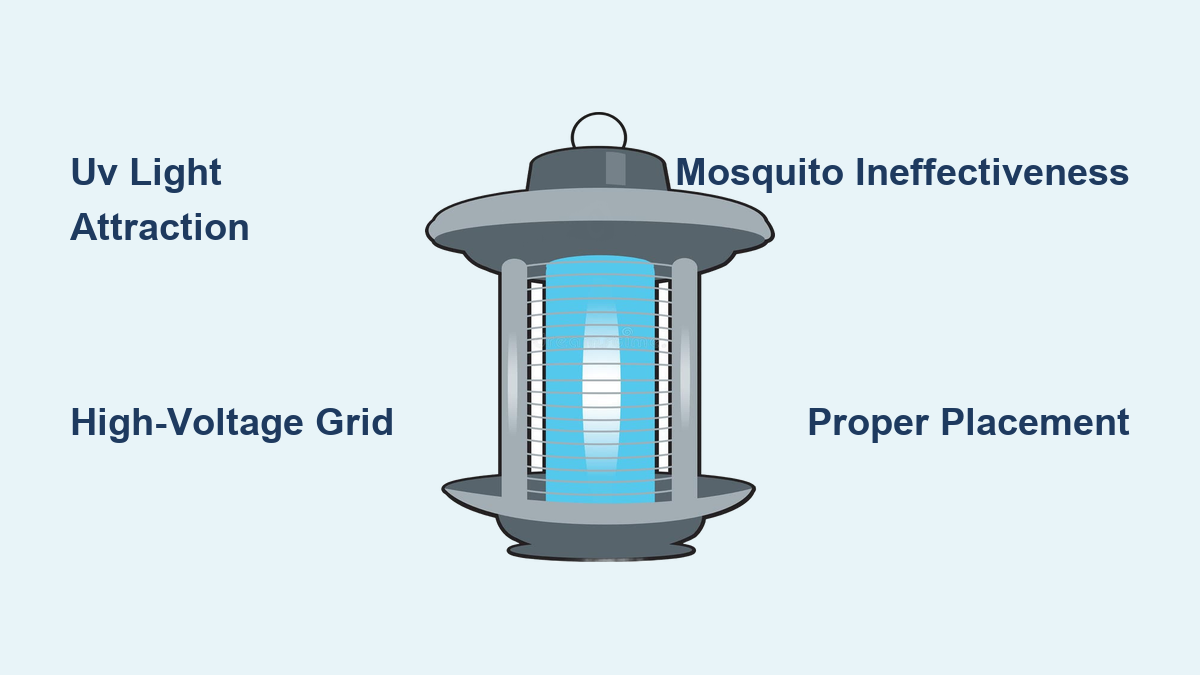
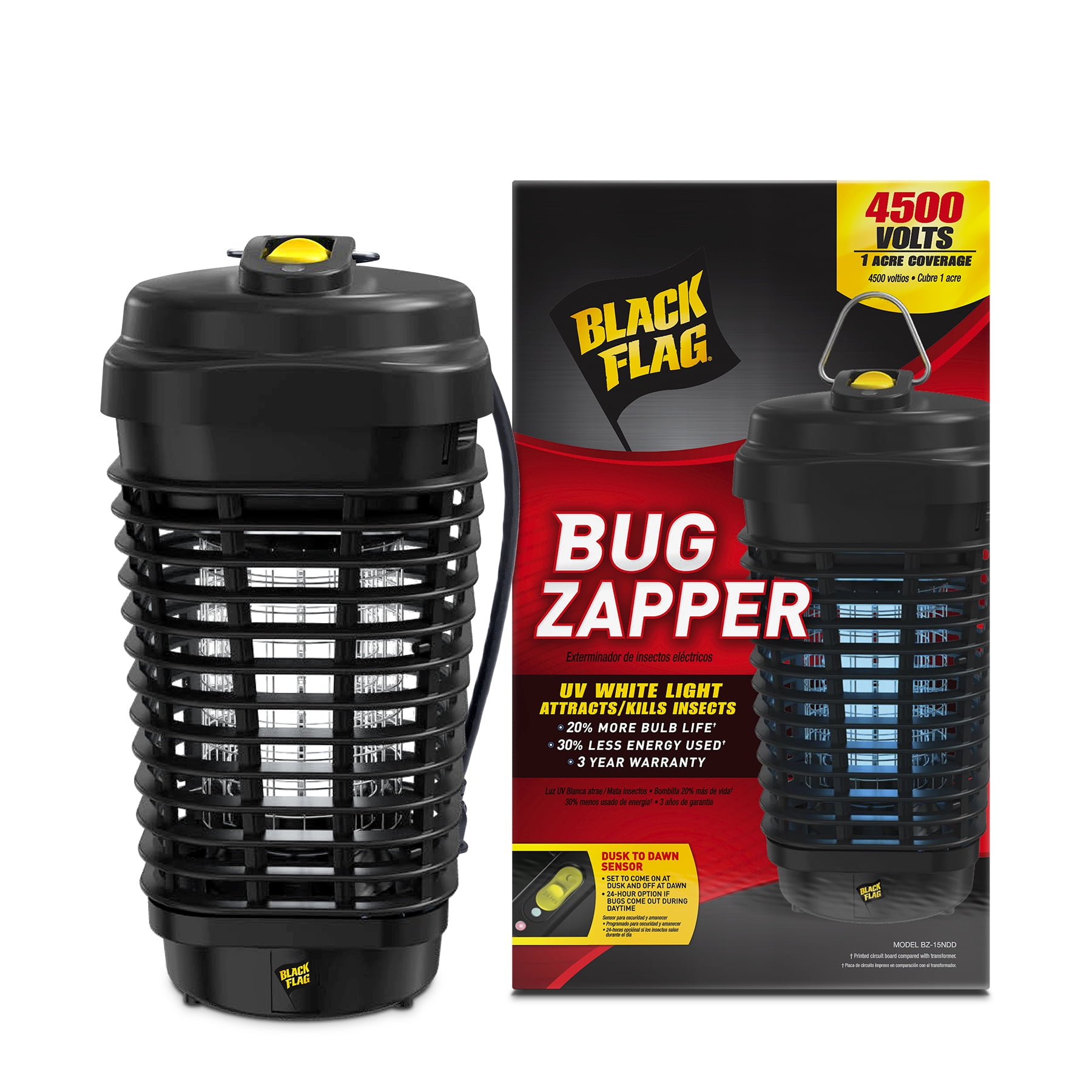
Across the United States, bug zappers are common on porches, patios, garages, and camp sites. These devices draw flying insects toward a light, then kill them with a high-voltage electric grid.
A bug zapper can reduce some flying insects near the unit. It does not attract every pest, and it may not control mosquitoes well. Its results depend on the insect, the light, the placement, and the design of the trap.

How Does a Bug Zapper Work?
A bug zapper uses light to attract insects and electricity to kill them. Most models follow this basic process:
- A lamp gives off ultraviolet or blue-violet light.
- A flying insect moves toward the light.
- The insect reaches two or more metal grid wires.
- Its body bridges the gap between the wires.
- Electric current passes through the insect.
- The insect dies or falls into a collection tray.
The device repeats this cycle whenever it is turned on. It does not need bait, spray, or a moving part to kill insects.
The role of light
Many flying insects can see ultraviolet light better than people can. This makes UV-A light useful for attracting moths, flies, gnats, and some beetles.
Most bug zappers use a fluorescent UV-A tube or an LED light. The light may look blue or purple to people. The exact wavelength varies by model, but many insect traps use light near the UV-A range.
Light attraction is not the same for every insect. Some pests respond more to body heat, carbon dioxide, moisture, odors, or food than to light. This is one reason a bug zapper may kill many moths while having little effect on mosquitoes.
The role of high voltage
Inside the unit, a power circuit raises household voltage to a much higher voltage. A transformer or electronic circuit does this job.
The grid has narrow gaps between its wires. The device keeps a high voltage between nearby wires. When an insect touches both sides, its body creates a path for current. The current produces a spark, heat, and an audible snap.
The voltage is high enough to create a spark across the small gap. The available current is usually limited by the device design. That limit helps reduce the energy of each discharge, but it does not make the grid safe to touch.
What happens after the insect dies?
Most models let dead insects fall into a tray below the grid. Some use a removable drawer. Others allow debris to fall through the bottom.
A fan-assisted trap works in a different way. A fan pulls insects into a chamber, where the insects may dry out or become trapped on a glue board. These units do not always use an electric grid.

What Parts Are Inside a Bug Zapper?
A typical electric bug zapper has five main parts.
| Part | What it does |
|---|---|
| UV-A lamp or LED | Draws some flying insects toward the unit |
| Reflector or housing | Directs light and shields parts of the device |
| High-voltage grid | Delivers the electric shock |
| Transformer or power circuit | Raises the input voltage |
| Tray or catch area | Holds dead insects and debris |
Some models also include a switch, timer, fan, glue board, or protective outer cage.
The outer cage keeps fingers and larger objects away from the live grid. It also helps protect the grid from rain and impact. It is still not a reason to touch or open the device while it is plugged in.
Why does a bug zapper make a popping sound?
The pop occurs when an insect bridges the gap between charged wires. A small arc jumps through or around the insect. Larger insects may make a louder sound because they can contact more of the grid.
A few pops are normal. Repeated loud arcing without insects may point to a wet grid, dirt buildup, a bent wire, or an electrical fault. Unplug the unit before you inspect it.
Why does the light stay on after the zap?
The lamp and the electric grid usually work as separate parts. The light can keep attracting insects even after the grid has killed one. The circuit then returns to its normal state and waits for the next contact.
A brief flash is expected. A steady arc, smoke, burning smell, or melted plastic is not expected. Turn the unit off, unplug it, and stop using it if any of these signs occur.

Do Bug Zappers Work on Mosquitoes?
Bug zappers can kill some mosquitoes, but they are usually not a strong mosquito-control method by themselves.
Mosquitoes often find people through carbon dioxide, body heat, skin odor, and moisture. A UV lamp does not copy these signals well. A zapper may kill a few mosquitoes that pass near it, but it can also kill many harmless insects instead.
A well-known study by Frick and Tallamy, published in Entomological News in 1996, found that suburban electric insect traps killed large numbers of insects but did not show that the devices reduced nuisance mosquito problems. The study also raised concern about the number of non-target insects killed.
This does not mean every bug zapper has the same result. Trap design, location, insect species, weather, and nearby light all change performance. It does mean that a zapper should not be treated as a complete defense against mosquito bites.
Better ways to reduce mosquito bites
For mosquito protection in the United States, the Centers for Disease Control and Prevention recommends measures such as:
- Using an EPA-registered insect repellent as directed.
- Wearing long sleeves and long pants when practical.
- Removing standing water from containers, gutters, toys, and plant saucers.
- Using screens on doors and windows.
- Staying indoors or using added protection when mosquito activity is high.
A bug zapper may be an extra tool for flying insects. It should not replace personal mosquito protection.
What insects do bug zappers attract?
Bug zappers may attract:
- Moths
- Small flies
- Gnats
- Beetles
- Mayflies
- Flying ants
- Some wasps
- Other night-flying insects
The catch will depend on the area and season. A large number of dead insects does not prove that the device is reducing bites or stopping an infestation.
How to Place a Bug Zapper for Better Results
Placement matters because the unit must attract insects before it can kill them.
Use these steps:
-
Place the unit away from people.
Keep it several feet away from seating, doors, and food areas when possible. This gives insects a target that is not directly beside you. -
Choose a darker location.
Bright porch lights can compete with the zapper's lamp. Turn off nearby lights when safe and practical. -
Keep the light visible.
Do not hide the unit behind furniture, thick plants, or walls. -
Follow the outdoor rating.
Use an outdoor model outdoors. Do not place an indoor-only unit on an exposed porch. -
Keep it dry.
Avoid puddles, sprinklers, heavy rain, and areas where water can collect. -
Mount it at the height listed in the manual.
If the manual gives no height, place it where insects commonly fly and where people cannot touch it. -
Keep it away from flammable items.
Do not place it near curtains, dry leaves, paper, fuel, or other materials that can catch fire.
A zapper placed beside your chair may pull insects into your immediate area before they reach the grid. Moving it away from the seating area can make the setup more useful.
Indoor and outdoor placement
Indoor units are often made for kitchens, garages, warehouses, or commercial spaces. Outdoor units need protection from moisture and weather. Check the product label for its intended location.
Do not assume that a covered patio is fully protected from rain. Wind can carry water farther than expected, and condensation can collect inside the unit.

How to Clean and Maintain a Bug Zapper
Regular cleaning helps the light and grid work as designed. It also reduces the chance of dirt, dead insects, and moisture causing unwanted arcing.
Safe cleaning steps
- Turn the unit off.
- Unplug it from the outlet.
- Wait for the time listed in the manual before opening or touching internal parts.
- Remove the collection tray if the design allows it.
- Empty the tray into a sealed trash bag.
- Brush away dry debris with a soft brush.
- Clean the tray with a dry or slightly damp cloth.
- Let every part dry fully before reassembly.
- Check the cord, plug, housing, and grid for damage.
- Plug the unit back in only when it is dry and intact.
Never spray cleaner, water, insecticide, or oil onto the grid. Do not use a metal tool to remove debris while the unit is connected to power.
How often should you clean it?
Clean the collection tray whenever it becomes full or dirty. In areas with many insects, this may be weekly. Clean the grid when you see buildup or when the unit begins to arc without insects.
Replace UV lamps according to the manual. A lamp can still glow while producing less useful UV output. LED models may not have a replaceable lamp, but the light can still weaken or fail.
Signs of a problem
Stop using the zapper if you notice:
- A damaged cord or plug
- Cracked plastic
- Loose grid wires
- A burning smell
- Smoke
- Repeated arcing
- Water inside the housing
- A hot plug or outlet
- A circuit breaker that trips
Do not bypass the protective cage or repair a high-voltage circuit unless a qualified technician is equipped to do so.
Are Bug Zappers Safe?
Bug zappers are safer when used as directed, but they contain a high-voltage grid and need care.
Keep the unit away from children and pets. Place it where hands, paws, and toys cannot reach the grid. Unplug it before cleaning, moving, or servicing it.
The outer cage may reduce accidental contact, but it does not remove the shock risk. A wet unit can also create added electrical danger. Use a properly grounded outdoor outlet or a ground-fault circuit interrupter, commonly called a GFCI, where required by local electrical rules and the product manual.
Do not use an extension cord unless the manual allows it and the cord is rated for the location and load. Outdoor cords must be approved for outdoor use and kept away from standing water.
Do bug zappers create harmful fumes?
A normal zapper does not use insecticide. The spark can produce a small amount of smoke or odor when it kills an insect. A strong burning smell, visible smoke from the housing, or melting plastic signals a fault rather than normal operation.
Do not add chemicals to the device. Do not place treated paper, bait, or sprays inside the housing unless the manufacturer specifically designed the unit for that use.
Can a bug zapper start a fire?
Any electrical device can create a fire risk if it is damaged, wet, overloaded, or placed near flammable material. The risk is not unique to bug zappers, but the high-voltage grid makes proper use especially important.
Use the device only in the conditions listed in its instructions. When in doubt, unplug it and replace it rather than taking apart the high-voltage section.

Common Bug Zapper Problems and Fixes
| Problem | Likely cause | Safe first step |
|---|---|---|
| No light | No power, failed lamp, bad switch, or blown part | Test the outlet with another safe device |
| Light works but no zaps | Dirty grid, poor contact, or low insect activity | Unplug it and clean the dry grid |
| Many insects nearby but few in the tray | Poor placement, competing light, or wrong insect type | Move it to a darker, open location |
| Loud or constant arcing | Wetness, dirt, bent wires, or damage | Unplug it and stop use until checked |
| Weak results outdoors | Wind, rain, nearby lights, or low attraction | Improve placement and reduce competing light |
| It attracts insects but does not reduce bites | The target may not respond to UV light | Use mosquito barriers and EPA-registered repellent |
If the outlet works and the lamp remains dark, check the manual for a replaceable tube or fuse. Do not open a sealed high-voltage compartment.
If cleaning and better placement do not help, the device may be worn out or unsuitable for the target pest. Replacing it with the same type may not solve the real problem.

Bug Zapper vs. Other Insect Control Methods
A bug zapper is best viewed as one tool, not a universal pest solution.
| Method | Best use | Main limit |
|---|---|---|
| Electric bug zapper | Some flying insects near the trap | May kill non-target insects and may work poorly on mosquitoes |
| Fan trap | Quiet capture of small flying insects | Needs power and regular emptying |
| Glue trap | Indoor flies and small flying pests | Glue loses strength and can catch non-target animals |
| Window screen | Keeps many flying insects outside | Does not remove insects already indoors |
| EPA-registered repellent | Personal mosquito protection | Must be used as the label directs |
| Source reduction | Standing water and breeding-site control | Requires repeated inspection and effort |
The best choice depends on the pest. A light trap may help with moths around a garage. A screen may help more with flies entering a home. Repellent and standing-water control are usually more relevant when the main concern is mosquito bites.

Key Takeaways
- A bug zapper uses light to draw insects toward a high-voltage grid.
- An insect dies when it bridges the gap between charged wires.
- UV light attracts some flying insects but does not attract all pests equally.
- Bug zappers are not a reliable stand-alone solution for mosquito bites.
- Placement, darkness, weather protection, and cleaning affect results.
- Unplug the unit before cleaning, moving, or inspecting it.
- Replace a damaged or wet unit instead of using it until it fails.
Frequently Asked Questions
Does a bug zapper attract more bugs to my yard?
It can draw some flying insects toward the device from nearby areas. The range is limited and varies by model, light output, weather, and competing light. Place it away from people so insects are less likely to gather beside you.
Will a bug zapper work during the day?
It may kill insects during the day, but sunlight and other bright light can reduce the lamp's attraction. Many models work better from dusk through the night.
Why do bug zappers kill moths but not mosquitoes?
Moths often respond strongly to light. Mosquitoes rely more on carbon dioxide, body heat, moisture, and odors. A UV lamp may attract some mosquitoes, but it does not imitate the strongest signals mosquitoes use to find people.
Can I leave a bug zapper on all night?
Many units are designed for long operation, but check the manual first. Keep the unit dry, use the correct outlet, and turn it off if it becomes hot, smells like burning, arcs constantly, or shows damage.
How long do bug zapper bulbs last?
Lamp life varies by bulb type and model. A lamp may continue to glow after its insect-attracting output has weakened. Follow the replacement schedule in the product manual rather than judging the lamp by visible light alone.
Conclusion
A bug zapper works by combining insect-attracting light with a high-voltage electric grid. It can reduce some flying insects near the device, but its effect depends on the pest and the setting.
For better results, place it in a dark, open, dry location away from people. Clean it while unplugged, follow the outdoor-use rules, and use other control methods when mosquitoes or biting pests are the real concern.
For U.S. mosquito guidance, consult the CDC mosquito prevention recommendations. For product safety, follow the instructions and warnings supplied with the specific bug zapper.

One Comment