The best essential oil diffuser for your home depends on your room size, cleaning habits, noise needs, and safety concerns. For most people in the United States, a small ultrasonic diffuser with an automatic shutoff is a practical starting point. It uses water, runs quietly, and is easy to find at many U.S. retailers.
Before you buy, decide where the diffuser will sit, how long you want it to run, and whether children, pets, or anyone with breathing problems will be nearby. A larger tank is not always better, and a stronger scent is not always safer or more useful.
This guide explains the main diffuser types, key features, running costs, maintenance needs, and safety limits. It also explains which features matter most for bedrooms, offices, large rooms, and travel.
Quick Answer: Which Essential Oil Diffuser Should You Choose?
Choose an ultrasonic diffuser if you want a quiet, affordable diffuser for a bedroom, office, or small living space. Choose a nebulizing diffuser if you want a strong scent without adding water, but expect more oil use, noise, and cost.
A simple decision guide:
- Best for most homes: Ultrasonic diffuser with a 100–300 mL tank
- Best for strong fragrance: Nebulizing diffuser
- Best for small spaces: Evaporative diffuser
- Best for travel: Small USB or personal inhaler-style diffuser
- Best for avoiding added humidity: Nebulizing or evaporative diffuser
- Best for a child’s room: Use extra caution; a diffuser may not be needed
- Best for homes with pets: Check the oil with a veterinarian before use
Look for these basic features:
- Automatic shutoff when the water runs out
- Easy-to-clean tank
- A timer or intermittent mist mode
- A stable base that will not tip easily
- Clear instructions from the maker
- A power cord and plug suitable for U.S. outlets
- A tank size that fits the room and your daily routine
Understand the Main Types of Essential Oil Diffusers
The diffuser type controls how the oil enters the air, how much oil it uses, how loud it sounds, and whether it adds moisture.
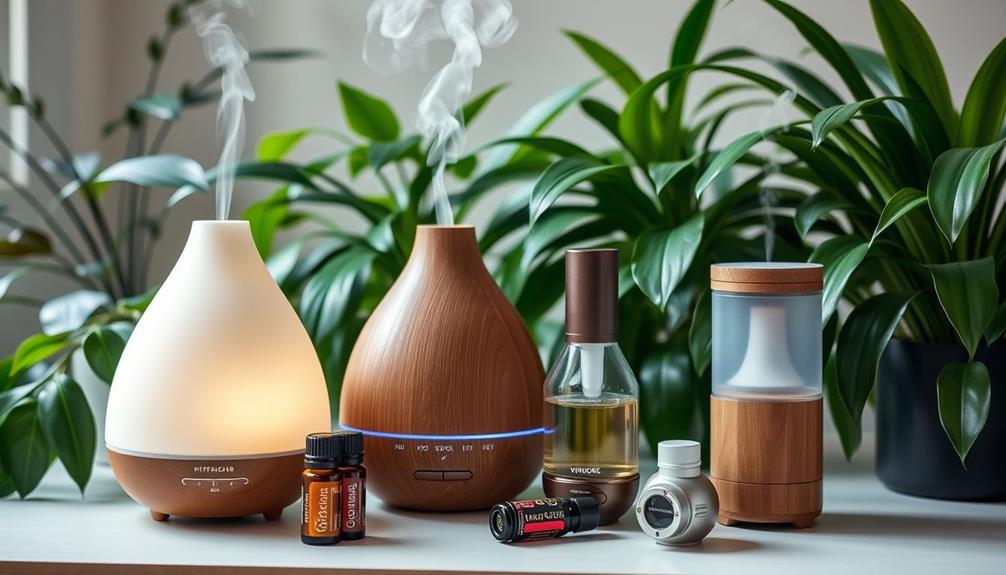
Ultrasonic diffusers
Ultrasonic diffusers use a small vibrating plate to break water and essential oil into a fine mist. The mist enters the room at a low temperature.
They are popular because they are often quiet, affordable, and simple to operate. Many also include lights, timers, and intermittent settings. The water mist may add a small amount of humidity, although a diffuser is not a replacement for a true humidifier.
Choose an ultrasonic diffuser when you want:
- A quiet option for a bedroom or office
- Lower oil use than a nebulizing diffuser
- A visible mist
- A timer or intermittent mode
- A budget-friendly device
Limitations:
- The tank needs regular cleaning.
- Tap water can leave mineral deposits.
- The scent may seem milder than with a nebulizing diffuser.
- Extra moisture may not suit a damp room.
Nebulizing diffusers
Nebulizing diffusers use pressurized air to break essential oil into very small particles. They do not need water.
These diffusers can create a strong scent and may use more oil than other types. They can also be louder and more expensive. Since they do not add water, they may suit people who want to avoid extra moisture.
Choose a nebulizing diffuser when you want:
- A strong scent
- No added water
- Shorter diffusion sessions
- A device for a large area, when the maker says it is suitable
Limitations:
- They may use oil quickly.
- The scent can become overwhelming.
- The motor or air pump may make more noise.
- Oil residue can build up in the glass reservoir.
- They may cost more to buy and operate.
Evaporative diffusers
Evaporative diffusers use a fan or natural airflow to move oil through a pad, wick, or porous surface. The oil slowly evaporates into the air.
These models are often simple and portable. They do not create a water mist, so they can work well in small areas or while traveling.
Choose an evaporative diffuser when you want:
- A basic, low-maintenance design
- No water
- A portable option
- A mild scent near your desk or bedside
Limitations:
- The scent may not spread far.
- The oil can evaporate at different rates.
- Fan-based models may make noise.
- Pads and wicks may need replacement.
Heat diffusers
Heat diffusers warm essential oil so it evaporates. They may use a dish, candle, or electric heating element.
Heat can change the smell of some oils. Open-flame models also create a fire risk. For that reason, an electric, non-flame model is generally easier to manage than a candle-based option.
Choose a heat diffuser only when:
- The product has clear safety instructions.
- You can keep it away from children, pets, curtains, and other flammable items.
- You accept that heat may change the oil’s scent.
Do not leave a candle or heat source unattended.

Match the Diffuser to Your Room and Routine
The right diffuser size depends more on the room and your habits than on the largest tank available.
For a bedroom
A small ultrasonic diffuser with a timer is often enough for a bedroom. A 100–200 mL tank may suit a short evening session, but tank size alone does not prove how large an area the device can cover.
Check the manufacturer’s stated coverage area. Treat that number as an estimate, since room height, airflow, open doors, and ventilation can change how far the scent travels.
Choose:
- Low noise
- A dimmable or switchable light
- Automatic shutoff
- Intermittent mist
- A stable, spill-resistant base
Avoid running a diffuser all night unless the instructions clearly allow it and the room has suitable ventilation. Longer exposure is not automatically better.
For a home office
An office diffuser should be easy to control and should not distract you. A small ultrasonic, evaporative, or personal diffuser may work better than a powerful model.
Look for:
- A short timer
- Low noise
- A small footprint
- A power button that is easy to reach
- A scent level you can adjust
If other people share the space, ask before using scented products. Fragrance can bother people with asthma, allergies, migraines, or chemical sensitivities.
For a living room
A larger room may need a diffuser with a bigger tank or a model designed for a wider coverage area. However, one diffuser may not spread scent evenly through an open floor plan.
Consider:
- The room’s square footage
- Ceiling height
- Air conditioning and fans
- Open doorways
- How strong you want the scent to be
Place the unit on a level, water-resistant surface. Keep it away from the edge of a table and away from electronics that could be damaged by spills or mist.
For travel
A travel diffuser should be compact, simple, and easy to clean. Waterless and evaporative models are often easier to pack than large ultrasonic units.
Before using one in a hotel, rental, or shared space, check the property rules. Scent can remain in fabrics and may affect the next guest.
A useful room-size rule
Do not buy based on tank capacity alone. A 300 mL tank may run longer, but it may also produce more mist than a small room needs.
Use this process:
- Measure or estimate the room size.
- Read the maker’s coverage claim.
- Select a model with a low or intermittent setting.
- Start with a short session.
- Reduce the output if the scent feels strong or causes irritation.
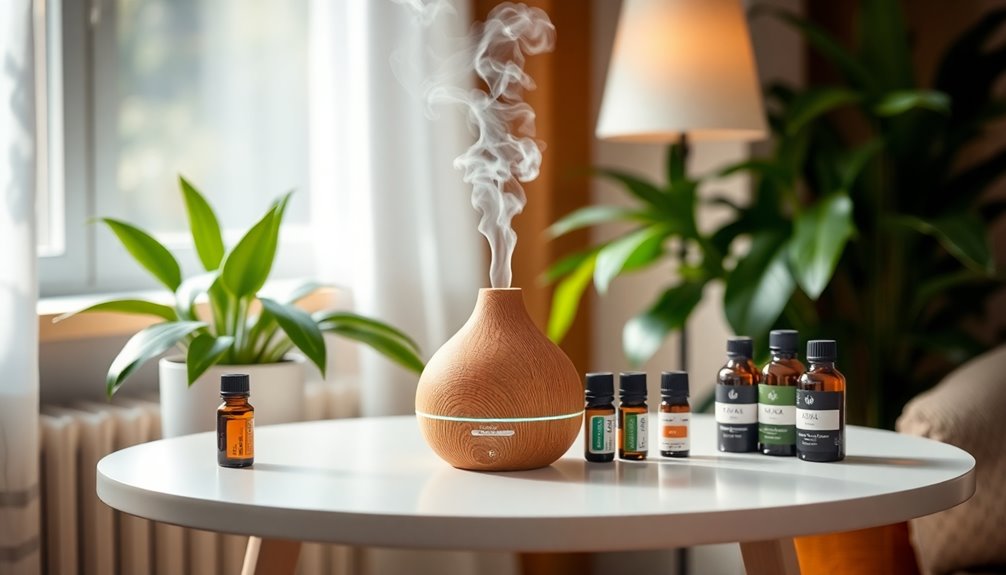
Compare Essential Oil Diffuser Features
Features matter only when they solve a real problem. Focus first on safety, cleaning, control, and fit.
Automatic shutoff
Automatic shutoff turns the diffuser off when the water runs out or the set time ends. This is one of the most useful features for an ultrasonic diffuser.
It helps prevent the unit from running dry and makes it easier to use while you are busy. Do not treat it as permission to place the diffuser where a spill could cause harm.
Timer and intermittent mode
A timer lets you set a session length. Intermittent mode alternates between mist and rest periods.
These controls can help reduce oil use and limit scent buildup. They may also suit people who prefer a mild scent rather than constant output.
Tank design
A removable tank with a wide opening is easier to clean than a narrow reservoir. Look for:
- Few grooves and hidden spaces
- A clear water-level mark
- A lid that comes off without force
- A tank that does not trap standing water
- Materials listed in the care instructions
A larger tank can reduce refills, but it can also hold more water that must be cleaned regularly.
Noise level
Manufacturers do not always measure noise under the same conditions. A product described as “quiet” may still be noticeable in a silent bedroom.
If noise matters, look for:
- User instructions that describe sound during operation
- A low-output setting
- A fanless design, if appropriate
- A return policy that lets you test the product
Do not place a diffuser directly beside your head. Even a quiet unit may disturb sleep if it sits on a nightstand.
Light controls
Many diffusers include colored lights. These lights are decorative, not evidence that the diffuser works better.
Choose a model with a light-off setting if you sleep in a dark room. A light should never be the main reason to choose a diffuser.
Material and oil compatibility
Essential oils can affect some plastics, seals, and painted surfaces. Follow the product manual for oil compatibility and cleaning.
Do not add carrier oil, perfume, alcohol, or other liquid unless the manufacturer specifically permits it. Use only the liquid and oil amounts listed in the instructions.
Power and controls
For U.S. use, check the plug, voltage, and instructions before purchase. A USB model may need a wall adapter, and the adapter may not be included.
Avoid using a damaged cord or a loose adapter. Keep power connections away from water.
Warranty and replacement parts
A warranty can help if the motor, light, or control panel fails. It is also useful to check whether the company sells replacement lids, tanks, pads, or seals.
A diffuser that cannot be cleaned or repaired may create more waste and cost more over time.

Estimate Oil Use and Ongoing Cost
The purchase price is only part of the cost. Oil use, replacement pads, electricity, and cleaning supplies also matter.
Basic oil-use calculation
You can estimate oil cost with this formula:
Oil cost per session = drops used × cost per drop
For example, if a session uses 6 drops and each drop costs $0.12:
6 × $0.12 = $0.72 per session
If you run that session 20 times in one month:
$0.72 × 20 = $14.40 per month
This is a hypothetical calculation. Actual drop size varies by bottle opening, oil thickness, and dispensing method.
A nebulizing diffuser may use more oil per session than an ultrasonic or evaporative model. Check the instructions and observe your own bottle level for a more useful estimate.
Electricity cost
Most small diffusers use little electricity, but the exact cost depends on wattage and your local utility rate.
Use this formula:
Monthly electricity cost = watts ÷ 1,000 × hours used × electricity price per kilowatt-hour
For a hypothetical 10-watt diffuser used for 2 hours a day over 30 days:
- 10 watts ÷ 1,000 = 0.01 kilowatts
- 0.01 × 60 hours = 0.6 kilowatt-hours
- At $0.20 per kilowatt-hour, the cost is about $0.12 per month
Oil usually costs more to operate than electricity for a small diffuser.
Other recurring costs
Include:
- Replacement pads or wicks
- Distilled water, if you choose to use it
- Cleaning supplies
- Replacement parts
- Shipping for oils or accessories

Use and Clean a Diffuser Correctly
A diffuser works better and lasts longer when you clean it on schedule.
Before first use
- Read the full instruction manual.
- Place the diffuser on a level, water-resistant surface.
- Check that the cord and plug are dry.
- Add only the recommended amount of water.
- Add the stated number of essential oil drops.
- Confirm that the lid is fitted correctly.
- Start with a short session.
Do not fill above the marked line. Too much water may cause leaks or weak operation.
After each use
For an ultrasonic diffuser:
- Turn it off and unplug it.
- Empty leftover water.
- Wipe the tank with a soft, clean cloth.
- Dry the inside before storing it.
- Leave the lid open if the manual permits it.
Standing water can support microbial growth. Do not assume that adding essential oil keeps the tank clean.
Periodic cleaning
Follow the product manual first. If the manual allows it, a mild cleaning method may include a small amount of diluted white vinegar to loosen mineral buildup. Rinse the tank well afterward so vinegar does not mix with your next oil session.
Do not use bleach, abrasive pads, or strong cleaners unless the manufacturer specifically approves them. These products may damage parts or leave residue in the tank.
Signs the diffuser needs attention
Stop and inspect the unit if you notice:
- A sour or stale smell
- Slime or visible buildup
- A weaker mist
- Leaking
- Unusual heat
- Electrical sounds
- A cracked tank
- A cord that feels damaged
If the unit becomes hot, smells like burning, or sparks, unplug it if you can do so safely. Do not use it again until the cause is resolved.

Follow Essential Oil Safety Rules
Essential oils are concentrated plant products. “Natural” does not mean harmless, and a diffuser can spread the oil through the air and onto nearby surfaces.
Use less oil first
Start with the lowest amount in the instructions. A strong scent can cause headache, nausea, coughing, eye irritation, or throat irritation in some people.
Open a window or stop the diffuser if anyone feels unwell. Fresh air is a better first response than adding another oil to mask the smell.
Protect children
Keep oils and diffusers out of reach of children. Essential oils can be harmful if swallowed, and some oils may irritate skin or airways.
Do not place a diffuser in a baby’s room without advice from a pediatrician. Infants and young children may be more sensitive to airborne irritants.
If a child swallows essential oil, contact Poison Control in the United States at 1-800-222-1222 or use PoisonHelp.org. Call 911 for trouble breathing, collapse, seizure, or another emergency.
Protect pets
Some essential oils may be harmful to cats, dogs, birds, and other animals. Risk can depend on the oil, concentration, ventilation, animal species, and exposure route.
The ASPCA advises caution with essential oils around pets. Birds may be especially sensitive to airborne products. Ask a veterinarian before diffusing an oil in a home with animals.
Never apply essential oils to a pet unless a veterinarian specifically directs you to do so.
Consider asthma, allergies, and migraines
A diffuser does not treat asthma, allergies, infection, or other medical conditions. Fragrance may trigger symptoms in some people.
If you have asthma, chronic lung disease, frequent migraines, or strong fragrance sensitivity, ask a qualified health professional whether using a diffuser is appropriate. Stop use if breathing becomes difficult or symptoms worsen.
Do not use a diffuser as a medical device
A diffuser can make a room smell different. It cannot replace prescribed medicine, medical care, ventilation, handwashing, or an air cleaner designed to remove particles.
Be skeptical of claims that a diffuser can cure illness, kill indoor germs throughout a room, improve oxygen levels, or replace treatment.
For general safety information, see guidance from Poison Control, the ASPCA, and the U.S. Food and Drug Administration.
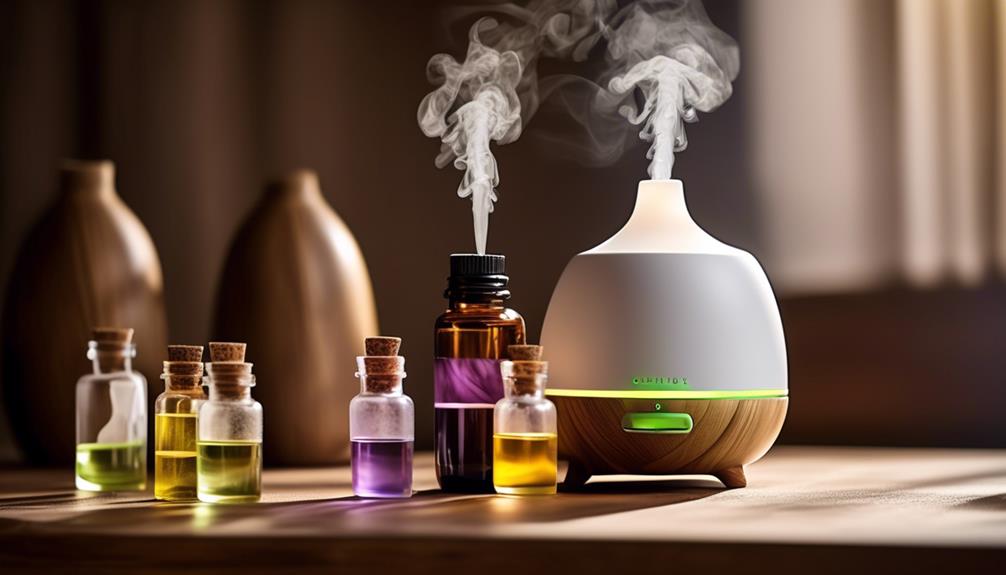
Avoid Common Diffuser-Buying Mistakes
Many poor buying decisions come from choosing extra features instead of checking the basics.
Mistake 1: Buying the largest tank
A large tank may run for many hours, but long run time is not always useful. It can encourage excess scent and leave water sitting in the reservoir.
Choose a tank that matches your normal session length.
Mistake 2: Trusting vague coverage claims
“Covers the whole house” is not a useful promise without room size, airflow, and operating conditions.
Use the maker’s coverage number as a starting point, not a guarantee. An open floor plan may need a different setup from a closed bedroom.
Mistake 3: Choosing a diffuser that is hard to clean
A complex tank with narrow channels may look attractive but take more time to maintain. Examine product photos and the manual before buying.
Simple parts are often more useful than extra lights or app controls.
Mistake 4: Ignoring shared air
A scent that seems mild to one person may bother another. Ask household members, roommates, coworkers, and guests before diffusing in shared spaces.
Use short sessions and good ventilation.
Mistake 5: Adding too much oil
More drops do not always create a better experience. Too much oil can create a harsh scent and increase irritation risk.
Start low. Increase only if the product instructions allow it and everyone nearby tolerates the scent.
Mistake 6: Using tap water without checking
Hard water can leave mineral deposits in an ultrasonic diffuser. Those deposits may reduce mist output and make cleaning harder.
Check the manual. If it allows distilled or filtered water, that may help reduce buildup.
Mistake 7: Treating a diffuser like a humidifier
An ultrasonic diffuser releases some water, but it is not designed to control room humidity. If dry air is your concern, use a properly sized humidifier and monitor humidity with a hygrometer.
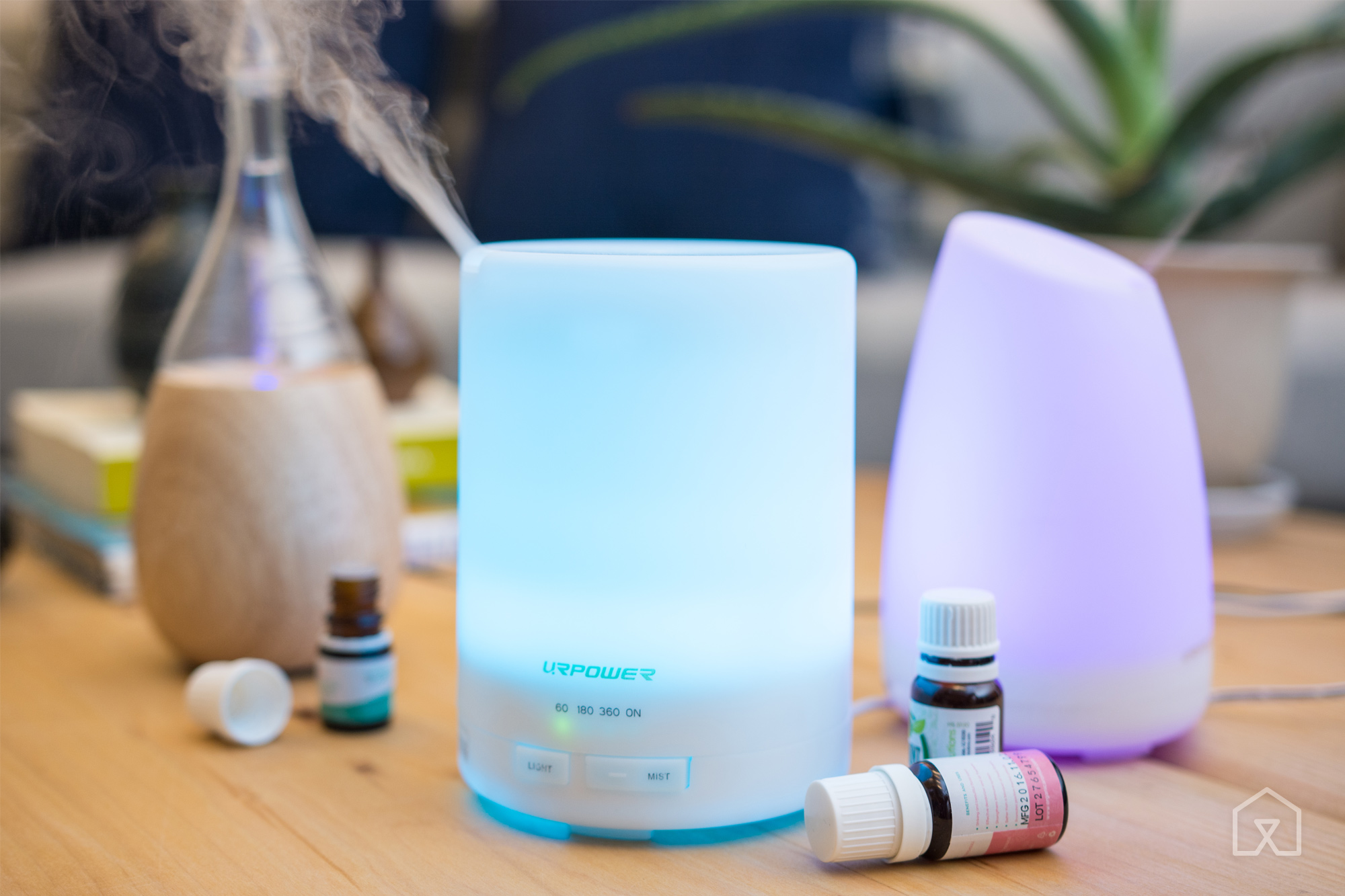
Use This Essential Oil Diffuser Decision Table
The table below matches common needs with practical features. It does not identify one universally best diffuser.
| Your priority | Diffuser type to consider | Features to prioritize | Main trade-off |
|---|---|---|---|
| Quiet bedroom use | Ultrasonic | Timer, light-off mode, low output | Requires water and cleaning |
| Strong scent | Nebulizing | Output control, short timer | Uses more oil and may be louder |
| No added moisture | Nebulizing or evaporative | Waterless operation | Different scent strength and maintenance |
| Small desk area | Evaporative or small ultrasonic | Compact size, low output | Limited coverage |
| Travel | USB or evaporative | Light weight, simple cleaning | May have weaker output |
| Shared office | Small, controlled diffuser | Short timer, mild output | Consent and ventilation still matter |
| Pet household | Use caution with any type | Easy shutoff, good ventilation | Oil safety depends on the animal and oil |
| Low ongoing cost | Ultrasonic or evaporative | Low oil use, reusable parts | May produce a lighter scent |
The most balanced choice for many U.S. households is a small or medium ultrasonic model with a timer, automatic shutoff, an easy-clean tank, and a low mist setting.
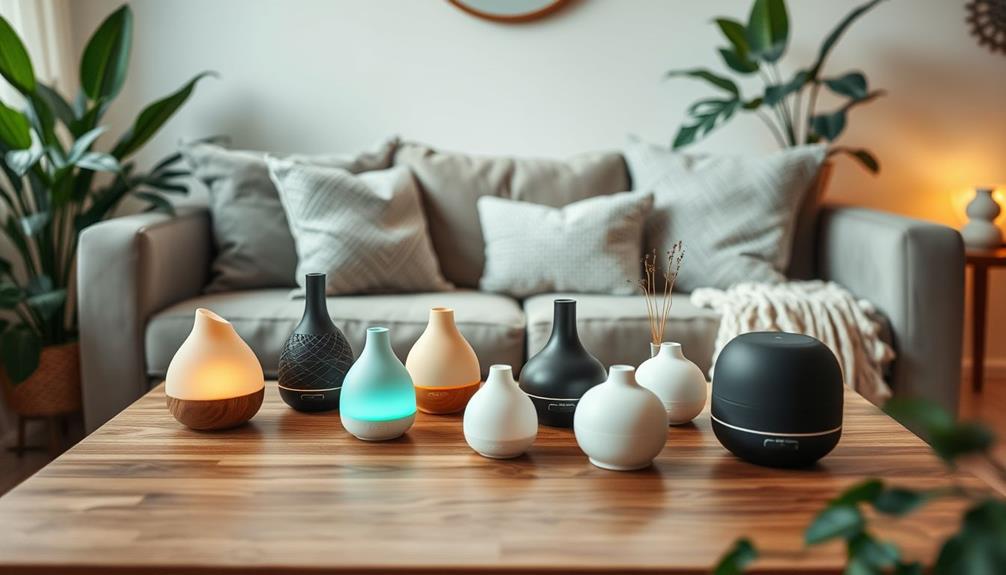
Signs You Chose the Right Diffuser
Your diffuser is a good fit when it meets your needs without creating new problems.
Look for these signs:
- The scent stays mild and comfortable.
- The unit does not leak.
- The room does not feel damp.
- You can clean the tank without much effort.
- The noise does not interrupt work or sleep.
- The timer matches your usual routine.
- Household members and pets remain comfortable.
- Oil use stays within your budget.
- The diffuser sits securely in a safe location.
If the scent is too strong, use fewer drops, shorten the session, increase ventilation, or choose intermittent mode. If the unit leaks, unplug it and check the fill line, lid, seal, and placement before using it again.
If cleaning does not remove residue or odor, replace the affected part or the diffuser. A low-cost device is not a bargain if it cannot be kept clean.

Frequently Asked Questions
Is an ultrasonic or nebulizing diffuser better?
Neither is best for every user. An ultrasonic diffuser usually costs less, uses less oil, and runs quietly. A nebulizing diffuser can produce a stronger scent without water but may use more oil and make more noise.
How many drops of essential oil should I use?
Follow the diffuser’s instructions and start with the smallest suggested amount. There is no single safe number for every room, oil, device, or person. Stop if anyone develops headache, coughing, nausea, eye irritation, or breathing symptoms.
Can I leave an essential oil diffuser on overnight?
It is safer to use a timer or intermittent setting than to run a diffuser continuously while asleep. Check the manual, keep the unit on a stable surface, and maintain ventilation. Do not run a damaged or leaking diffuser.
Can I use tap water in an ultrasonic diffuser?
Check the manual. Tap water may work, but minerals can build up in the tank and on the vibrating plate. If the instructions allow it, distilled water may reduce mineral residue.
Are essential oil diffusers safe for dogs and cats?
Safety depends on the animal, oil, dose, ventilation, and exposure. Some oils may harm pets, and birds can be particularly sensitive. Ask a veterinarian before using a diffuser around animals, and provide a way for pets to leave the area.
Do essential oil diffusers clean the air?
A diffuser adds fragrance. It should not be treated as an air purifier or a medical device. If you need to reduce particles or improve indoor air quality, use ventilation and a properly selected air-cleaning device.
Should I buy a diffuser with an app?
An app can help with scheduling, but it does not improve the oil itself. Buy app control only if it solves a real need, such as remote scheduling or routine automation. Check whether the app requires an account, Wi-Fi, Bluetooth, or ongoing support.
Conclusion: Choose for Control, Cleaning, and Safety
For most people, a small ultrasonic diffuser with automatic shutoff, a timer, low-output control, and an easy-clean tank is the most practical choice. Pick a nebulizing diffuser when strong, waterless diffusion matters more than quiet operation and low oil use.
Match the device to the room, start with less oil, and clean the reservoir often. Keep the diffuser away from children, pets, water hazards, and people who may react to fragrance.
Before you buy, check three things: the manufacturer’s coverage guidance, the cleaning instructions, and the safety information for everyone who shares your home.