Introduction
In the United States, a GFCI tester is used to check whether a ground-fault circuit interrupter can sense a dangerous loss of current and shut off power. It does this by creating a small current imbalance between the hot and neutral wires. A working GFCI should detect that imbalance and trip quickly.
A plug-in GFCI tester is useful for a basic field check. However, it cannot prove that every part of a circuit is safe. It may not detect all wiring faults, and its result can depend on the presence of a proper equipment grounding path.

What Is a GFCI?
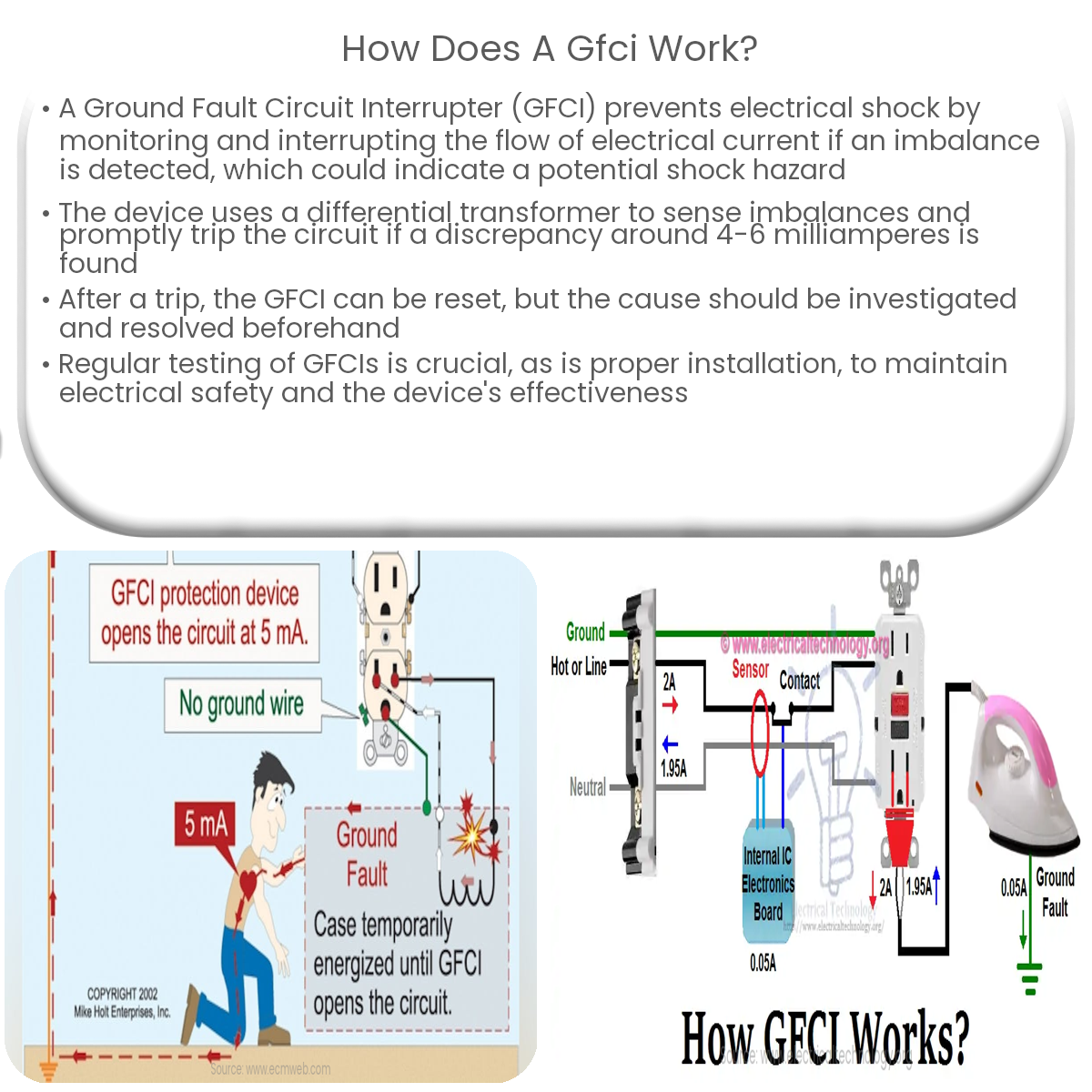
A ground-fault circuit interrupter, or GFCI, is a protective device that cuts power when electricity takes an unintended path to ground.
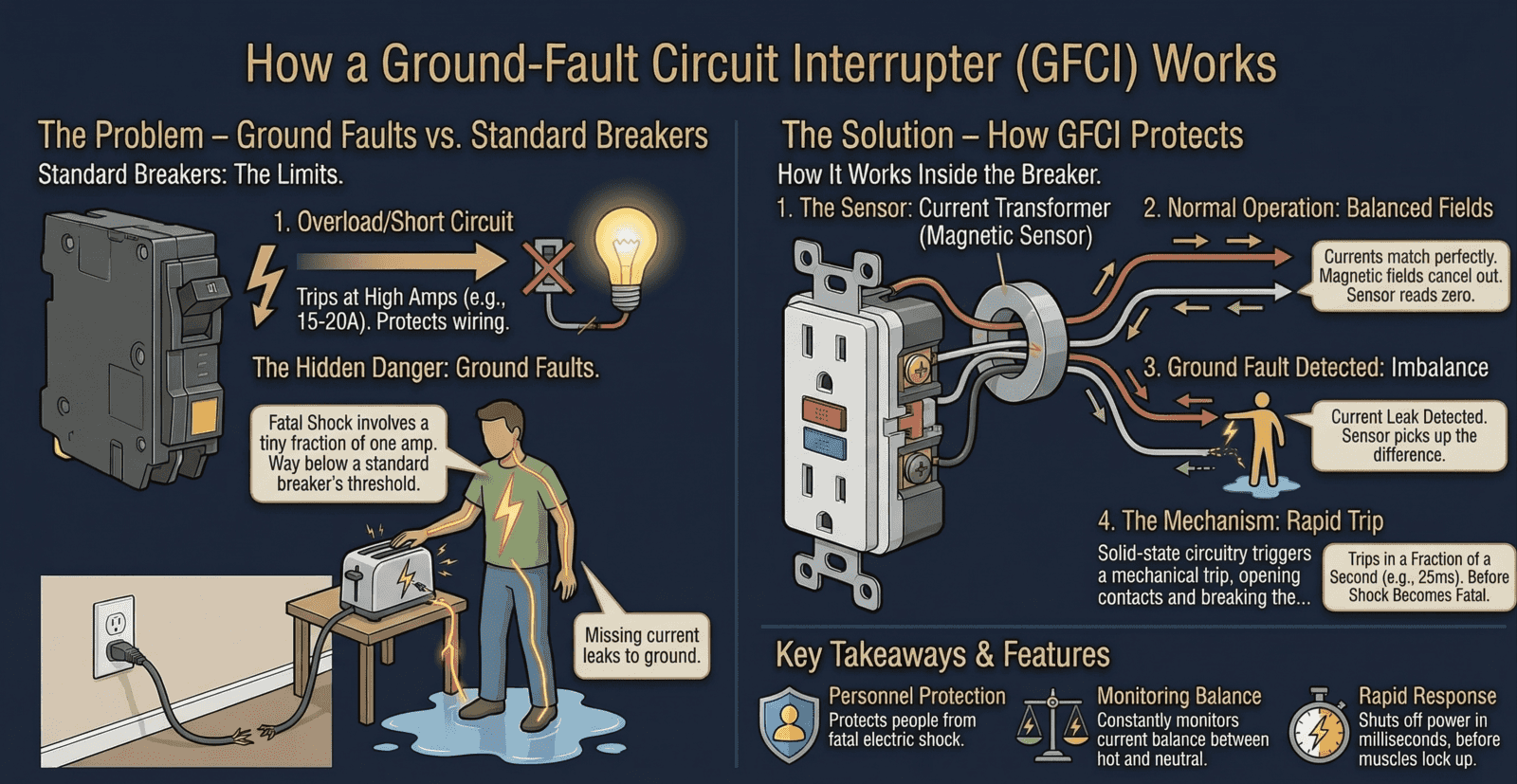
Normally, current flows out through the hot wire and returns through the neutral wire. The GFCI compares those two currents. They should be equal, or nearly equal.
If some current leaves the normal path, the device detects the difference. That missing current may be flowing through:
- A person touching an energized part
- A wet surface
- A damaged cord
- A faulty appliance
- An unintended path to ground
A GFCI is designed to react before a small leakage current becomes a more serious shock hazard. It does not protect against every electrical danger. For example, a GFCI does not normally protect against overloads or short circuits in the same way a circuit breaker does.
GFCI protection may be built into:
- Receptacles
- Circuit breakers
- Portable cord devices
- Temporary power distribution units
- Some outdoor power equipment
The test button on a GFCI device is part of the device itself. A separate plug-in GFCI tester is an external tool that checks whether the device responds to a simulated ground fault.
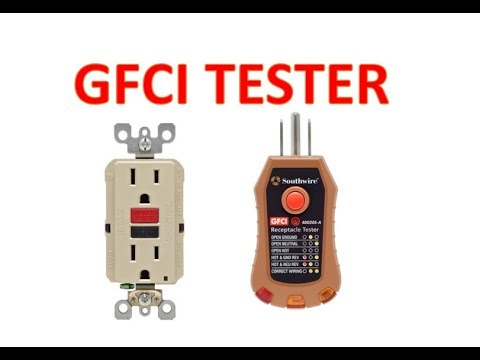
How Does a GFCI Tester Work?
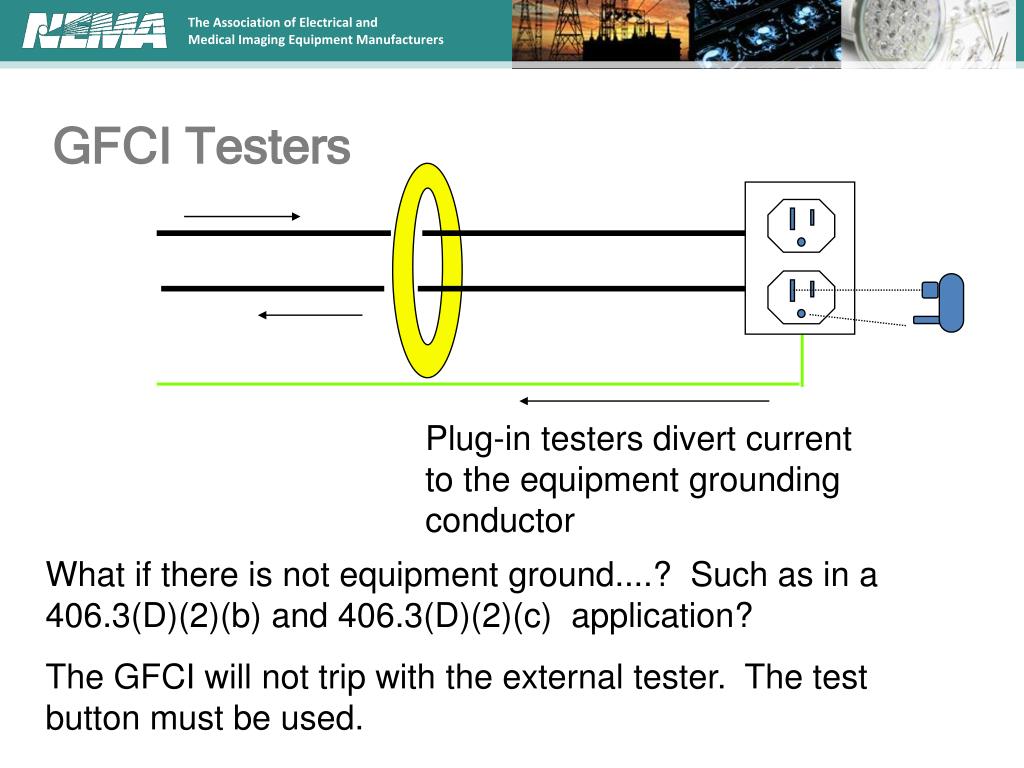
A plug-in GFCI tester works by sending a small amount of current from the hot conductor to the equipment grounding conductor. This creates an imbalance because some current does not return through the neutral conductor.
The GFCI senses the imbalance and should disconnect power.
The basic process is:
- The tester receives power from the receptacle.
- The tester connects an internal resistor between hot and ground.
- A small test current flows through that path.
- The current returning through neutral is lower than the current leaving through hot.
- The GFCI detects the difference.
- The GFCI opens the circuit and removes power.
The tester does not usually measure the GFCI’s internal trip time or trip current with laboratory accuracy. It mainly asks a simple question:
Does the GFCI respond when the tester creates a simulated leakage current?
This is why a plug-in tester is best viewed as a functional check, not a complete electrical inspection.
Why the tester needs a grounding path
Most plug-in GFCI testers use the equipment grounding conductor to create the test fault. If the receptacle has no usable ground path, pressing the tester’s button may not trip the GFCI.
That result does not always mean the GFCI itself is defective. It may indicate:
- An open equipment ground
- Incorrect wiring
- A bootleg ground
- A missing or damaged grounding connection
- A circuit design that does not provide the path the tester needs
some newer GFCI testers use different test methods or include a separate test mode. Always follow the instructions for the exact tester.
How to Use a Plug-In GFCI Tester
Before testing, check that the tester is rated for the voltage and receptacle type in use. Most common US household receptacles supply about 120 volts, but electrical systems can vary.
Step 1: Inspect the tester
Look for damaged insulation, bent blades, cracks, or loose parts. Do not use a damaged tester.
Read the tester’s instructions. Different models may have different indicator lights, button labels, and test functions.
Step 2: Plug it into the receptacle
Insert the tester fully into the receptacle. If the tester has indicator lights, compare the pattern with the chart supplied by the manufacturer.
A three-light tester may show conditions such as:
- Correct wiring
- Open neutral
- Open hot
- Open ground
- Reversed hot and neutral
- Other wiring errors
These light patterns vary by model. Do not rely on a generic chart if your tester includes a model-specific chart.
Step 3: Press the GFCI test button
Press the tester’s button. If the receptacle is protected by a working GFCI, power should turn off.
The GFCI may be:
- The receptacle itself
- An upstream receptacle
- A GFCI circuit breaker
- Another listed protective device serving the circuit
A downstream receptacle can lose power when an upstream GFCI trips.
Step 4: Check for loss of power
The tester’s lights should turn off, or the device should otherwise show that power is no longer present.
You can confirm the result by checking the receptacle’s reset button. On many GFCI receptacles, the reset button moves outward when the device trips.
Step 5: Reset the GFCI
Press the reset button on the GFCI device. Power should return if the circuit has no continuing fault and the device is operating normally.
If a breaker tripped, reset it only after moving the breaker fully to the OFF position and then back to ON. If it trips again, stop and investigate the cause.
Step 6: Repeat the test on a regular schedule
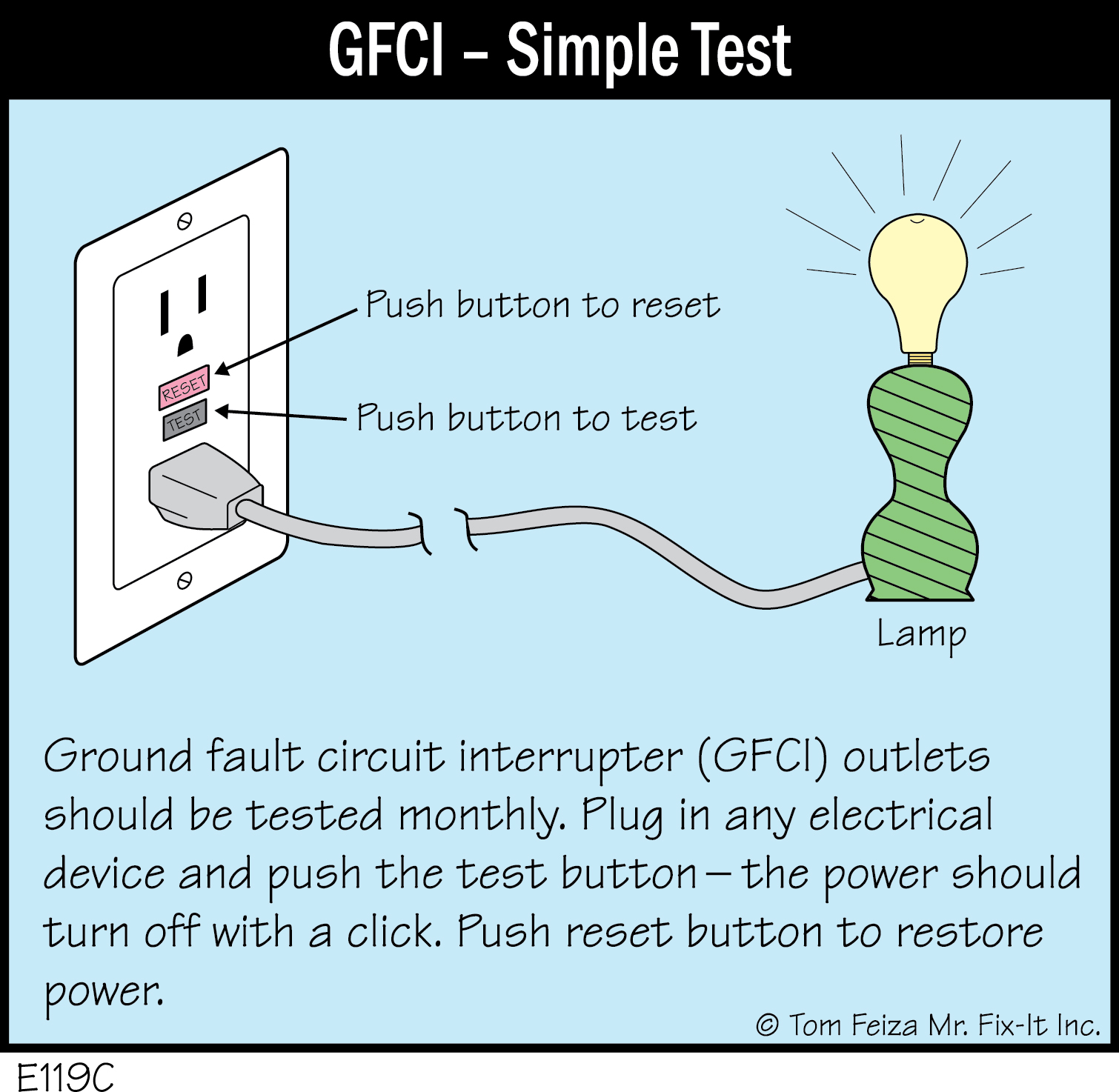
The US Consumer Product Safety Commission advises testing GFCI devices regularly. Many manufacturers and safety groups recommend a monthly test, especially for devices in wet or outdoor locations.
Use the built-in TEST button as part of routine maintenance. A plug-in tester can add information, but it should not replace the built-in test.

What the GFCI Tester Lights Mean
A plug-in tester’s lights provide clues about receptacle wiring. The exact meaning depends on the tester’s design.
| Tester result | Possible meaning | What to do |
|---|---|---|
| Correct-wiring pattern | The tester sees the expected connections | Perform the GFCI test |
| No lights | No power, open hot, or tester problem | Check another known-good receptacle and stop if the issue remains |
| Open ground pattern | Equipment grounding path may be missing | Have the wiring checked |
| Open neutral pattern | Neutral may be disconnected | Do not use the receptacle until checked |
| Reversed hot and neutral | Conductors may be connected to the wrong terminals | Stop using it and arrange repair |
| Lights remain on after the test | The GFCI did not trip, or the tester cannot create its test path | Press the built-in TEST button and seek help if it fails |
| Power goes off but will not reset | A fault may remain, or the device may lack line power | Unplug loads and investigate safely |
A light pattern is not a diagnosis. The tester can report what it detects at the receptacle, but it cannot see every connection inside the box or cable.
For example, a receptacle may show a normal pattern even though a loose connection exists under load. A tester also may not reveal a high-resistance connection that becomes hot only when an appliance is operating.
What a GFCI Tester Can and Cannot Tell You
A GFCI tester can show whether a protective device responds to its simulated test fault. It can also identify some common wiring conditions.
It may help you determine whether:
- The receptacle has power
- The GFCI trips when tested
- The device can be reset
- Some conductors appear reversed or disconnected
- A downstream receptacle loses power when an upstream GFCI trips
It cannot prove that:
- The entire circuit is wired correctly
- The GFCI will trip at the exact required current
- The GFCI will trip within the required time
- Every downstream receptacle has protection
- The grounding electrode system is correct
- An appliance is safe
- There is no loose or overheated connection
- The circuit can safely carry its full rated load
A professional electrician can use instruments such as a circuit analyzer, insulation tester, or specialized GFCI analyzer for deeper testing. Those instruments can provide measurements that a basic plug-in tester cannot.
Why a tester may fail on an ungrounded receptacle
A common surprise occurs when a GFCI receptacle trips with its own TEST button but does not trip when a plug-in tester is used.
One possible reason is the equipment grounding path. The receptacle’s internal test circuit may create an imbalance by a method that does not depend on the same external path used by the plug-in tester.
In contrast, many portable testers send current from hot to ground. Without a usable ground path, they may not create the expected imbalance.
Do not install a jumper from neutral to ground to make a tester work. That can create a dangerous condition and is not a proper repair.
Built-In GFCI Tests Versus Plug-In Testers
The built-in TEST button and a plug-in GFCI tester perform related but different checks.
| Test method | Main purpose | Key limitation |
|---|---|---|
| GFCI TEST button | Checks the device’s internal test function | May not reveal all wiring problems |
| Plug-in GFCI tester | Simulates leakage at the receptacle | Often depends on an equipment grounding path |
| Professional GFCI analyzer | Measures trip performance under controlled conditions | Requires suitable training and equipment |
The built-in button is the first test to perform. Press it while the receptacle is energized. The device should trip and remove power. Press RESET to restore power.
If the built-in button does not trip the device, do not keep using the receptacle as if it were protected. Some GFCI devices include self-monitoring features and may refuse to reset when they detect an internal problem. Other models may need replacement after a failed test.
Check the product instructions because test behavior differs by design and model.
Why Won’t the GFCI Trip?
When a GFCI tester does not trip the circuit, work through the safest explanations first.
The receptacle may not be GFCI protected
The tester may be connected to a regular receptacle. Protection could be located elsewhere, such as an upstream GFCI receptacle or the electrical panel.
Check nearby receptacles and the panel for a GFCI breaker. Do not assume that every receptacle on a circuit is protected just because one device has a GFCI button.
The tester may not have a ground path
An open ground can prevent some plug-in testers from creating their test current. This is especially likely in older wiring.
The tester’s lights may indicate an open ground. A qualified person should verify the condition with proper test equipment.
The GFCI may be wired incorrectly
Line and load terminals are not interchangeable on many GFCI receptacles. Incorrect connections can prevent normal operation or leave downstream outlets unprotected.
Turn off the circuit breaker before any inspection. If you are not trained to identify and verify de-energized conductors, do not open the box.
The GFCI may have failed
A GFCI that will not trip with its built-in TEST button may be defective, improperly supplied, or affected by a wiring fault.
Do not bypass it or replace it with a standard receptacle just to restore power.
A connected appliance may be causing repeated trips
If the GFCI trips as soon as an appliance is plugged in, unplug the appliance and reset the device. If the GFCI holds without the appliance, the appliance, cord, or moisture may be the cause.
Do not keep resetting the GFCI while a suspected appliance remains connected.

Common Mistakes to Avoid
Treating the lights as a complete safety inspection
The indicator lights are a quick screening tool. They do not replace circuit testing by a qualified electrician.
Assuming “no trip” always means a bad GFCI
The tester may require a grounding path that is missing. Check the tester instructions and the wiring indication before reaching a conclusion.
Using the tester on damaged or wet equipment
Water, damaged insulation, and exposed metal create shock risks. Dry the area, keep hands clear, and do not use faulty tools.
Resetting a repeatedly tripping device
Repeated trips are a warning. They may point to moisture, leakage, damaged wiring, an appliance fault, overload conditions, or a defective GFCI.
Working inside the electrical box without proper training
Turning off a wall switch does not make the box safe. Switches often interrupt only one conductor, and nearby parts may remain energized.
For electrical repairs, use a licensed electrician or another qualified professional who follows local US code and permitting rules.
Confusing a GFCI tester with an outlet polarity tester
A basic receptacle tester may show wiring patterns but may not test GFCI operation. A GFCI tester includes a button or function that creates a simulated leakage condition.

How Often Should You Test a GFCI?
Test the built-in GFCI button at least monthly unless the device manufacturer or local authority gives different instructions.
Test more carefully after:
- Electrical work
- Flooding or water intrusion
- A lightning event
- A long period without use
- Repeated unexplained trips
- Installation of a new receptacle or breaker
GFCI devices in bathrooms, kitchens, garages, basements, crawl spaces, laundry areas, outdoor locations, and other damp areas deserve regular attention.
The most useful sign of success is simple: pressing TEST removes power, and pressing RESET restores it without unusual noise, heat, odor, or repeated tripping.

When Should You Call an Electrician?
Call a qualified electrician if:
- The built-in TEST button does not trip the GFCI
- The GFCI trips repeatedly with no clear cause
- The receptacle is warm, scorched, cracked, loose, or buzzing
- A tester reports reversed polarity or an open neutral
- A receptacle has no apparent ground
- The breaker trips when the GFCI is reset
- Water has entered the box or wiring
- You need to open the electrical panel or receptacle box
- You are unsure which breaker controls the circuit
Never defeat GFCI protection by removing the device, tying neutral to ground, using an adapter without understanding its limits, or repeatedly resetting a faulted circuit.
Key Takeaways
- A GFCI tester creates a small current imbalance to simulate a ground fault.
- Most plug-in testers send current from hot to the equipment grounding conductor.
- A working GFCI should trip and cut power.
- A tester may not work correctly on an ungrounded receptacle.
- The built-in TEST button is the first check to perform.
- Tester lights can identify some wiring problems, but they are not a complete safety inspection.
- Stop using the circuit if the GFCI fails, trips repeatedly, feels hot, or shows damage.
Frequently Asked Questions
Does a GFCI tester test the whole circuit?
No. It tests the response at the point where it is plugged in. It may show whether downstream power turns off, but it does not inspect every connection, load, or receptacle on the circuit.
Can a GFCI tester trip a GFCI breaker?
Often, yes, if the breaker protects the receptacle and the tester can create the required test path. Results can vary with circuit wiring and the tester design.
Why does the GFCI button work but the plug-in tester does not?
The plug-in tester may depend on an equipment grounding path that is missing or faulty. The GFCI’s internal TEST button may use a different test circuit.
Can I use a GFCI tester on a two-prong outlet?
A plug-in tester may not operate as intended on a two-prong receptacle because that outlet may not provide an equipment grounding conductor. Do not use an adapter or create a neutral-to-ground jumper to force a result.
Should I replace a GFCI that fails the test?
A GFCI that fails its built-in TEST function should not be treated as protective. Turn off power if needed, avoid using the receptacle, and have the wiring and device checked by a qualified electrician. Replacement may be necessary, but the underlying wiring should also be verified.
Sources and Further Reading
- US Consumer Product Safety Commission: Ground-Fault Circuit Interrupters
- OSHA: Ground-Fault Circuit-Interrupters
- National Electrical Manufacturers Association: GFCI information
- The installation and testing instructions supplied with the specific GFCI receptacle, breaker, or tester
Conclusion
A GFCI tester works by creating a controlled imbalance between the hot and neutral current. The GFCI should sense that difference and shut off power. This makes the tester useful for a quick functional check, but it does not replace professional electrical testing.
Start with the device’s built-in TEST button. If it fails, will not reset, trips repeatedly, or shows signs of heat or damage, stop using the circuit and arrange a qualified inspection.